
clematis 'Chatsworth'
Also known as: Information to be completed
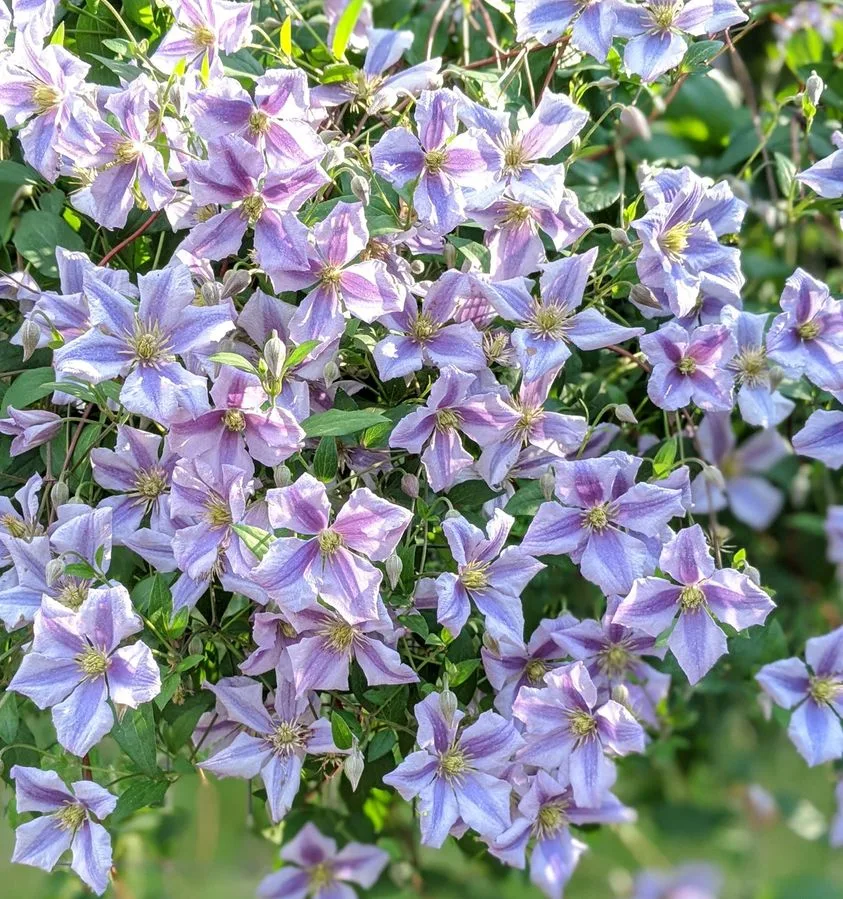
Chatsworth' is a climber 3-4m high, with green leaves, and flowers, 7-8cm across, composed of four or six pale blue-lilac sepals, with darker bars, and pale greenish-yellow stamens, from midsummer to autumn; many clematis are visited by bees for pollen, and some also provide nectar
Scientific classification
- Species
- clematis 'Chatsworth' (Clematis 'Chatsworth')
- Genus
- Clematis
- Family
- Ranunculaceae
- Order
- Ranunculales
- Class
- Magnoliopsida
- Phylum
- Tracheophyta
- Skin irritant. Wear gloves and other protective equipment when handling
- Toxicity
- Climber Wall Shrub
- Plant type
- 2.5-4 metres
- Height
- 1-1.5 metres
- Spread
- Deciduous
- Foliage
- Climbing
- Habit
- Spring · Summer · Autumn
- Season of interest
- Full sun · Partial shade
- Sunlight
- Information to be completed
- Ideal temperature









clematis 'Chatsworth' pictures
Toxicity
Skin irritant. Wear gloves and other protective equipment when handling
clematis 'Chatsworth' care guide
- Water root base evenly, cool damp root environment required
- Watering
- Full sun · Partial shade
- Sunlight

Watering
Water root base evenly, cool damp root environment required
Fertilizing
 Fertilizing
High phosphorus clematis feed biweekly spring budding phase
Pruning
 Pruning
 (clematis) group 3
Propagation
 Propagation
Propagate by internodal leaf-bud semi-ripe cuttings taken from spring to late summer, or by layering from late winter to spring
Growing
 Growing
Grow in full sun or partial shade in containers (at least 45cm deep and wide) or in the ground, in cool, moisture-retentive, well-drained soil, with the crown 5-8cm deep to encourage new shoots to grow from below ground level; keep the base of the plant and the roots cool and shaded by other plants or a layer of pebbles or flat stones; for more advice, see clematis cultivation
Common pests and diseases
Diseases
May be susceptible to honey fungus (rarely), clematis wilt and clematis slime flux
Pests
May be susceptible to aphids, snails and caterpillars; petals may be eaten by earwigs
Explore the plant health library →




