
Hippeastrum 'Rosario'
Also known as: Information to be completed
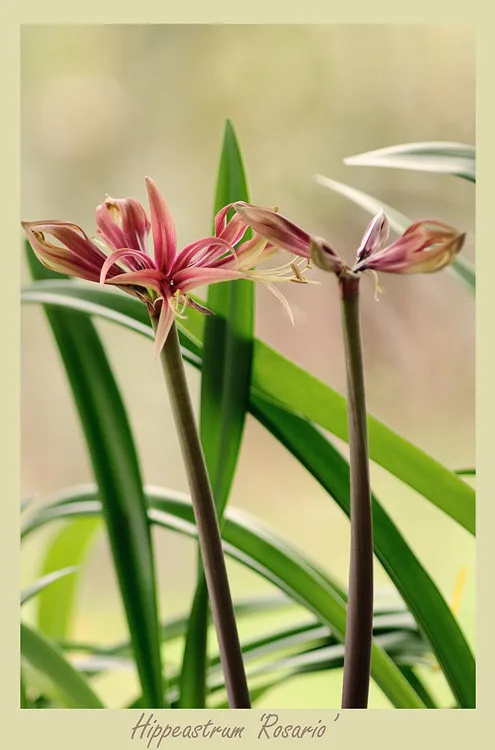
Rosario' is a tender, bulbous perennial with narrowly strap-shaped leaves. Stems to 60cm tall bear flowers to 15cm across with narrow, spidery white petals with dark pink to red central makings and speckles. This cultivar is considered to be predominantly evergreen once the bulbs have been established
Scientific classification
- Species
- Hippeastrum 'Rosario' (Hippeastrum 'Rosario')
- Genus
- Hippeastrum
- Family
- Amaryllidaceae
- Order
- Asparagales
- Class
- Liliopsida
- Phylum
- Magnoliophyta
- Harmful if eaten. Wear gloves and other protective equipment when handling
- Toxicity
- Conservatory Greenhouse · Bulbs
- Plant type
- 0.5-1 metres
- Height
- 0.1-0.5 metres
- Spread
- Evergreen · Semi evergreen
- Foliage
- Columnar upright
- Habit
- Spring · Summer · Autumn · Winter
- Season of interest
- Full sun · Partial shade
- Sunlight
- Information to be completed
- Ideal temperature









Hippeastrum 'Rosario' pictures
Toxicity
Harmful if eaten. Wear gloves and other protective equipment when handling
Hippeastrum 'Rosario' care guide
- Moderate regular watering, allowing brief slight drying between soakings
- Watering
- Full sun · Partial shade
- Sunlight

Watering
Moderate regular watering, allowing brief slight drying between soakings
Fertilizing
 Fertilizing
Balanced perennial feed every four weeks from spring through summer
Pruning
 Pruning
None required
Propagation
 Propagation
Propagate by removing offsets in autumn
Growing
 Growing
Pot newly purchased bulbs from October to January so that two-thirds of the bulb remains above the surface and water in well. The appearance of leaves will signify that root activity has started and regular watering can begin. A good supply of water is required as soon as growth becomes vigorous with a temperature ideally in the region of 15-18°C and a sunny position. See hippeastrum cultivation for further information
Common pests and diseases
Diseases
Generally disease-free
Pests
May be susceptible to bulb scale mite, large narcissus bulb fly and slugs and snails throughout the summer months
Explore the plant health library →




