
Magnolia stellata 'Chrysanthemumiflora'
Also known as: Information to be completed
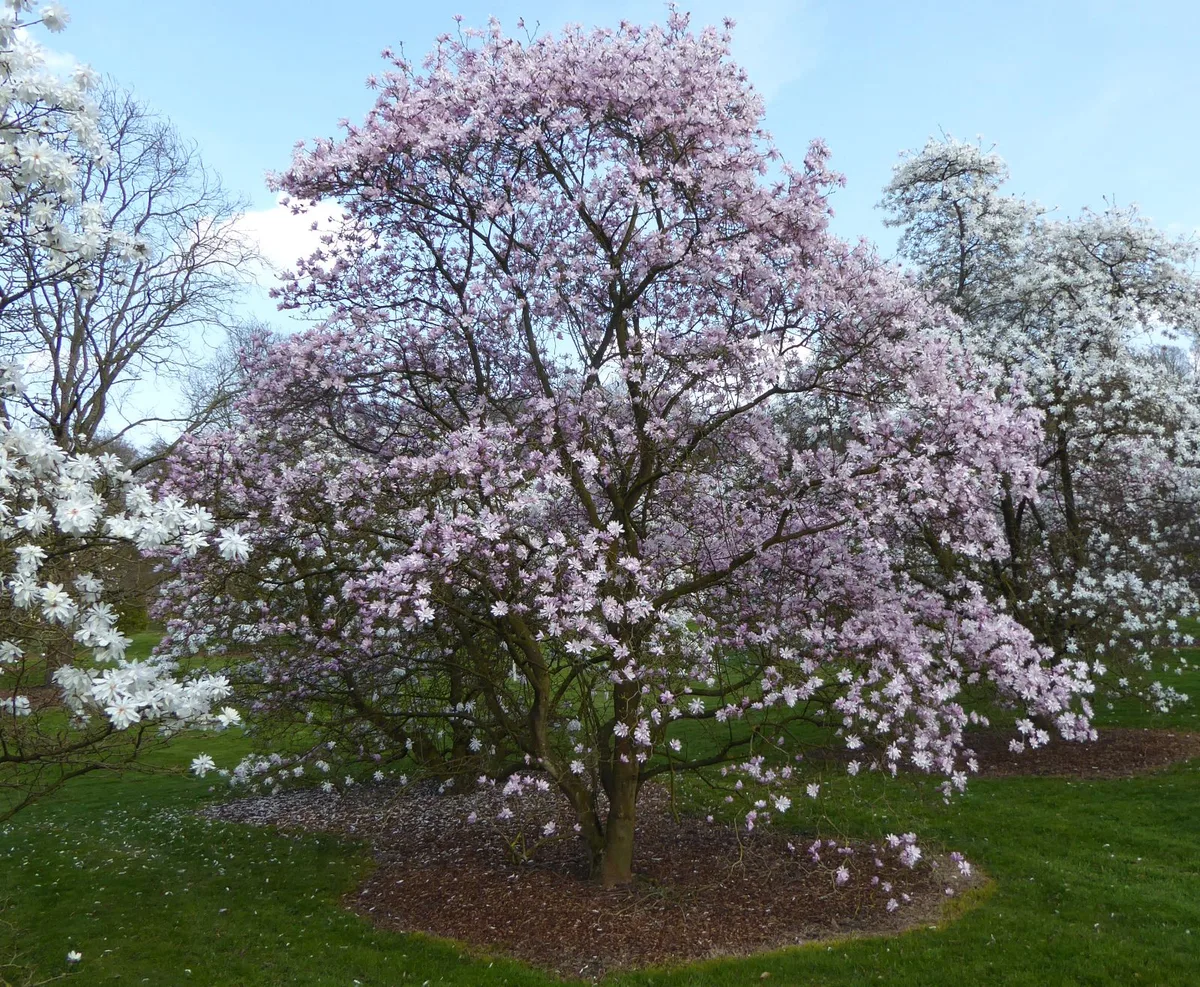
A slow-growing deciduous shrub, to around 3m high, with a broadly rounded habit and narrowly oval-shaped green leaves. Flowers are double, with up to 40 narrow, pale pink petals, and are produced before the leaves in spring
Scientific classification
- Species
- Magnolia stellata 'Chrysanthemumiflora' (Magnolia stellata 'Chrysanthemumiflora')
- Genus
- Magnolia
- Family
- Magnoliaceae
- Order
- Magnoliales
- Class
- Magnoliopsida
- Phylum
- Magnoliophyta
- Skin allergen. Wear gloves and other protective equipment when handling
- Toxicity
- Shrubs
- Plant type
- 2.5-4 metres
- Height
- 2.5-4 metres
- Spread
- Deciduous
- Foliage
- Bushy
- Habit
- Autumn · Spring · Summer
- Season of interest
- Full sun · Partial shade
- Sunlight
- Information to be completed
- Ideal temperature









Magnolia stellata 'Chrysanthemumiflora' pictures
Distribution of Magnolia stellata 'Chrysanthemumiflora'
Distribution map
- Native
- Introduced
- Cultivated
Source:WCVP v16 · Royal Botanic Gardens, Kew · CC BY 3.0 · Boundaries:WGSRPD / TDWG
Toxicity
Skin allergen. Wear gloves and other protective equipment when handling
Magnolia stellata 'Chrysanthemumiflora' care guide
- Moderate regular watering, allowing brief slight drying between soakings
- Watering
- Full sun · Partial shade
- Sunlight

Watering
Moderate regular watering, allowing brief slight drying between soakings
Fertilizing
 Fertilizing
Balanced perennial feed every four weeks from spring through summer
Pruning
 Pruning
Minimal pruning required, see magnolia pruning. Deciduous magnolias should only be pruned between midsummer and early autumn
Propagation
 Propagation
Propagate by softwood cuttings in early summer or by semi-ripe cuttings in late summer
Growing
 Growing
Thrives in moist but well-drained, neutral to acid soil, though this species will also tolerate chalk as long as it is not too dry. Position in full sun or part shade with shelter from cold winds. Late frosts may damage flower buds. See magnolia cultivation for more advice
Common pests and diseases
Diseases
May be susceptible to glasshouse grey mould, powdery mildews and chrysanthemum white rust
Pests
May be susceptible to scale insects and capsid bug
Explore the plant health library →




