
commonName:"banana-leaved fern 'Crocodyllus'"
Also known as: Information to be completed
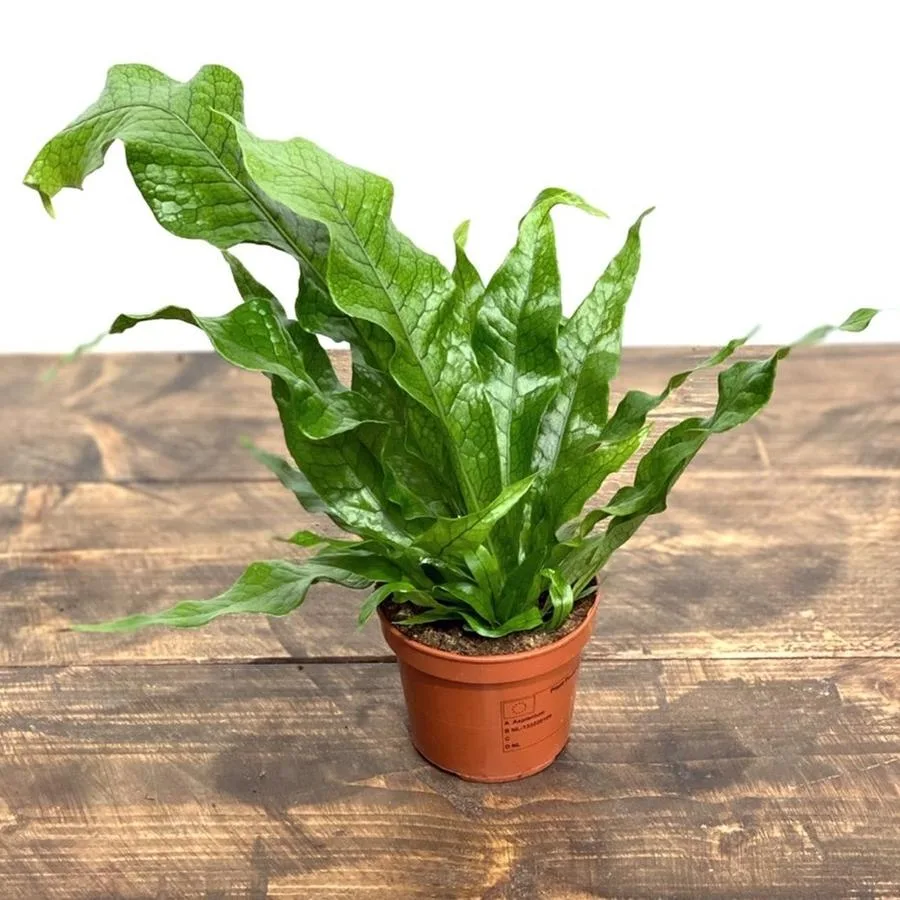
A tender epiphytic fern with simple, upright to arching, leathery fronds that are bright glossy green when young, with darker veins giving a distinct pattern and texture to the frond surface
Scientific classification
- Species
- commonName:"banana-leaved fern 'Crocodyllus'" (Microsorum musifolium 'Crocodyllus')
- Genus
- Microsorum
- Family
- Polypodiaceae
- Order
- Polypodiales
- Class
- Polypodiopsida
- Phylum
- Tracheophyta
- Information to be completed
- Toxicity
- Ferns
- Plant type
- 0.5-1 metres
- Height
- 0.5-1 metres
- Spread
- Evergreen
- Foliage
- Clump forming
- Habit
- Spring · Summer · Autumn · Winter
- Season of interest
- Partial shade
- Sunlight
- Information to be completed
- Ideal temperature









commonName:"banana-leaved fern 'Crocodyllus'" pictures
Distribution of commonName:"banana-leaved fern 'Crocodyllus'"
Distribution map
- Native
- Introduced
- Cultivated
Source:WCVP v16 · Royal Botanic Gardens, Kew · CC BY 3.0 · Boundaries:WGSRPD / TDWG
commonName:"banana-leaved fern 'Crocodyllus'" care guide
- Keep soil consistently moist with higher humidity and no hot drying winds
- Watering
- Partial shade
- Sunlight

Watering
Keep soil consistently moist with higher humidity and no hot drying winds
Fertilizing
 Fertilizing
Very dilute fern feed monthly during warm active frond growth
Pruning
 Pruning
No pruning required
Propagation
 Propagation
Propagate by spores; plants grown from spore may vary. As this plant is protected by Plant Breeders' Rights, any propagation should be for personal rather than commercial use
Growing
 Growing
Grow under glass in filtered light, in a free draining mix of equal parts loam, orchid bark, coarse leaf mould or peat substitute, and charcoal. Position away from direct sunlight and cold draughts, and provide high humidity, using a pebble tray or similar. Do not allow to sit in water. See ferns advice profile for further information
Common pests and diseases
Diseases
Generally disease-free
Pests
May be susceptible to scale insects, red spider mite and mealybugs
Explore the plant health library →




