
Lavandula stoechas Little Bee Rose ('Florvendula Rose')
Also known as: Information to be completed
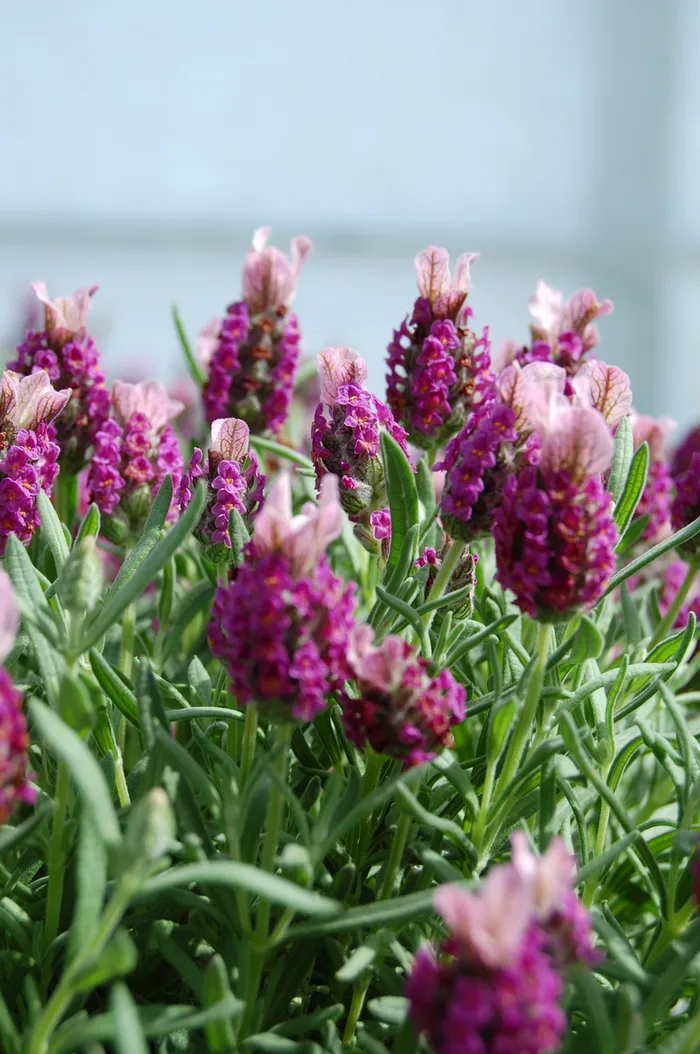
A compact, bushy evergreen shrub, with linear, aromatic grey-green leaves. Dense spikes of small, fragrant, dark reddish-purple flowers topped with pale pink bracts are borne on short stems from early to late summer
Scientific classification
- Species
- Lavandula stoechas Little Bee Rose ('Florvendula Rose') (Lavandula stoechas Little Bee Rose ('Florvendula Rose'))
- Genus
- Lavandula
- Family
- Lamiaceae
- Order
- Lamiales
- Class
- Magnoliopsida
- Phylum
- Magnoliophyta
- Information to be completed
- Toxicity
- Shrubs
- Plant type
- 0.1-0.5 metres
- Height
- 0.1-0.5 metres
- Spread
- Evergreen
- Foliage
- Bushy
- Habit
- Spring · Summer · Autumn · Winter
- Season of interest
- Full sun
- Sunlight
- Information to be completed
- Ideal temperature









Lavandula stoechas Little Bee Rose ('Florvendula Rose') pictures
Lavandula stoechas Little Bee Rose ('Florvendula Rose') care guide
- Allow soil to dry completely between deep watering cycles
- Watering
- Full sun
- Sunlight

Watering
Allow soil to dry completely between deep watering cycles
Fertilizing
 Fertilizing
Low-nitrogen diluted fertilizer once monthly in warm growing months
Pruning
 Pruning
Shorten flowered shoots to about 1.5–2.5 cm from the previous year's growth. If flowering is on last year's growth, prune after flowering; if on current-year growth, prune the following early to mid-spring.
Propagation
 Propagation
Propagate by semi-hardwood cuttings in summer
Growing
 Growing
Grow in full sun in well-drained soil. May need winter protection in areas prone to heavy frosts. For more advice, see lavender cultivation
Common pests and diseases
Diseases
May be susceptible to grey moulds (Botrytis) and honey fungus (rarely)
Pests
May be susceptible to rosemary beetle and cuckoo spit (froghoppers)
Explore the plant health library →




