
castor oil plant 'New Zealand Black'
Also known as: Information to be completed
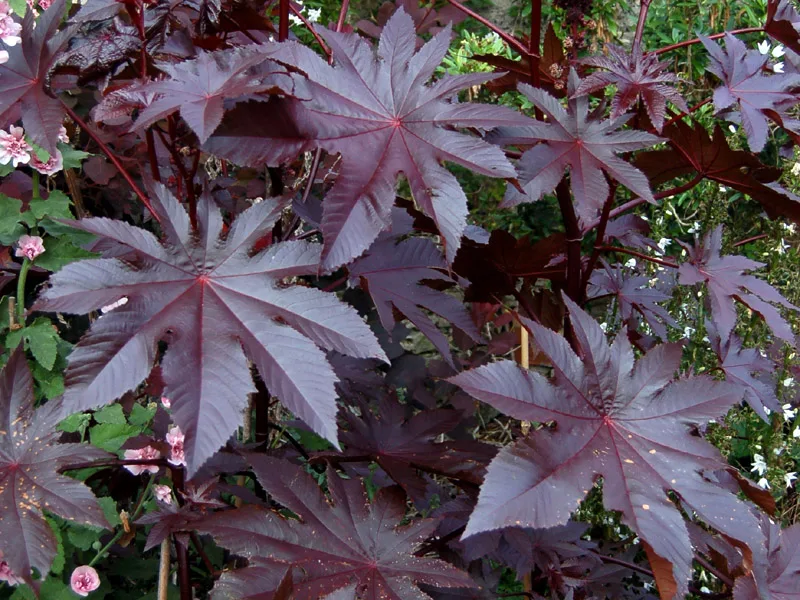
New Zealand Black' is a large, tender, evergreen shrub grown as an annual in temperate climates. It has large, dark red-purple, palmately lobed leaves and showy red female flower spikes in summer, followed by dark red fruits with soft spines
Scientific classification
- Species
- castor oil plant 'New Zealand Black' (Ricinus communis 'New Zealand Black')
- Genus
- Ricinus
- Family
- Euphorbiaceae
- Order
- Malpighiales
- Class
- Magnoliopsida
- Phylum
- Magnoliophyta
- TOXIC if eaten, wear gloves and other protective equipment when handling]
- Toxicity
- Bedding · Shrubs
- Plant type
- 1.5-2.5 metres
- Height
- 0.5-1 metres
- Spread
- Evergreen
- Foliage
- Bushy
- Habit
- Spring · Summer · Autumn
- Season of interest
- Full sun
- Sunlight
- Information to be completed
- Ideal temperature









castor oil plant 'New Zealand Black' pictures
Distribution of castor oil plant 'New Zealand Black'
Distribution map
- Native
- Introduced
- Cultivated
Source:WCVP v16 · Royal Botanic Gardens, Kew · CC BY 3.0 · Boundaries:WGSRPD / TDWG
Toxicity
TOXIC if eaten, wear gloves and other protective equipment when handling]
castor oil plant 'New Zealand Black' care guide
- Regular deep irrigation dry weather, mulch to lock underground moisture
- Watering
- Full sun
- Sunlight

Watering
Regular deep irrigation dry weather, mulch to lock underground moisture
Fertilizing
 Fertilizing
Balanced tropical shrub feed monthly spring through late summer heat
Pruning
 Pruning
No pruning required
Propagation
 Propagation
Propagate by seed, sowing in late spring. Soak seed for 24 hours and sow singly in pots with bottom heat
Growing
 Growing
Grow in a loam-based compost in full light. Water freely in growth and apply a balanced liquid fertiliser monthly. Plant outdoors when all danger of frost has passed. Stake plants in exposed positions. Plants grown on poorer soils tend to produce flowers at the expense of foliage
Common pests and diseases
Diseases
May be susceptible to honey fungus (rarely)
Pests
May be susceptible to glasshouse red spider mite
Explore the plant health library →




