
blackberry lily
Also known as: Chinese blackberry lily; Chinese leopard flower; dwarf tiger lily; leopard lily
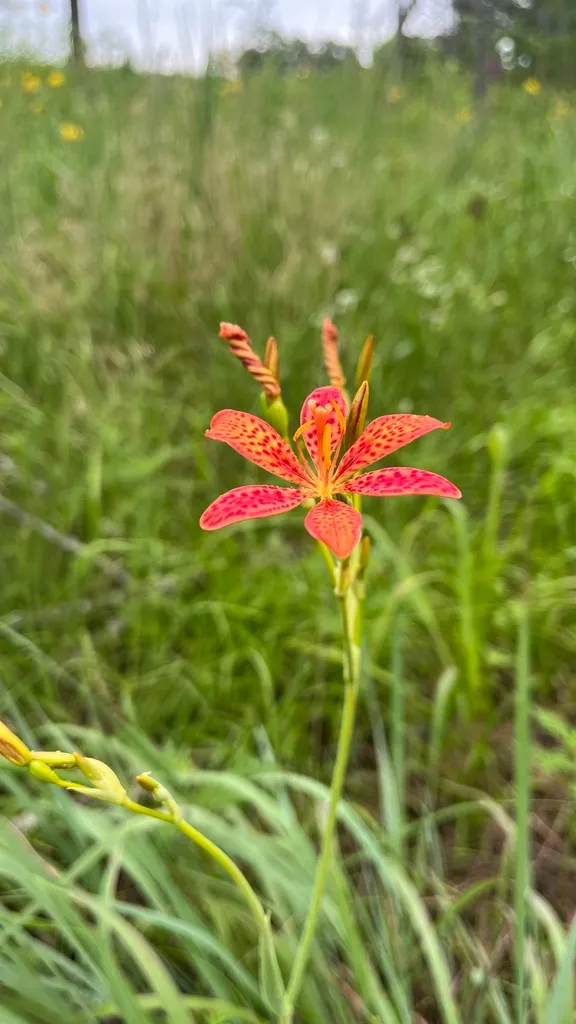
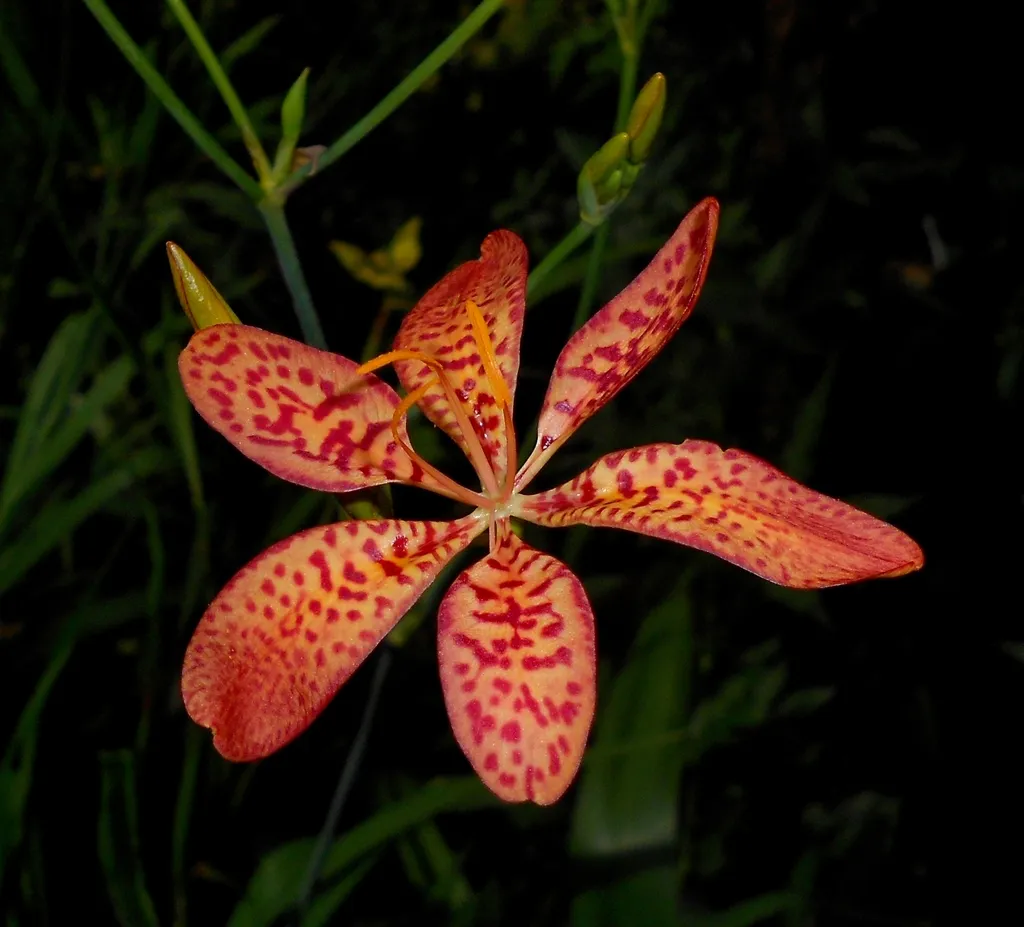
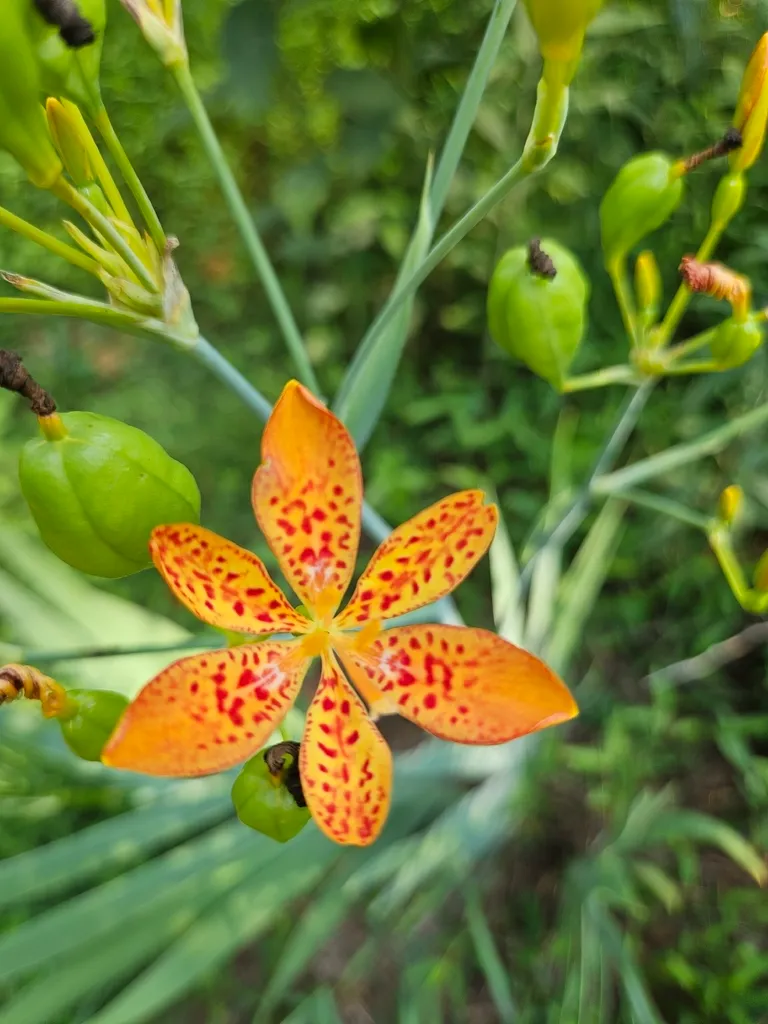
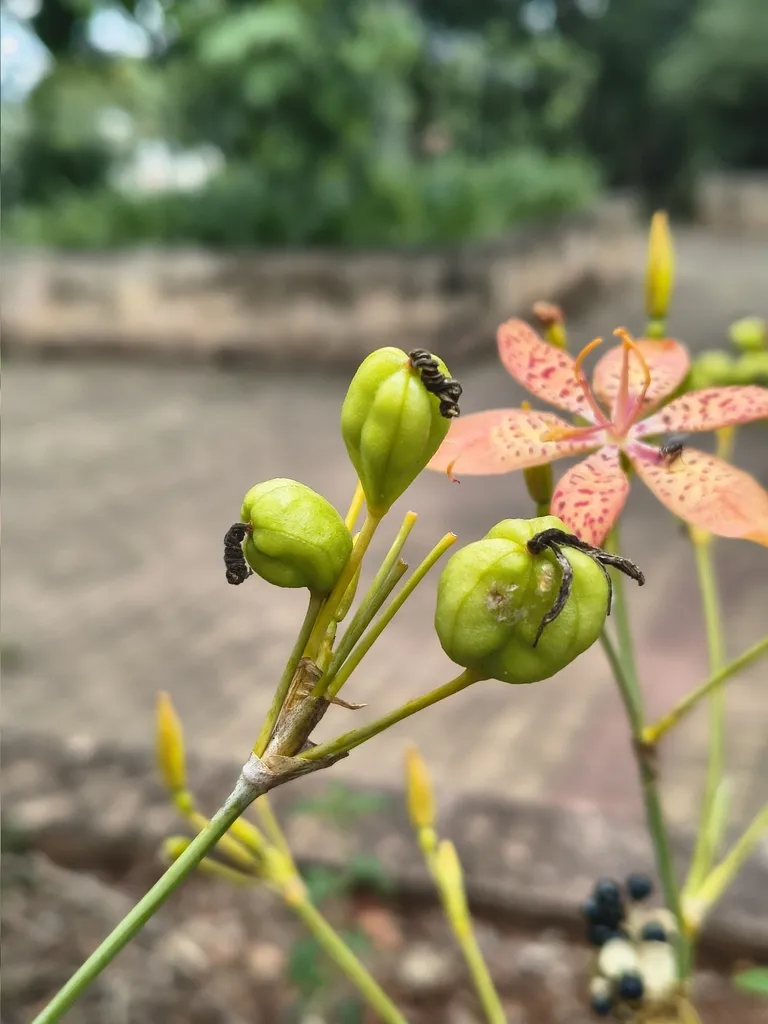
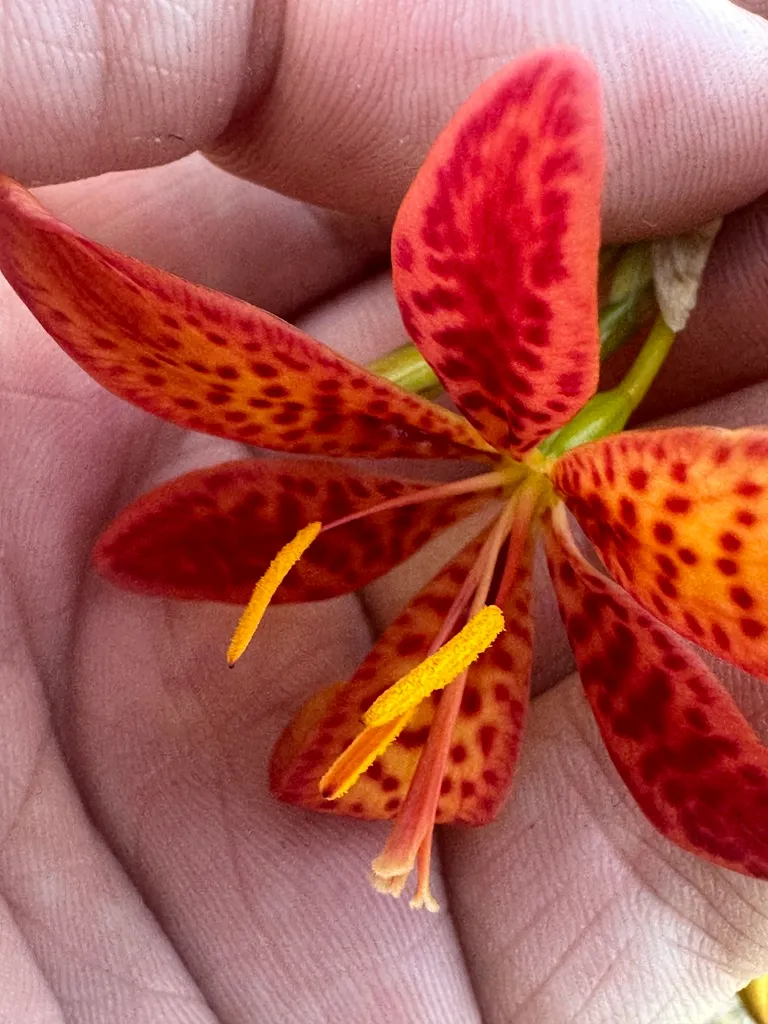
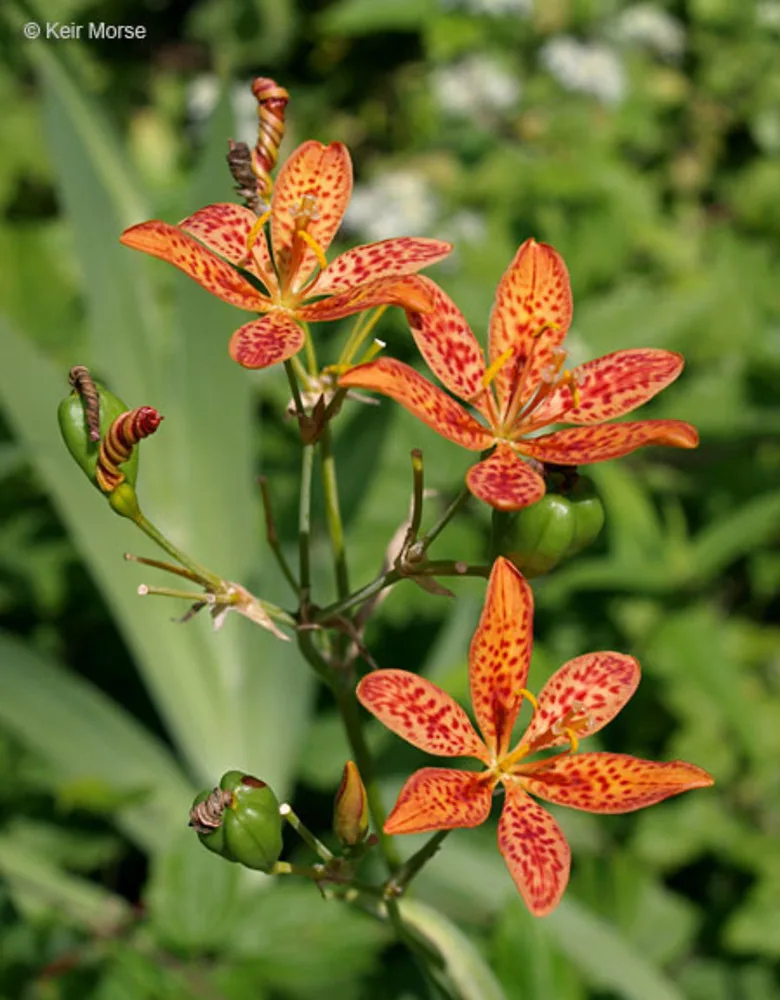
I. domestica has narrow leaves to 20cm long, and yellow of reddish-orange flowers 4cm wide, heavily spotted with deep red, and followed by green seed pods splitting to reveal several conspicuous, glossy black seeds
Scientific classification
- Species
- blackberry lily (Iris domestica)
- Genus
- Iris
- Family
- Iridaceae
- Harmful if eaten. Wear gloves and other protective equipment when handling
- Toxicity
- Herbaceous Perennial
- Plant type
- 0.5-1 metres
- Height
- 0.1-0.5 metres
- Spread
- Deciduous
- Foliage
- Bushy
- Habit
- Spring · Summer · Autumn
- Season of interest
- Full sun · Partial shade
- Sunlight
- Information to be completed
- Ideal temperature









blackberry lily pictures
Distribution of blackberry lily
Distribution map
- Native
- Introduced
- Cultivated
Source:WCVP v16 · Royal Botanic Gardens, Kew · CC BY 3.0 · Boundaries:WGSRPD / TDWG
Culture
Information to be completed
Toxicity
Harmful if eaten. Wear gloves and other protective equipment when handling
Quick identification of blackberry lily
Information to be completed
blackberry lily care guide
- Medium moisture in growth, then drier once flowering fully finishes
- Watering
- Full sun · Partial shade
- Sunlight
- Information to be completed
- Ideal temperature

Watering
Medium moisture in growth, then drier once flowering fully finishes
Fertilizing
 Fertilizing
Diluted iris feed every three to four weeks during spring bloom
Pruning
 Pruning
No pruning required
Propagation
 Propagation
Propagate by seed in a cold frame in spring. Divide in spring
Growing
 Growing
Thrives in a sunny position, in moist but well-drained, ideally neutral to slightly acid soil. Will tolerate some dappled shade, though they flower best in full sun. Mulch in winter
People also ask
Information to be completed
Common pests and diseases
Diseases
May be susceptible to aphid-borne viruses, bacterial soft rot and grey moulds; see Iris diseases
Pests
May be susceptible to slugs, snails and thrips
Explore the plant health library →




