
Brugmansia × cubensis 'Langenbuscher Garten'
Also known as: Information to be completed
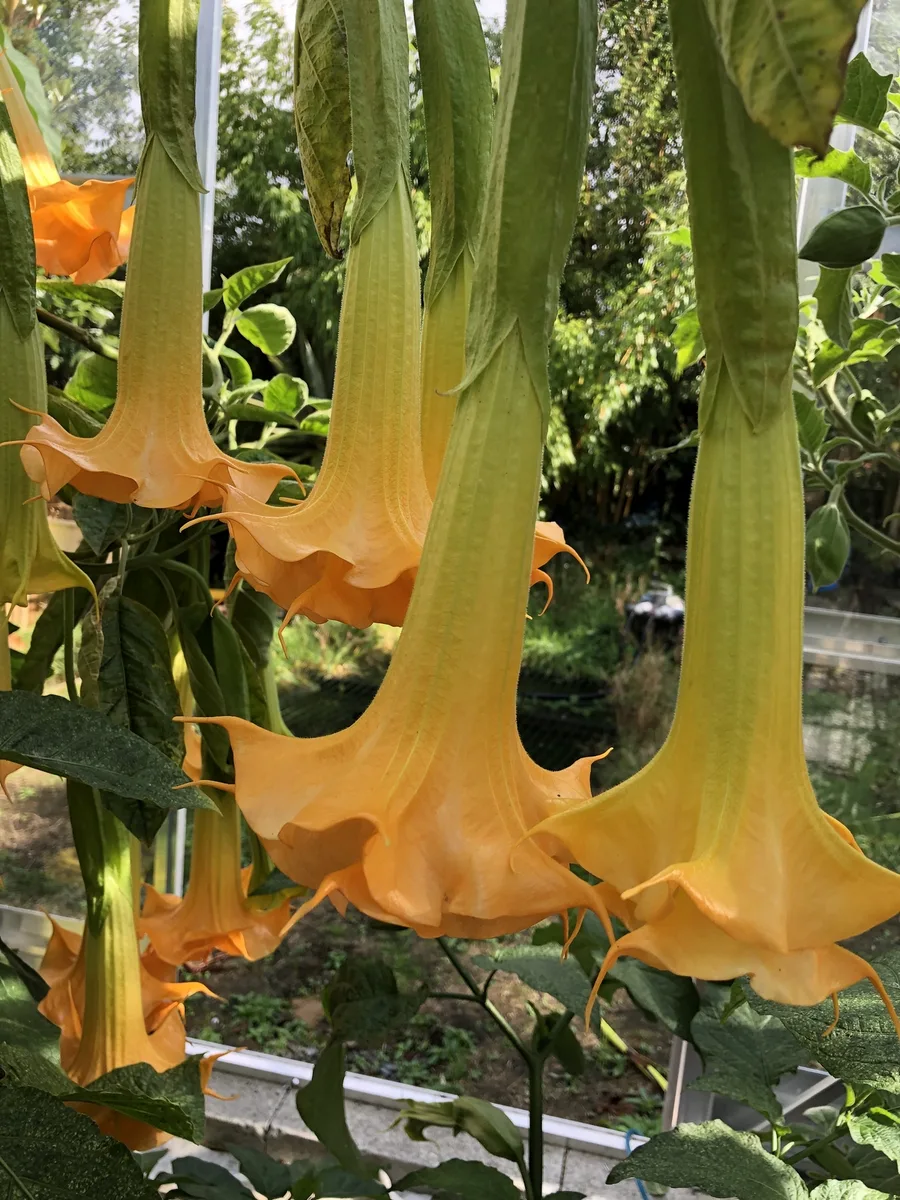
A tender shrub with an open, erect and branched habit. This free-flowering cultivar produces double, trumpet-shaped flowers in spring and autumn. The apricot-coloured flowers are 30cm long and highly fragrant
Scientific classification
- Species
- Brugmansia × cubensis 'Langenbuscher Garten' (Brugmansia × cubensis 'Langenbuscher Garten')
- Genus
- Brugmansia
- Family
- Solanaceae
- Order
- Solanales
- Class
- Magnoliopsida
- Phylum
- Magnoliophyta
- TOXIC if eaten, skin irritant, avoid eye contact. Wear gloves and other protective equipment when handling
- Toxicity
- Conservatory Greenhouse · Shrubs
- Plant type
- 1.5-2.5 metres
- Height
- 1-1.5 metres
- Spread
- Semi evergreen
- Foliage
- Bushy
- Habit
- Spring · Summer · Autumn
- Season of interest
- Full sun · Partial shade
- Sunlight
- Information to be completed
- Ideal temperature









Brugmansia × cubensis 'Langenbuscher Garten' pictures
Toxicity
TOXIC if eaten, skin irritant, avoid eye contact. Wear gloves and other protective equipment when handling
Brugmansia × cubensis 'Langenbuscher Garten' care guide
- Maintain evenly moist soil, reduce watering in cool dormant months
- Watering
- Full sun · Partial shade
- Sunlight

Watering
Maintain evenly moist soil, reduce watering in cool dormant months
Fertilizing
 Fertilizing
Weekly diluted high-potassium feed during active leaf and bloom growth
Pruning
 Pruning
Prune lightly as needed to remove unwanted shoots and keep the shrub in shape. Prune in mid- to late spring.
Propagation
 Propagation
Propagate by semi-ripe cuttings
Growing
 Growing
Under glass, grow in loam-based potting compost in full light. Water freely while in active growth and apply a balanced liquid fertiliser every 2 weeks. Keep barely moist in winter. Maintain a minimum winter temperature of about 5°C; the plants will lose their leaves but these will regrow in spring. Plants may be moved outdoors to a position in light, dappled shade in summer. See brugmansia cultivation for further information
Common pests and diseases
Diseases
Generally disease-free
Pests
May be susceptible to slugs, snails, mealybugs, glasshouse whitefly, thrips and glasshouse red spider mite
Explore the plant health library →




