
Begonia cucullata var. arenosicola
Also known as: Information to be completed
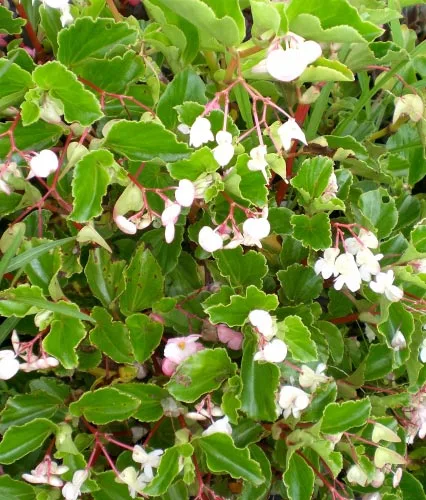
A ender evergreen perennial, up to around 40cm high, with succulent stems and oval to broadly elliptic, glossy green leaves with toothed and often wavy edges. Small clusters of white flowers touched with pink are produced in summer
Scientific classification
- Species
- Begonia cucullata var. arenosicola (Begonia cucullata var. arenosicola)
- Genus
- Begonia
- Family
- Begoniaceae
- Order
- Cucurbitales
- Class
- Magnoliopsida
- Phylum
- Magnoliophyta
- Ornamental bulbs - not to be eaten. Wear gloves and other protective equipment when handling
- Toxicity
- Herbaceous Perennial · Bedding · Conservatory Greenhouse
- Plant type
- Information to be completed
- Height
- Information to be completed
- Spread
- Evergreen
- Foliage
- Bushy
- Habit
- Spring · Summer · Autumn · Winter
- Season of interest
- Partial shade
- Sunlight
- Information to be completed
- Ideal temperature









Begonia cucullata var. arenosicola pictures
Distribution of Begonia cucullata var. arenosicola
Distribution map
- Native
- Introduced
- Cultivated
Source:WCVP v16 · Royal Botanic Gardens, Kew · CC BY 3.0 · Boundaries:WGSRPD / TDWG
Toxicity
Ornamental bulbs - not to be eaten. Wear gloves and other protective equipment when handling
Begonia cucullata var. arenosicola care guide
- Keep compost evenly moist with bright shade and good humidity
- Watering
- Partial shade
- Sunlight

Watering
Keep compost evenly moist with bright shade and good humidity
Fertilizing
 Fertilizing
Weak balanced begonia feed every two to three weeks in growth
Pruning
 Pruning
No pruning required
Propagation
 Propagation
Propagate by seed, by root cuttings, or by leaf cuttings in spring or summer in a propagating case, in partial shade
Growing
 Growing
Thrives in fertile, well-drained soil, ideally in dappled or afternoon shade though will tolerate most positions. Plant out after the last frosts; best grown as bedding or in containers that can be moved indoors over winter. See begonias: outdoors for further information
Common pests and diseases
Diseases
May be susceptible to grey moulds (botrytis), powdery mildews and stem rot
Pests
May be susceptible to caterpillars, mealybugs, mites, thrips, vine weevil and aphids
Explore the plant health library →




