
western red cedar [Goldy]
Also known as: Information to be completed
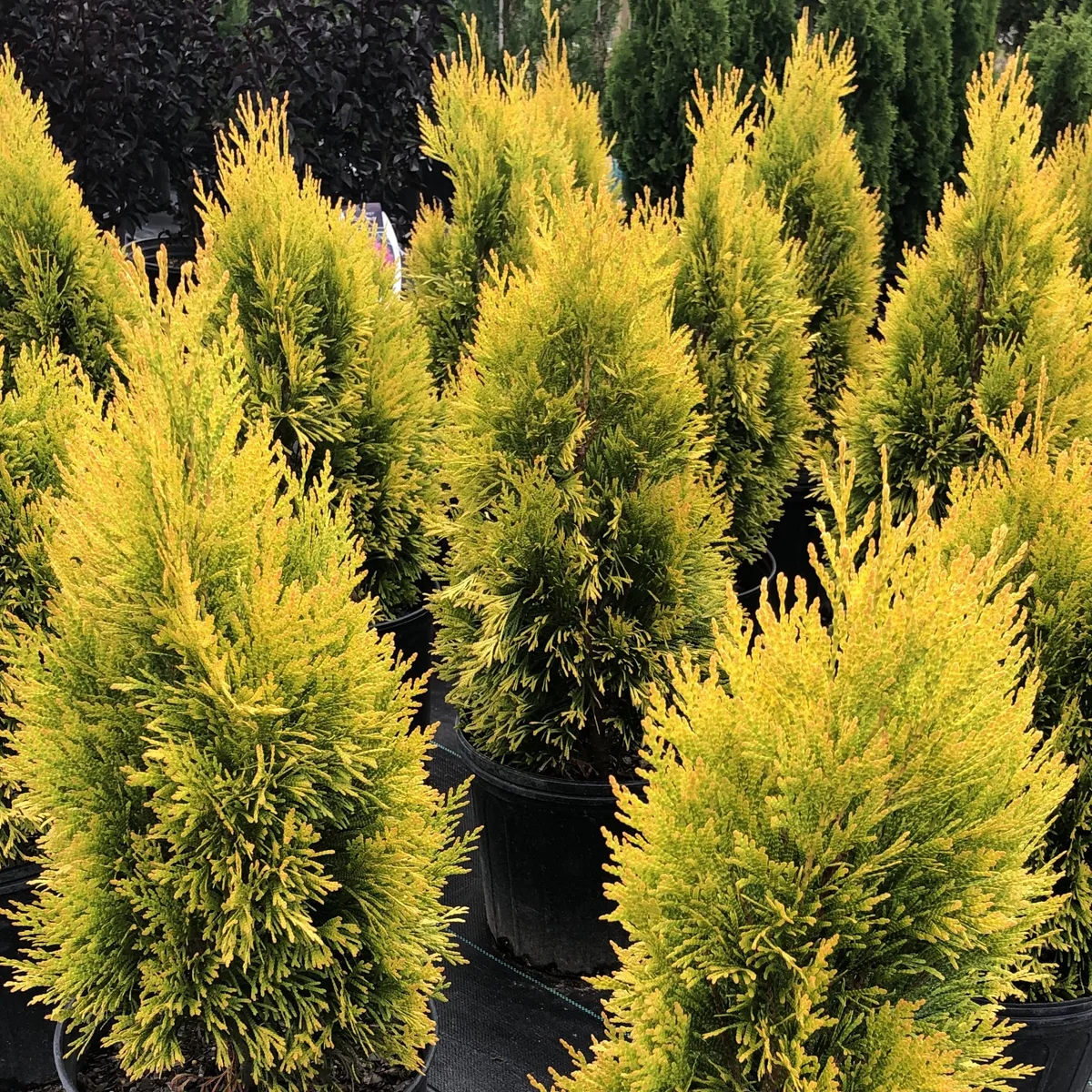
An upright conifer suitable for hedging. Foliage is dark yellow-gold turning a richer gold -orange in autumn
Scientific classification
- Species
- western red cedar [Goldy] (Thuja plicata Goldy ('4ever'))
- Genus
- Thuja
- Family
- Cupressaceae
- Order
- Cupressales
- Class
- Pinopsida
- Phylum
- Pinophyta
- Harmful if eaten, skin allergen. Wear gloves and other protective equipment when handling]
- Toxicity
- Conifers
- Plant type
- 4-8 metres
- Height
- 1.5-2.5 metres
- Spread
- Evergreen
- Foliage
- Columnar upright
- Habit
- Autumn · Spring · Summer · Winter
- Season of interest
- Full sun · Partial shade
- Sunlight
- Information to be completed
- Ideal temperature









western red cedar [Goldy] pictures
Toxicity
Harmful if eaten, skin allergen. Wear gloves and other protective equipment when handling]
western red cedar [Goldy] care guide
- Deep occasional watering with excellent drainage, less once established
- Watering
- Full sun · Partial shade
- Sunlight

Watering
Deep occasional watering with excellent drainage, less once established
Fertilizing
 Fertilizing
Light conifer feed once yearly in early spring only
Pruning
 Pruning
Prune hedge by trimming if necessary in spring and then again in summer to maintain a good shape
Propagation
 Propagation
Propagate by semi-ripe cuttings in late summer
Growing
 Growing
Grow in moist, well drained soil in full sun or semi-shade
Common pests and diseases
Diseases
May be susceptible to honey fungus and other fungal diseases, particularly thuja blight and Coryneum canker (see conifers: brown patches)
Pests
May be susceptible to scale insects and aphids
Explore the plant health library →




