
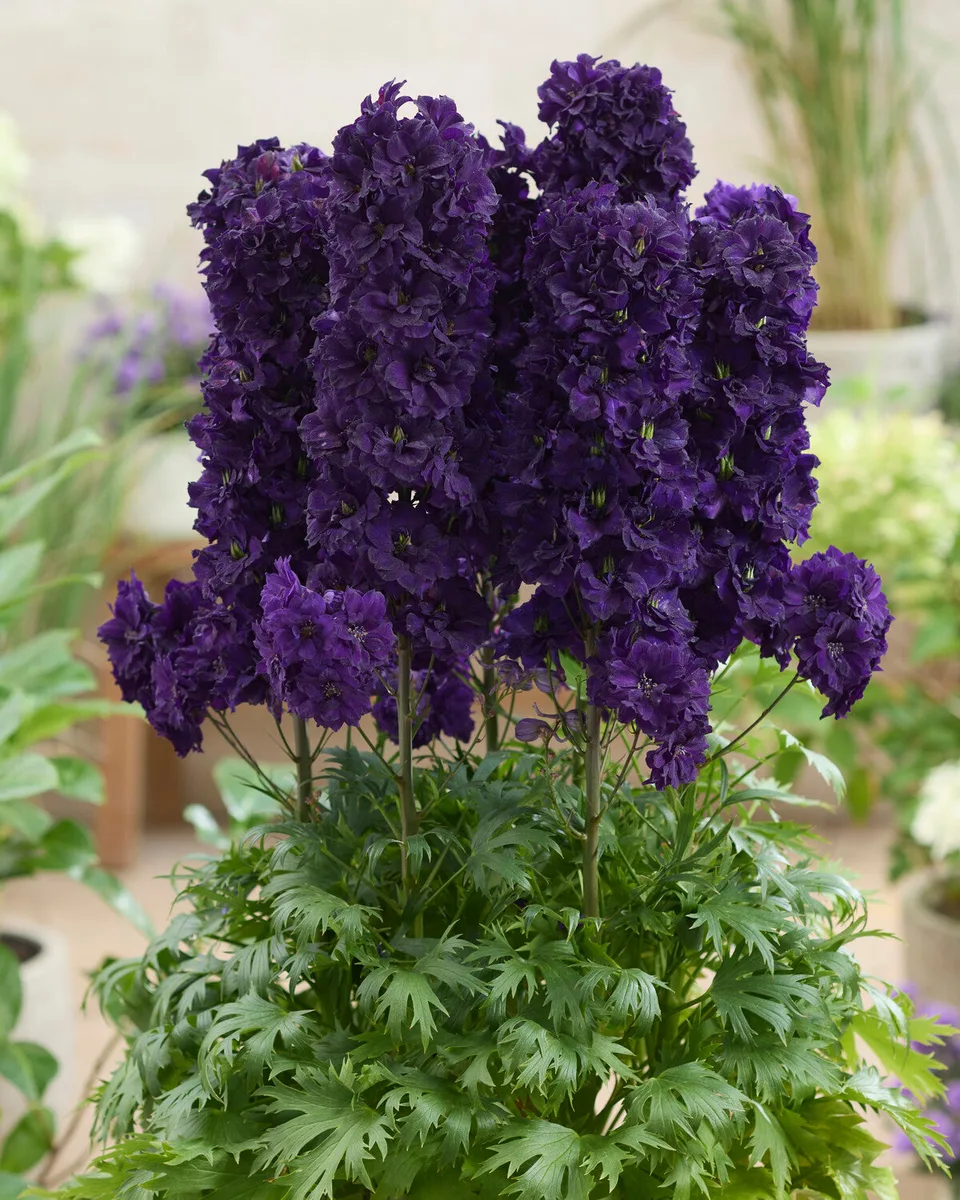
delphinium 'Black Velvet'
Also known as: Information to be completed
An upright herbaceous perennial with a mound of deeply-cut foliage. In summer, densely-packed spires of semi-double, dark purple-blue flowers are held above the foliage
Scientific classification
- Species
- delphinium 'Black Velvet' (Delphinium 'Black Velvet')
- Genus
- Delphinium
- Family
- Ranunculaceae
- Order
- Ranunculales
- Class
- Magnoliopsida
- Phylum
- Magnoliophyta
- Harmful if eaten. Wear gloves and other protective equipment when handling
- Toxicity
- Herbaceous Perennial
- Plant type
- 1-1.5 metres
- Height
- 0.1-0.5 metres
- Spread
- Deciduous
- Foliage
- Columnar upright
- Habit
- Spring · Summer
- Season of interest
- Full sun
- Sunlight
- Information to be completed
- Ideal temperature









delphinium 'Black Velvet' pictures
Toxicity
Harmful if eaten. Wear gloves and other protective equipment when handling
delphinium 'Black Velvet' care guide
- Moderate regular watering, avoid prolonged drought or waterlogging
- Watering
- Full sun
- Sunlight

Watering
Moderate regular watering, avoid prolonged drought or waterlogging
Fertilizing
 Fertilizing
Balanced feed in spring and light repeat in growth season
Pruning
 Pruning
Deadhead spent flower spikes. After flowering, cut down all growth to ground level. If fed and watered well, a second flush of flowers may be produced in autumn
Propagation
 Propagation
Propagate by taking pencil thick basal cuttings in early spring
Growing
 Growing
Grow in a fertile, well-drained soil in full sun; shelter from strong winds and stake well. Apply a balanced liquid every couple of weeks in the growing season. For best flower spikes thin shoots when 7cm high to leave a minimum of 2-3 shoots on young plants and 5-7 shoots on established plants. See staking: perennials and delphinium cultivation for further advice
Common pests and diseases
Diseases
May be susceptible to powdery mildews, delphinium black blotch, crown rot and viruses
Pests
May be susceptible to aphids, earwigs, delphinium leaf miner, delphinium moth caterpillars, slugs, snails and caterpillars
Explore the plant health library →




