
bellflower 'Pink Octopus'
Also known as: Information to be completed
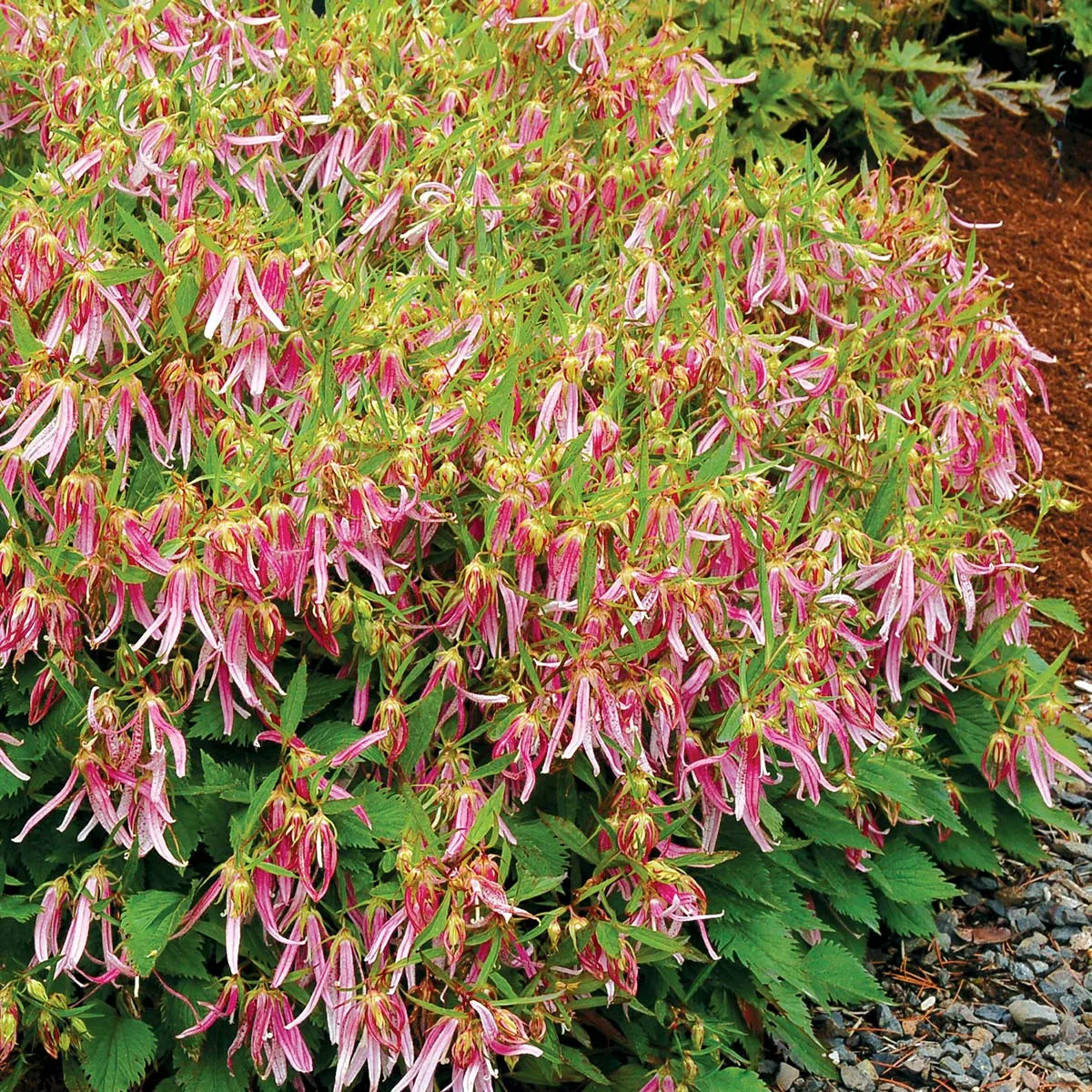
A striking cultivar related to C. punctata. The nodding, Japanese lantern shaped buds open not in a bell, but as thin spidery petals, sometimes slightly twisted, soft pink with red dots
Scientific classification
- Species
- bellflower 'Pink Octopus' (Campanula 'Pink Octopus')
- Genus
- Campanula
- Family
- Campanulaceae
- Information to be completed
- Toxicity
- Herbaceous Perennial
- Plant type
- 0.1-0.5 metres
- Height
- 0.5-1 metres
- Spread
- Semi evergreen
- Foliage
- Bushy · Suckering
- Habit
- Spring · Summer · Autumn · Winter
- Season of interest
- Full sun · Partial shade
- Sunlight
- Information to be completed
- Ideal temperature









bellflower 'Pink Octopus' pictures
Distribution of bellflower 'Pink Octopus'
Distribution map
Information to be completed
Information to be completed
Culture
Information to be completed
Toxicity
Information to be completed
Quick identification of bellflower 'Pink Octopus'
Information to be completed
bellflower 'Pink Octopus' care guide
- Moderate regular watering, avoid prolonged drought and stagnant waterlogging
- Watering
- Full sun · Partial shade
- Sunlight
- Information to be completed
- Ideal temperature

Watering
Moderate regular watering, avoid prolonged drought and stagnant waterlogging
Fertilizing
 Fertilizing
Balanced perennial feed every four weeks spring through summer growth
Pruning
 Pruning
Cut back after flowering to encourage a second flush of flowers
Propagation
 Propagation
Propagate by division in spring or autumn or take basal cuttings in winter
Growing
 Growing
Best grown in fertile, neutral to alkaline soil that is moist but well-drained, in partial shade or sun. No need to stake
People also ask
Information to be completed
Common pests and diseases
Diseases
May be infected by a rust, powdery mildews and a leaf spot
Pests
Damaged by slugs, snails and aphids
Explore the plant health library →




