
Ensete ventricosum 'Hiniba'
Also known as: Information to be completed
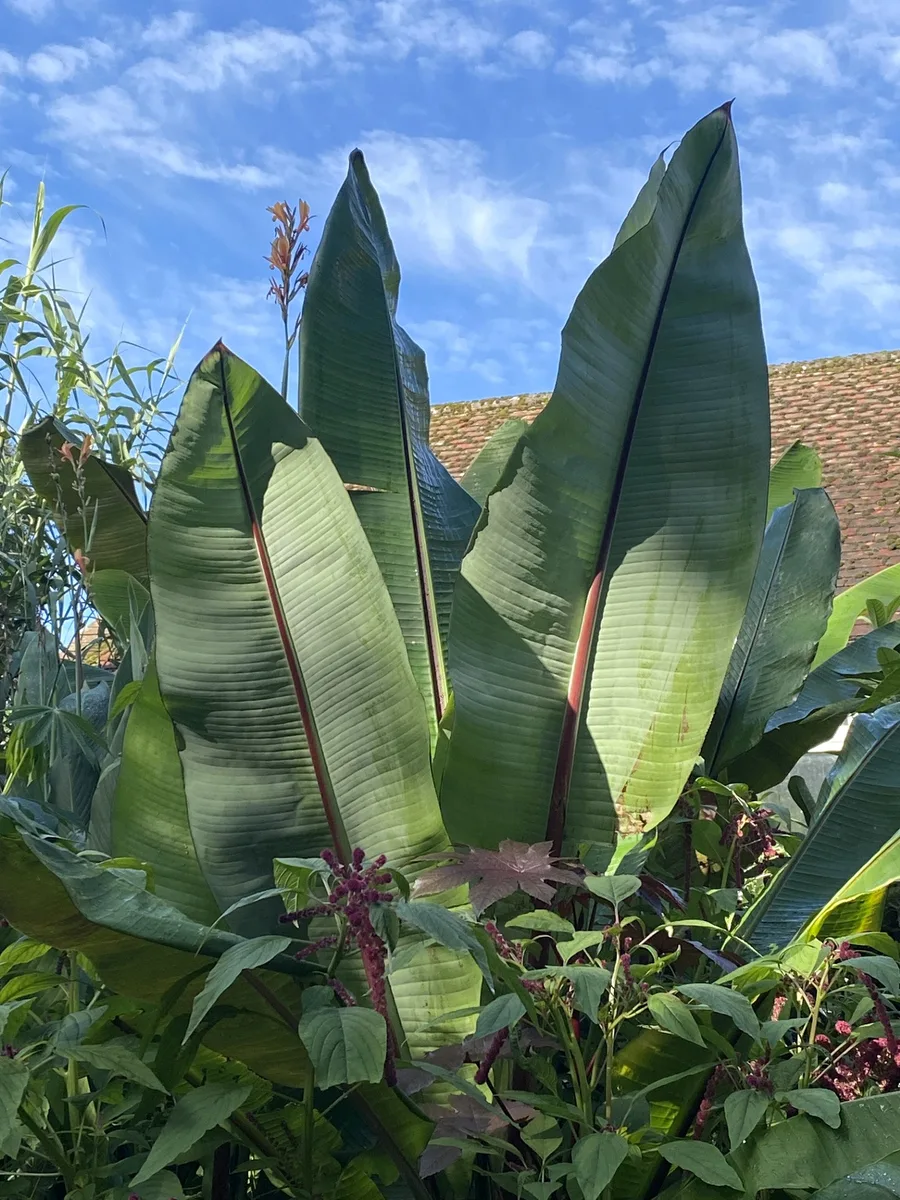
An upright, fast-growing, banana-like perennial, about 4m tall, with huge, paddle shaped, slightly glaucous-tinged, bright olive-green leaves, and thick midribs, bright red beneath. Ideal for a tropical garden but requires the protection of a warm greenhouse or conservatory in winter
Scientific classification
- Species
- Ensete ventricosum 'Hiniba' (Ensete ventricosum 'Hiniba')
- Genus
- Ensete
- Family
- Musaceae
- Order
- Zingiberales
- Class
- Liliopsida
- Phylum
- Magnoliophyta
- Information to be completed
- Toxicity
- Herbaceous Perennial · Conservatory Greenhouse
- Plant type
- Information to be completed
- Height
- Information to be completed
- Spread
- Evergreen
- Foliage
- Information to be completed
- Habit
- Spring · Summer · Autumn · Winter
- Season of interest
- Full sun · Partial shade
- Sunlight
- Information to be completed
- Ideal temperature









Ensete ventricosum 'Hiniba' pictures
Distribution of Ensete ventricosum 'Hiniba'
Distribution map
- Native
- Introduced
- Cultivated
Source:WCVP v16 · Royal Botanic Gardens, Kew · CC BY 3.0 · Boundaries:WGSRPD / TDWG
Ensete ventricosum 'Hiniba' care guide
- Moderate regular watering, allowing brief slight drying between soakings
- Watering
- Full sun · Partial shade
- Sunlight

Watering
Moderate regular watering, allowing brief slight drying between soakings
Fertilizing
 Fertilizing
Balanced perennial feed every four weeks from spring through summer
Pruning
 Pruning
No pruning required, but cut dead leaves no lower than the base of each leaf
Propagation
 Propagation
Propagate by sowing seed at 21°C in spring; germination may be erratic
Growing
 Growing
Grow outdoors in a frost-free area in humus-rich soil in full sun or partial shade. Under glass grow in loam-based compost with shade from hot sun. Water freely and apply a balanced liquid feed every two weeks in the growing season. See banana cultivation for further information
Common pests and diseases
Diseases
Generally disease-free
Pests
May be susceptible to glasshouse red spider mite, aphids and mealybugs
Explore the plant health library →




