
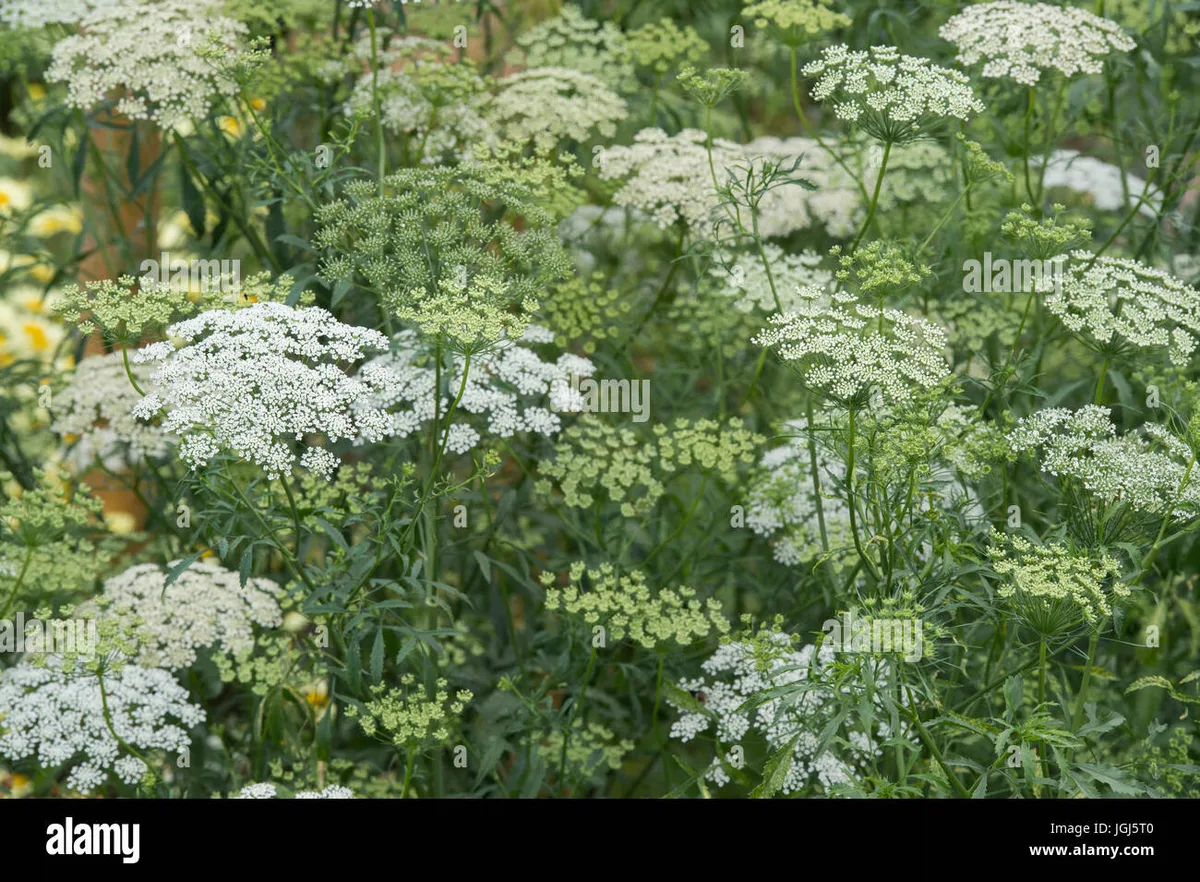
false bishop's weed 'Graceland'
Also known as: Information to be completed
An annual or biennial plant that typically flowers in June-July; with successional sowing, later flowering can be achieved
Scientific classification
- Species
- false bishop's weed 'Graceland' (Ammi majus 'Graceland')
- Genus
- Ammi
- Family
- Apiaceae
- Order
- Apiales
- Class
- Magnoliopsida
- Phylum
- Magnoliophyta
- Information to be completed
- Toxicity
- Annual Biennial
- Plant type
- 1-1.5 metres
- Height
- 0.1-0.5 metres
- Spread
- Deciduous
- Foliage
- Columnar upright
- Habit
- Spring · Summer
- Season of interest
- Full sun · Partial shade
- Sunlight
- Information to be completed
- Ideal temperature









false bishop's weed 'Graceland' pictures
false bishop's weed 'Graceland' care guide
- Moderate regular watering, avoid prolonged drought and stagnant waterlogging
- Watering
- Full sun · Partial shade
- Sunlight

Watering
Moderate regular watering, avoid prolonged drought and stagnant waterlogging
Fertilizing
 Fertilizing
Balanced perennial feed every four weeks spring through summer growth
Pruning
 Pruning
Cut back after flowering
Propagation
 Propagation
Propagate by seed sown in situ in spring
Growing
 Growing
Grow in any well-drained soil in full sun or partial shade, provide support when seedlings reach 7-10cm (3-4in) high. A good plant for pollinating insects
Common pests and diseases
Diseases
Generally disease free
Pests
Generally pest-free
Explore the plant health library →




