
cherry 'Mikuruma-gaeshi'
Also known as: Information to be completed
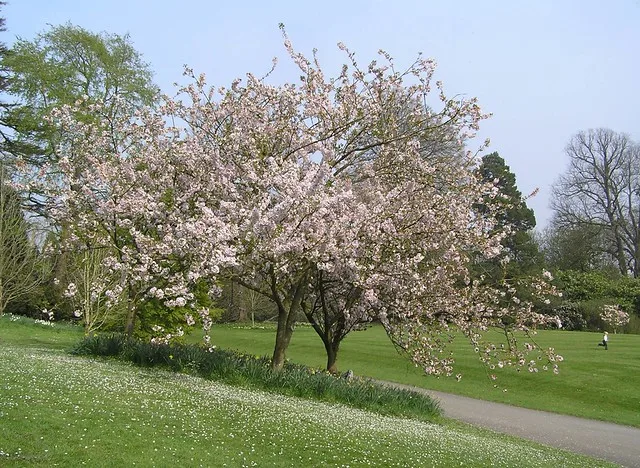
A small, deciduous tree with upright branches with an open habit, producing young bronze green foliage in the spring which changes to dark green in summer then red copper with yellow markings in the autumn. Single pale pink flowers are densely packed and appear in the spring. The name means 'Royal Carriage' in Japanese
Scientific classification
- Species
- cherry 'Mikuruma-gaeshi' (Prunus 'Mikuruma-gaeshi')
- Genus
- Prunus
- Family
- Rosaceae
- Order
- Rosales
- Class
- Magnoliopsida
- Phylum
- Magnoliophyta
- Information to be completed
- Toxicity
- Trees
- Plant type
- 4-8 metres
- Height
- 4-8 metres
- Spread
- Deciduous
- Foliage
- Columnar upright
- Habit
- Autumn · Spring · Summer
- Season of interest
- Full sun
- Sunlight
- Information to be completed
- Ideal temperature









cherry 'Mikuruma-gaeshi' pictures
cherry 'Mikuruma-gaeshi' care guide
- Deep watering during dry spells, let surface soil partly dry between sessions
- Watering
- Full sun
- Sunlight

Watering
Deep watering during dry spells, let surface soil partly dry between sessions
Fertilizing
 Fertilizing
Balanced tree feed applied once every early spring growth cycle
Pruning
 Pruning
Little pruning is needed. Remove diseased, damaged, crowded or crossing shoots and unwanted growth. If silver leaf disease is a concern, prune in midsummer.
Propagation
 Propagation
Propagate by chip budding or grafting, although softwood cuttings in early summer with bottom heat can be successful
Growing
 Growing
Grow in moderately fertile soil in full sun
Common pests and diseases
Diseases
May be susceptible to bacterial canker, blossom wilt and silver leaf. This variety may also be susceptible to brown rot
Pests
May be susceptible to cherry blackfly and other aphids, leaf-mining moths and caterpillars
Explore the plant health library →




