
cosmea 'Antiquity'
Also known as: Information to be completed
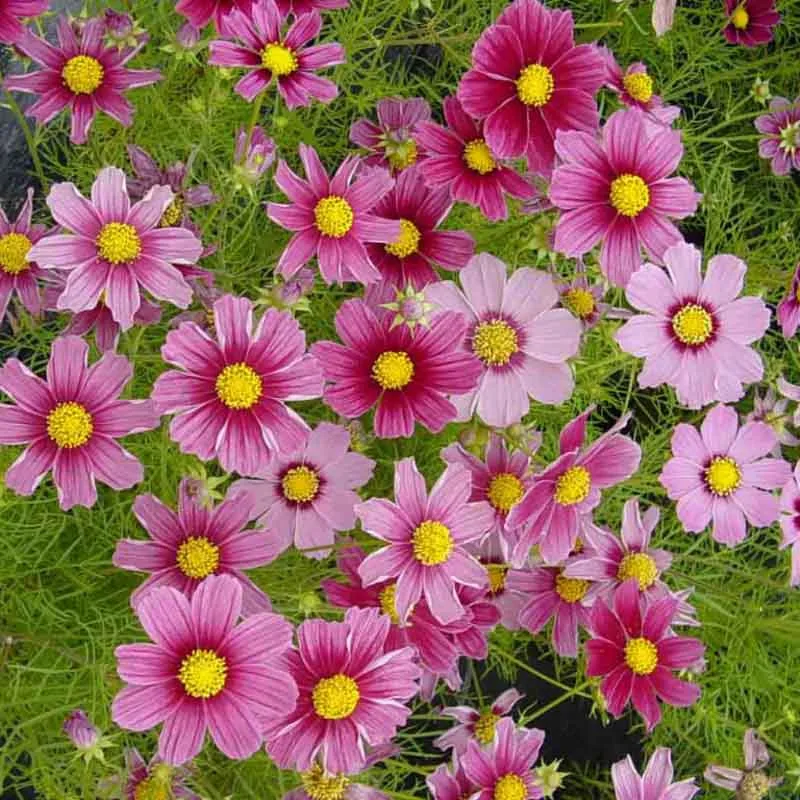
An upright, bushy annual to 60cm in height with finely-divided, bright green leaves from summer to autumn. During summer short, upright stems bear daisy-like, crimson to burgundy flowers fading to reddish-pink with age
Scientific classification
- Species
- cosmea 'Antiquity' (Cosmos bipinnatus 'Antiquity')
- Genus
- Cosmos
- Family
- Asteraceae
- Order
- Asterales
- Class
- Magnoliopsida
- Phylum
- Tracheophyta
- Information to be completed
- Toxicity
- Annual Biennial
- Plant type
- 0.5-1 metres
- Height
- 0.5-1 metres
- Spread
- Deciduous
- Foliage
- Columnar upright
- Habit
- Summer · Autumn
- Season of interest
- Full sun
- Sunlight
- Information to be completed
- Ideal temperature









cosmea 'Antiquity' pictures
Distribution of cosmea 'Antiquity'
Distribution map
- Native
- Introduced
- Cultivated
Source:WCVP v16 · Royal Botanic Gardens, Kew · CC BY 3.0 · Boundaries:WGSRPD / TDWG
cosmea 'Antiquity' care guide
- Keep compost lightly moist, never fully drying out while blooming
- Watering
- Full sun
- Sunlight

Watering
Keep compost lightly moist, never fully drying out while blooming
Fertilizing
 Fertilizing
Weak flowering feed every two to three weeks in active bloom
Pruning
 Pruning
Deadhead to prolong the flowering season
Propagation
 Propagation
See sowing seeds indoors
Growing
 Growing
Grow in moderately fertile, moist but well-drained soil in full sun. Deadhead flowers to prologue flowering season. Leave a few seedheads to ripen to selfseed if required. A relatively compact grower so most likely will not need staking
Common pests and diseases
Diseases
May be susceptible to grey moulds
Pests
Aphids and slugs may be troublesome
Explore the plant health library →




