
iris 'Pink Panther'
Also known as: Information to be completed
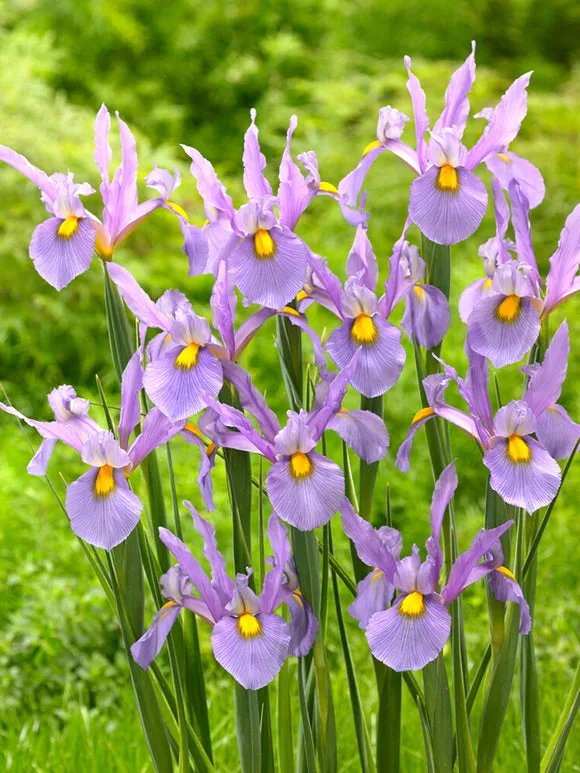
A compact perennial, to around 35cm high, with sword-shaped, grey-green leaves. Flowers have ruffled, pale peachy pink standards, and paler falls with tan veining and a light blue beard
Scientific classification
- Species
- iris 'Pink Panther' (Iris 'Pink Panther')
- Genus
- Iris
- Family
- Iridaceae
- Harmful if eaten. Wear gloves and other protective equipment when handling
- Toxicity
- Herbaceous Perennial
- Plant type
- 0.1-0.5 metres
- Height
- 0.1-0.5 metres
- Spread
- Deciduous
- Foliage
- Clump forming
- Habit
- Spring · Summer
- Season of interest
- Full sun
- Sunlight
- Information to be completed
- Ideal temperature









iris 'Pink Panther' pictures
Distribution of iris 'Pink Panther'
Distribution map
Information to be completed
Information to be completed
Culture
Information to be completed
Toxicity
Harmful if eaten. Wear gloves and other protective equipment when handling
Quick identification of iris 'Pink Panther'
Information to be completed
iris 'Pink Panther' care guide
- Medium moisture growing period, drier soil once flowering cycle fully finishes
- Watering
- Full sun
- Sunlight
- Information to be completed
- Ideal temperature

Watering
Medium moisture growing period, drier soil once flowering cycle fully finishes
Fertilizing
 Fertilizing
Diluted iris bulb feed every three to four weeks spring blooming season
Pruning
 Pruning
Remove spent flower stems in summer, and any dying foliage in autumn
Propagation
 Propagation
Propagate by division, see dividing irises for more detailed advice
Growing
 Growing
Grow in well-drained, fertile, neutral to slightly acid soil in full sun. See bearded iris cultivation for more detailed advice
People also ask
Information to be completed
Common pests and diseases
Diseases
May be susceptible to aphid-borne viruses, bacterial soft rot and grey moulds; see Iris diseases
Pests
May be susceptible to aphids, slugs, snails and thrips
Explore the plant health library →




