
Phlox paniculata 'Herbstwalzer'
Also known as: Information to be completed
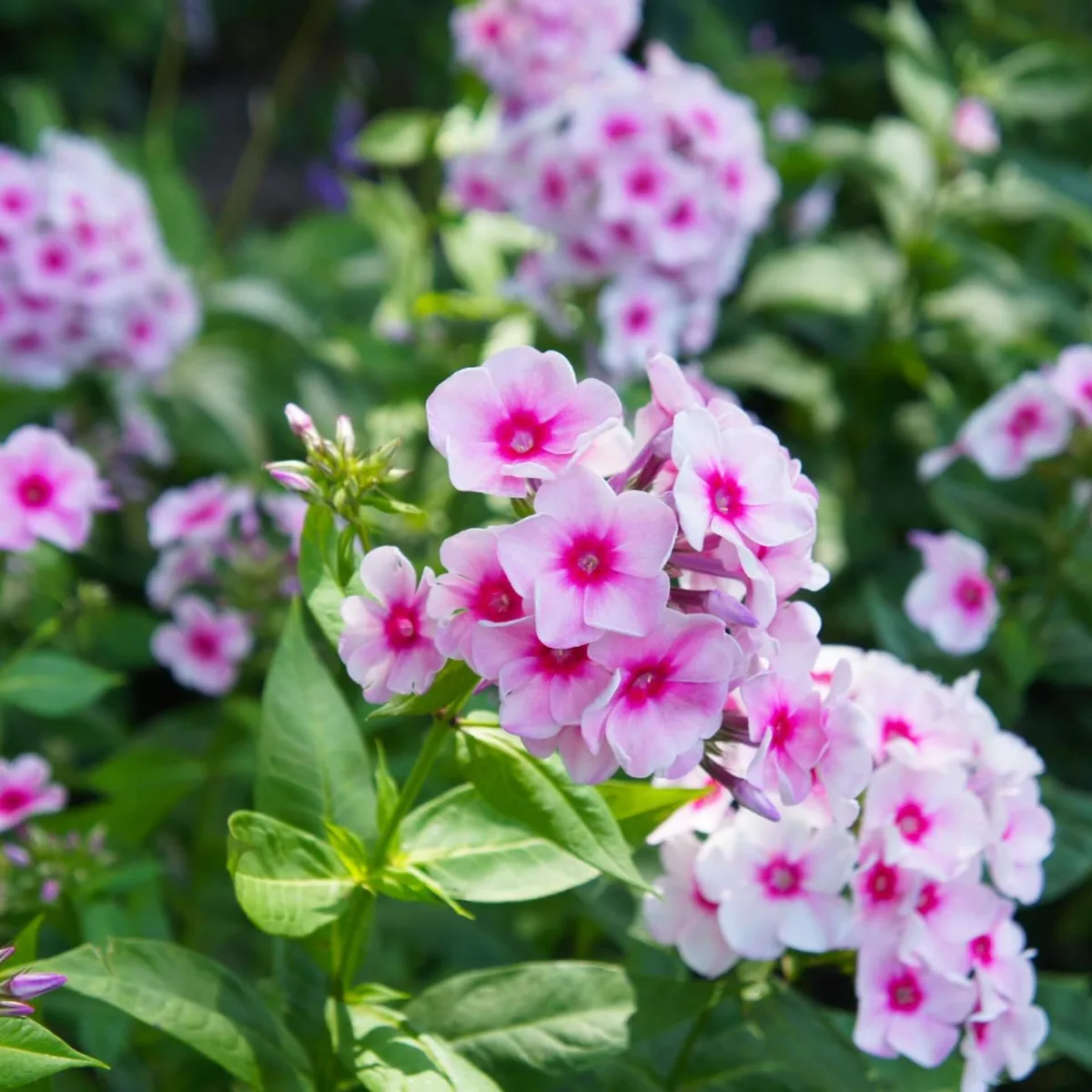
An upright perennial, to around 1m high, with thin, lance-shaped dark green leaves. Late flowering, producing rounded clusters of fragrant pink flowers with dark pink eyes, from late summer into early autumn
Scientific classification
- Species
- Phlox paniculata 'Herbstwalzer' (Phlox paniculata 'Herbstwalzer')
- Genus
- Phlox
- Family
- Polemoniaceae
- Information to be completed
- Toxicity
- Herbaceous Perennial
- Plant type
- 0.5-1 metres
- Height
- 0.5-1 metres
- Spread
- Deciduous
- Foliage
- Bushy · Columnar upright
- Habit
- Spring · Summer · Autumn
- Season of interest
- Full sun · Partial shade
- Sunlight
- Information to be completed
- Ideal temperature









Phlox paniculata 'Herbstwalzer' pictures
Distribution of Phlox paniculata 'Herbstwalzer'
Distribution map
Information to be completed
Information to be completed
Culture
Information to be completed
Toxicity
Information to be completed
Quick identification of Phlox paniculata 'Herbstwalzer'
Information to be completed
Phlox paniculata 'Herbstwalzer' care guide
- Consistently moist potting soil, slight dryness tolerated in hot weather
- Watering
- Full sun · Partial shade
- Sunlight
- Information to be completed
- Ideal temperature

Watering
Consistently moist potting soil, slight dryness tolerated in hot weather
Fertilizing
 Fertilizing
Balanced phlox perennial feed every three weeks spring to autumn
Pruning
 Pruning
Deadhead to prolong flowering then cut down to the base in late autumn
Propagation
 Propagation
Propagate by division in autumn or spring, by basal softwood cuttings in spring or by root cuttings in early autumn or winter
Growing
 Growing
Thrives in any fertile, humus rich, moist soil in full sun or part shade. Plants will benefit from good air circulation and from watering in extended dry spells. Water at the base if necessary, rather than over the leaves
People also ask
Information to be completed
Common pests and diseases
Diseases
May be susceptible to powdery mildews and leaf spot
Pests
May be susceptible to stem and bulb eelworm
Explore the plant health library →




