
Siberian iris 'Reprise'
Also known as: Information to be completed
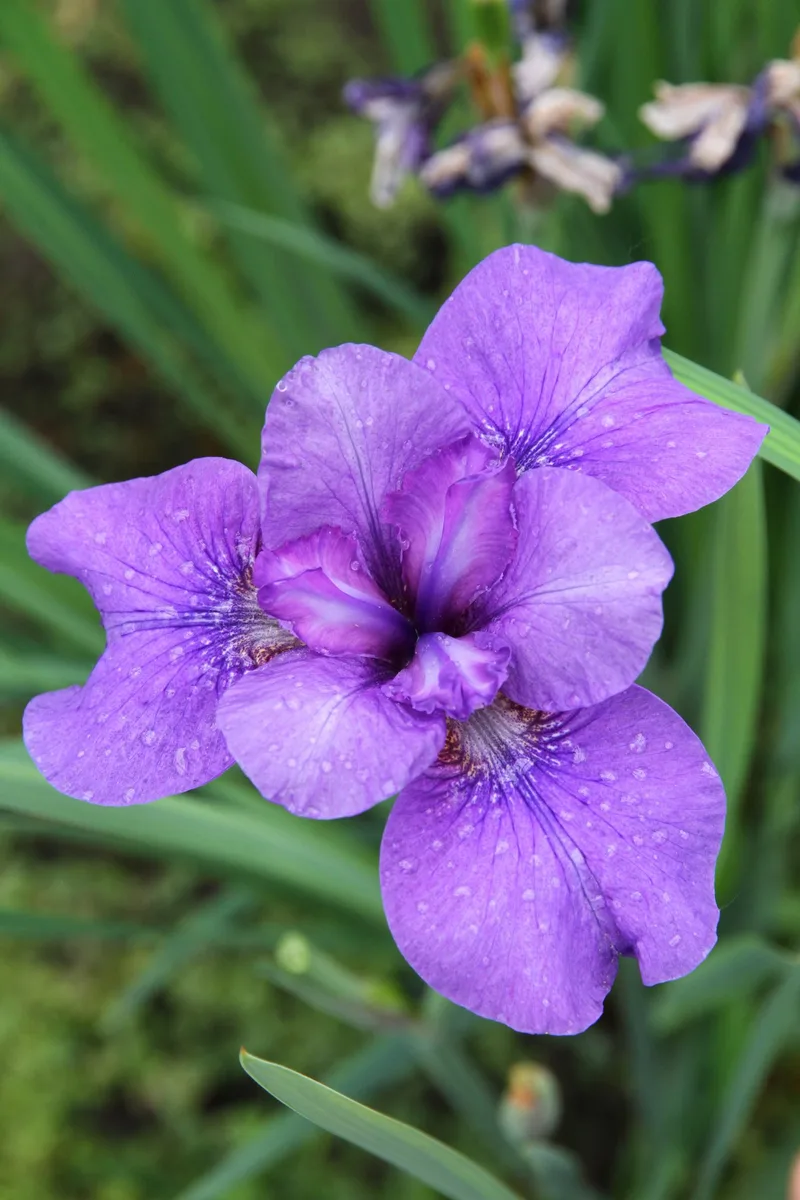
Reprise' is an herbaceous perennial to 80cm in height, with narrow foliage and up to 5 reddish-violet flowers, the falls darker, veined violet on white at the base
Scientific classification
- Species
- Siberian iris 'Reprise' (Iris 'Reprise')
- Genus
- Iris
- Family
- Iridaceae
- Harmful if eaten. Wear gloves and other protective equipment when handling
- Toxicity
- Herbaceous Perennial
- Plant type
- 0.5-1 metres
- Height
- 0.1-0.5 metres
- Spread
- Deciduous
- Foliage
- Clump forming
- Habit
- Spring · Summer
- Season of interest
- Full sun · Partial shade
- Sunlight
- Information to be completed
- Ideal temperature









Siberian iris 'Reprise' pictures
Distribution of Siberian iris 'Reprise'
Distribution map
Information to be completed
Information to be completed
Culture
Information to be completed
Toxicity
Harmful if eaten. Wear gloves and other protective equipment when handling
Quick identification of Siberian iris 'Reprise'
Information to be completed
Siberian iris 'Reprise' care guide
- Water moderately, keep rhizome zone damp without standing water buildup
- Watering
- Full sun · Partial shade
- Sunlight
- Information to be completed
- Ideal temperature

Watering
Water moderately, keep rhizome zone damp without standing water buildup
Fertilizing
 Fertilizing
Bulb and iris feed biweekly before bloom and post flowering finish
Pruning
 Pruning
Remove any dying foliage in autumn, old flower stems can be cut down after flowering
Propagation
 Propagation
Propagate by division of rhizomes from midsummer to early autumn
Growing
 Growing
Grow in any good garden soil that is preferably moist but not waterlogged. In drier soils, dig in well-rotted organic matter before planting then apply as a mulch each spring
People also ask
Information to be completed
Common pests and diseases
Diseases
May be susceptible to aphid-borne viruses, bacterial soft rot and grey moulds; see Iris diseases
Pests
May be susceptible to slugs, snails and thrips
Explore the plant health library →




