
Swedish ivy 'Barberton'
Also known as: Information to be completed
A mat-forming, trailing variety with green, waxy, heart-shaped serrated leaves with pinky-red undersides.
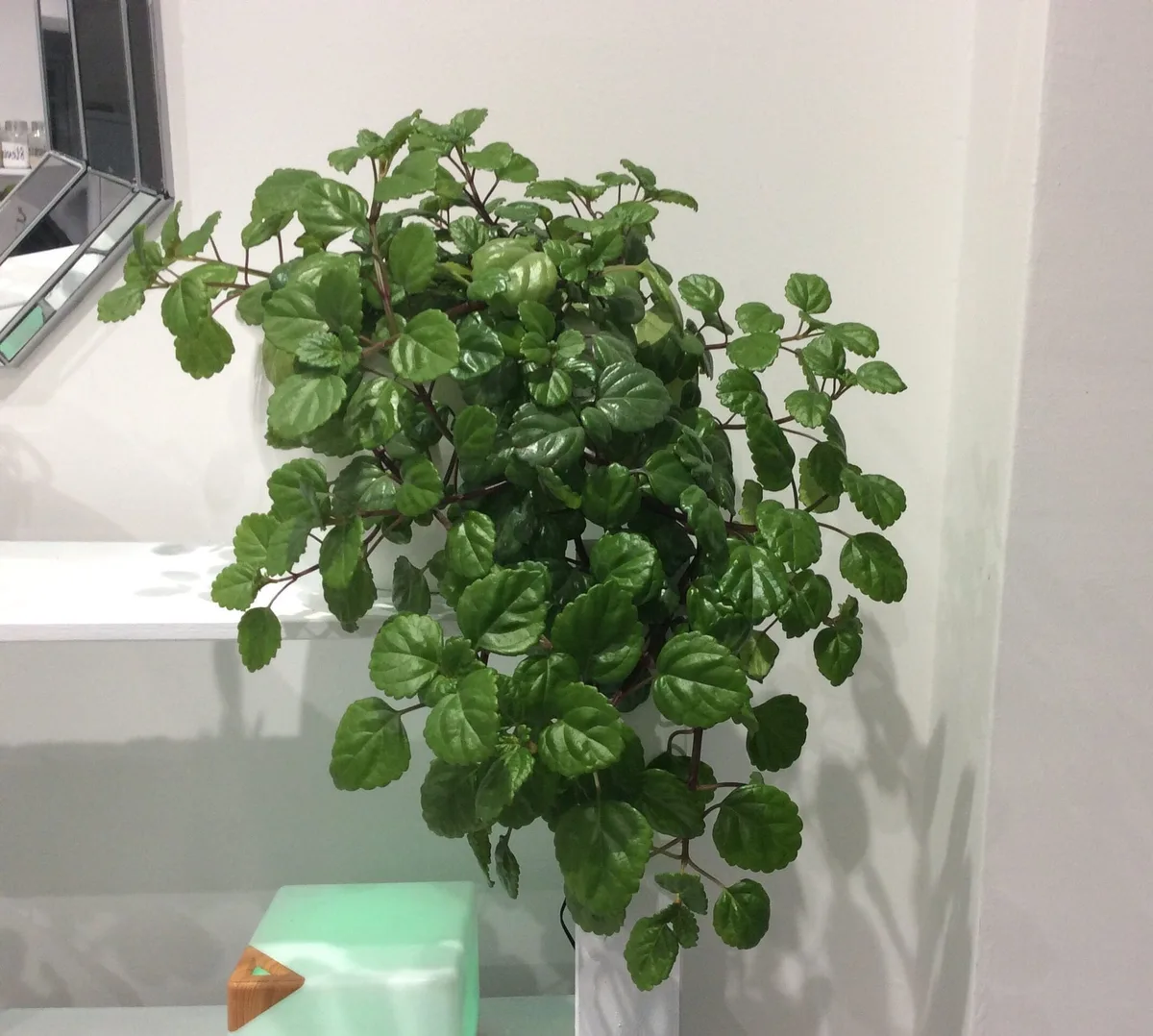
Scientific classification
- Species
- Swedish ivy 'Barberton' (Plectranthus verticillatus 'Barberton')
- Genus
- Plectranthus
- Family
- Lamiaceae
- Order
- Lamiales
- Class
- Magnoliopsida
- Phylum
- Magnoliophyta
- Information to be completed
- Toxicity
- Herbaceous Perennial · Bedding · Houseplants
- Plant type
- Up to 10 cm
- Height
- 0.5-1 metres
- Spread
- Evergreen
- Foliage
- Matforming · Trailing
- Habit
- Spring · Summer · Autumn · Winter
- Season of interest
- Partial shade
- Sunlight
- Information to be completed
- Ideal temperature









Swedish ivy 'Barberton' pictures
Distribution of Swedish ivy 'Barberton'
Distribution map
- Native
- Introduced
- Cultivated
Source:WCVP v16 · Royal Botanic Gardens, Kew · CC BY 3.0 · Boundaries:WGSRPD / TDWG
Swedish ivy 'Barberton' care guide
- Evenly moist potting mix, cut watering during cold winter months
- Watering
- Partial shade
- Sunlight

Watering
Evenly moist potting mix, cut watering during cold winter months
Fertilizing
 Fertilizing
Mild general foliage feed every four weeks spring to autumn
Pruning
 Pruning
Prune young plants to create bushy growth
Propagation
 Propagation
Propagate by seed at 19-24°C (19-24°F) when ripe or propagate by stem-tip cuttings at any time of year (see softwood cuttings)
Growing
 Growing
Best grown in a well-drained soil in partial shade, used as foliage plant either in beds or in a container. Can be grown under glass but shade from hot sun
Common pests and diseases
Diseases
Generally disease-free
Pests
Generally pest-free
Explore the plant health library →




