
begonia 'Morning Dew'
Also known as: Information to be completed
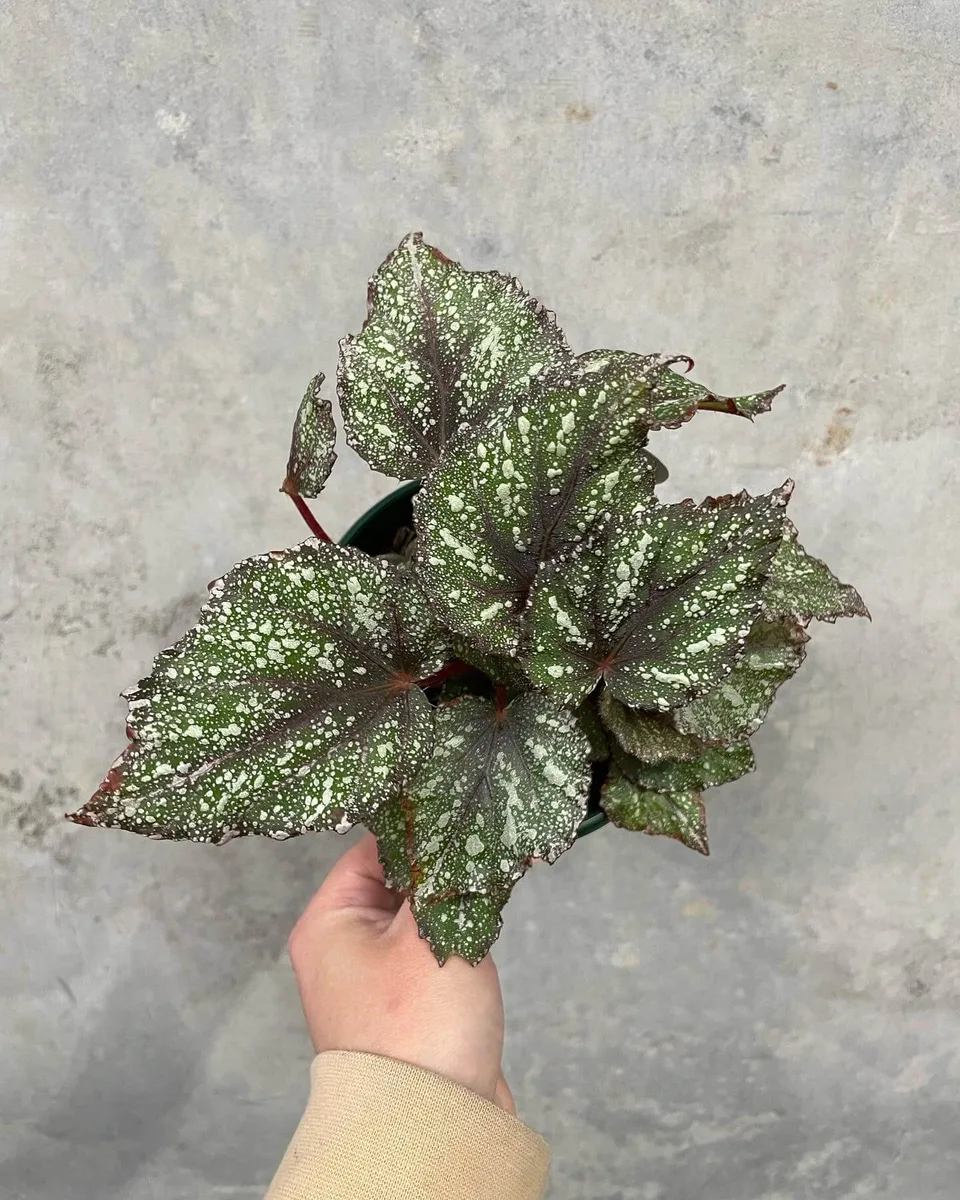
A compact, evergreen, rex begonia, grown for its foliage. Leaves are roughly triangular, rounded at the base, grey-green with a purple margin, purple flushed in the centre and covered in pale silvery-green spots. May produce clusters of simple, pink flowers in spring or summer
Scientific classification
- Species
- begonia 'Morning Dew' (Begonia 'Morning Dew')
- Genus
- Begonia
- Family
- Begoniaceae
- Order
- Cucurbitales
- Class
- Magnoliopsida
- Phylum
- Magnoliophyta
- Ornamental bulbs - not to be eaten. Wear gloves and other protective equipment when handling
- Toxicity
- Conservatory Greenhouse · Houseplants
- Plant type
- 0.1-0.5 metres
- Height
- 0.1-0.5 metres
- Spread
- Evergreen
- Foliage
- Bushy · Clump forming
- Habit
- Spring · Summer · Autumn · Winter
- Season of interest
- Partial shade
- Sunlight
- Information to be completed
- Ideal temperature









begonia 'Morning Dew' pictures
Toxicity
Ornamental bulbs - not to be eaten. Wear gloves and other protective equipment when handling
begonia 'Morning Dew' care guide
- Moderate regular watering, allowing brief slight drying between soakings
- Watering
- Partial shade
- Sunlight

Watering
Moderate regular watering, allowing brief slight drying between soakings
Fertilizing
 Fertilizing
Balanced perennial feed every four weeks from spring through summer
Pruning
 Pruning
No pruning required
Propagation
 Propagation
Propagate by leaf cuttings, or sections of rhizome
Growing
 Growing
Grow in light, well-drained, loam-based or loam-less, acid to neutral potting compost. Place in filtered light with shade from hot sun at an optimum of 15C to 22C, with high humidity. Will not tolerate continuous direct sunlight or waterlogging. Water moderately when in growth and apply a balanced liquid fertiliser at alternative waterings. See begonia cultivation - indoors for further information
Common pests and diseases
Diseases
May be susceptible to grey mould, powdery mildews, stem rot and rhizome rot
Pests
May be susceptible to caterpillars, mealy bugs, mites, glasshouse thrips, vine weevil and aphids
Explore the plant health library →




