
clematis 'Sweet Scentsation'
Also known as: Information to be completed
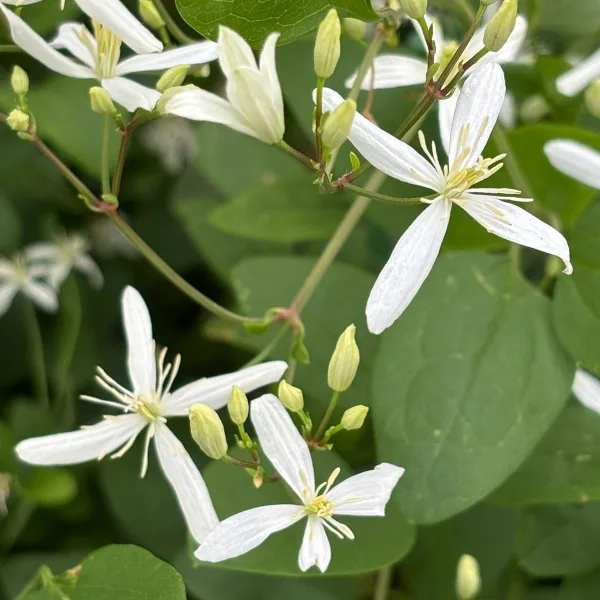
A compact, deciduous climber to 2.5m with mid-green foliage and small, scented, white flowers with four to six narrow petals in mid to late summer
Scientific classification
- Species
- clematis 'Sweet Scentsation' (Clematis 'Sweet Scentsation')
- Genus
- Clematis
- Family
- Ranunculaceae
- Order
- Ranunculales
- Class
- Magnoliopsida
- Phylum
- Tracheophyta
- Skin irritant. Wear gloves and other protective equipment when handling
- Toxicity
- Climber Wall Shrub
- Plant type
- 1.5-2.5 metres
- Height
- 0.5-1 metres
- Spread
- Deciduous
- Foliage
- Climbing
- Habit
- Spring · Summer · Autumn
- Season of interest
- Full sun · Partial shade
- Sunlight
- Information to be completed
- Ideal temperature









clematis 'Sweet Scentsation' pictures
Toxicity
Skin irritant. Wear gloves and other protective equipment when handling
clematis 'Sweet Scentsation' care guide
- Maintain steady medium moisture, soak thoroughly during heatwaves
- Watering
- Full sun · Partial shade
- Sunlight

Watering
Maintain steady medium moisture, soak thoroughly during heatwaves
Fertilizing
 Fertilizing
Diluted balanced liquid feed applied every three weeks in warm seasons
Pruning
 Pruning
 (clematis) group 3
Propagation
 Propagation
Propagate by rooting softwood cuttings in spring, or semi-ripe cuttings in early summer. Layering can be carried out in late winter or early spring
Growing
 Growing
Plant in well-drained soil, with the roots and base of the plant kept cool and shaded by other plants or a layer of pebbles at the base. Plant with the crown 5-8cm (2-3in) deep to encourage new shoots to grow from below ground level. Can be grown in containers at least 45cm (18in) deep and wide in a soil-based potting compost. See clematis cultivation
Common pests and diseases
Diseases
May be susceptible to honey fungus (rarely), clematis wilt and clematis slime flux
Pests
May be susceptible to aphid, slug and snail damage on young growth
Explore the plant health library →




