
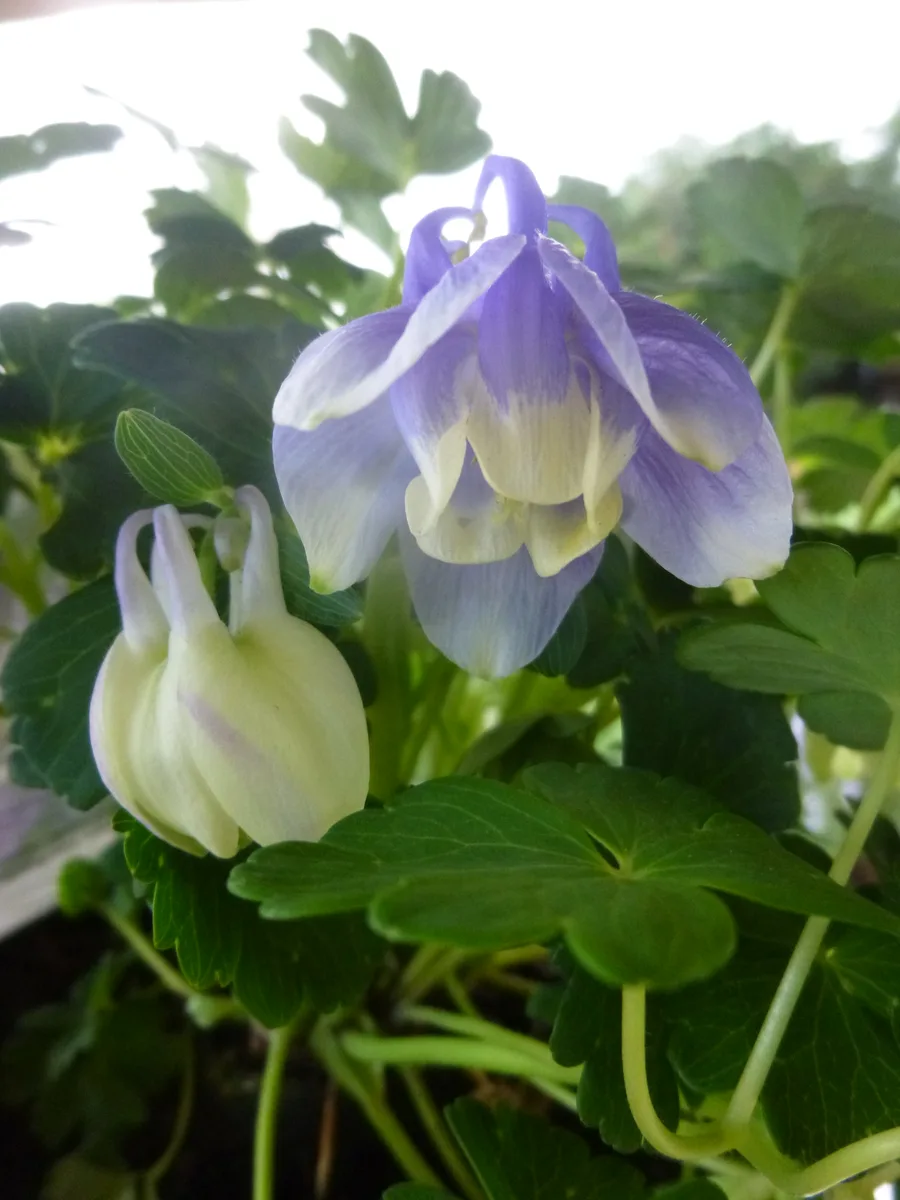
fan-leaved columbine 'Atlantis'
Also known as: Information to be completed
A small, clump-forming, perennial to about 20cm, with bluish-green leaves divided into rounded leaflets. Nodding to outward-facing, short-spurred flowers, produced in early summer, are purplish blue, the outer petals tipped with white and the inner petals with broad white borders
Scientific classification
- Species
- fan-leaved columbine 'Atlantis' (Aquilegia flabellata var. pumila 'Atlantis')
- Genus
- Aquilegia
- Family
- Ranunculaceae
- Order
- Ranunculales
- Class
- Magnoliopsida
- Phylum
- Magnoliophyta
- Information to be completed
- Toxicity
- Alpine Rockery · Herbaceous Perennial
- Plant type
- 0.1-0.5 metres
- Height
- 0.1-0.5 metres
- Spread
- Deciduous
- Foliage
- Clump forming
- Habit
- Autumn · Spring · Summer
- Season of interest
- Partial shade
- Sunlight
- Information to be completed
- Ideal temperature









fan-leaved columbine 'Atlantis' pictures
Distribution of fan-leaved columbine 'Atlantis'
Distribution map
- Native
- Introduced
- Cultivated
Source:WCVP v16 · Royal Botanic Gardens, Kew · CC BY 3.0 · Boundaries:WGSRPD / TDWG
fan-leaved columbine 'Atlantis' care guide
- Moderate regular watering, avoid prolonged drought and stagnant waterlogging
- Watering
- Partial shade
- Sunlight

Watering
Moderate regular watering, avoid prolonged drought and stagnant waterlogging
Fertilizing
 Fertilizing
Balanced perennial feed every four weeks spring through summer growth
Pruning
 Pruning
To encourage more flowers (and prevent self-seeding) deadhead regularly. Cut back foliage after flowering to promote fresh growth in late summer
Propagation
 Propagation
Propagate by seed; home-saved seed may not come true. Established plants can also be propagated by division in spring, but they dislike root disturbance and will be slow to recover
Growing
 Growing
Grow in fertile, moist but well-drained soil in full sun or partial shade. Good in containers. See aquilegia cultivation
Common pests and diseases
Diseases
May be susceptible to powdery mildews and aquilegia downy mildew
Pests
May be susceptible to aphids, caterpillars, leaf miners, aquilegia gall midge and aquilegia sawfly
Explore the plant health library →




