
weeping fig 'Anastasia'
Also known as: Information to be completed
An evergreen ornamental tree used as a houseplant, with a weeping habit and glossy, green and yellow variegated foliage
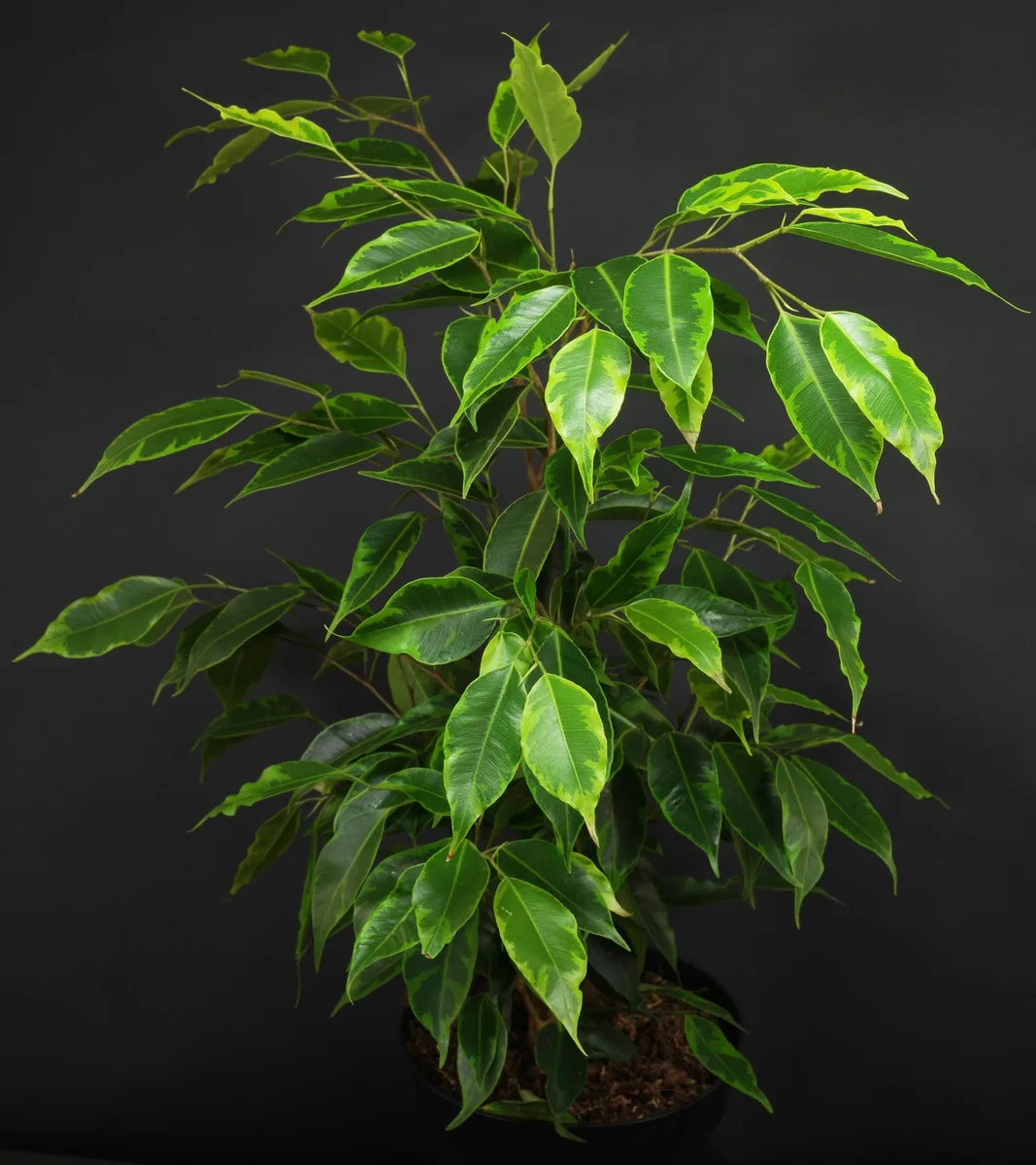
Scientific classification
- Species
- weeping fig 'Anastasia' (Ficus benjamina 'Anastasia')
- Genus
- Ficus
- Family
- Moraceae
- Skin allergen, harmful if eaten. Wear gloves and other protective equipment when handling]
- Toxicity
- Conservatory Greenhouse · Shrubs · Houseplants · Trees
- Plant type
- 4-8 metres
- Height
- 1-1.5 metres
- Spread
- Evergreen
- Foliage
- Pendulous weeping
- Habit
- Spring · Summer · Autumn · Winter
- Season of interest
- Full sun · Partial shade
- Sunlight
- Information to be completed
- Ideal temperature









weeping fig 'Anastasia' pictures
Distribution of weeping fig 'Anastasia'
Distribution map
Information to be completed
Information to be completed
Culture
Information to be completed
Toxicity
Skin allergen, harmful if eaten. Wear gloves and other protective equipment when handling]
Quick identification of weeping fig 'Anastasia'
Information to be completed
weeping fig 'Anastasia' care guide
- Moderate regular watering, allowing brief slight drying between soakings
- Watering
- Full sun · Partial shade
- Sunlight
- Information to be completed
- Ideal temperature

Watering
Moderate regular watering, allowing brief slight drying between soakings
Fertilizing
 Fertilizing
Balanced perennial feed every four weeks from spring through summer
Pruning
 Pruning
Little pruning is needed. Remove diseased, damaged, crowded or crossing shoots and unwanted growth. Timing depends on the plant: generally late winter or early spring; plants prone to bleeding and deciduous magnolias need different timing, and deciduous azaleas and lilacs are pruned after flowering.
Propagation
 Propagation
Propagate by seed at 15 - 21 °C in spring or by semi-hardwood or leaf-bud cuttings in spring or summer
Growing
 Growing
Under glass grow in loam-based potting compost with added fine bark chippings in full or filtered light. When in growth water moderately and apply a nitrogen rich fertiliser monthly. Keep just moist in winter. Plants benefit from regular misting and from being stood on a pebble tray, particularly in a warm dry atmosphere. Their main requirement is an even temperature, in winter not below 13°C and without the sharp fluctuations found in so many houses. Avoid draughty situations and keep them away from heater fumes
People also ask
Information to be completed
Common pests and diseases
Diseases
May be susceptible to honey fungus
Pests
May be susceptible to glasshouse red spider mite and scale insects
Explore the plant health library →




