
white-spathed jack in the pulpit
Also known as: Information to be completed
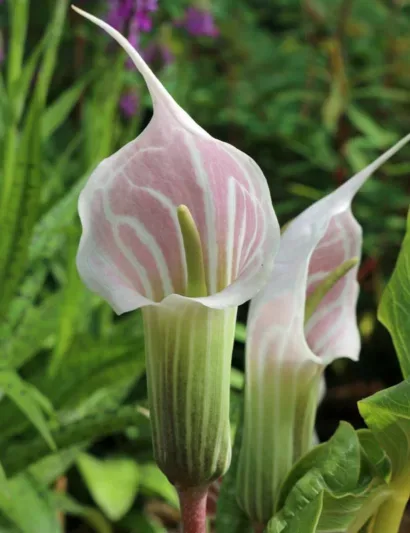
A tuberous perennial to 30cm in height, with leaves composed of three ovate leaflets, appearing after the flowers. White, hooded spathes, striped pale pink, with a greenish tube are 10cm in length and appear in summer
Scientific classification
- Species
- white-spathed jack in the pulpit (Arisaema candidissimum)
- Genus
- Arisaema
- Family
- Araceae
- Order
- Alismatales
- Class
- Liliopsida
- Phylum
- Magnoliophyta
- Harmful if eaten, skin/eye irritant. Wear gloves and other protective equipment when handling]
- Toxicity
- Bulbs
- Plant type
- 0.1-0.5 metres
- Height
- 0.1-0.5 metres
- Spread
- Deciduous
- Foliage
- Columnar upright
- Habit
- Summer · Autumn
- Season of interest
- Full sun · Partial shade
- Sunlight
- Information to be completed
- Ideal temperature









white-spathed jack in the pulpit pictures
Distribution of white-spathed jack in the pulpit
Distribution map
- Native
- Introduced
- Cultivated
Source:WCVP v16 · Royal Botanic Gardens, Kew · CC BY 3.0 · Boundaries:WGSRPD / TDWG
Toxicity
Harmful if eaten, skin/eye irritant. Wear gloves and other protective equipment when handling]
white-spathed jack in the pulpit care guide
- Moderate regular watering, allowing brief slight drying between soakings
- Watering
- Full sun · Partial shade
- Sunlight

Watering
Moderate regular watering, allowing brief slight drying between soakings
Fertilizing
 Fertilizing
Balanced perennial feed every four weeks from spring through summer
Pruning
 Pruning
No pruning required
Propagation
 Propagation
Propagate by seed, sowing them in containers in a cold frame in autumn or spring. Offsets may be removed in late summer
Growing
 Growing
Grow in moist but well-drained humus-rich soil in a cool site. In colder regions may need winter protection and tubers must not dry out when dormant
Common pests and diseases
Diseases
Generally disease-free
Pests
May be susceptible to slugs and vine weevil
Explore the plant health library →




