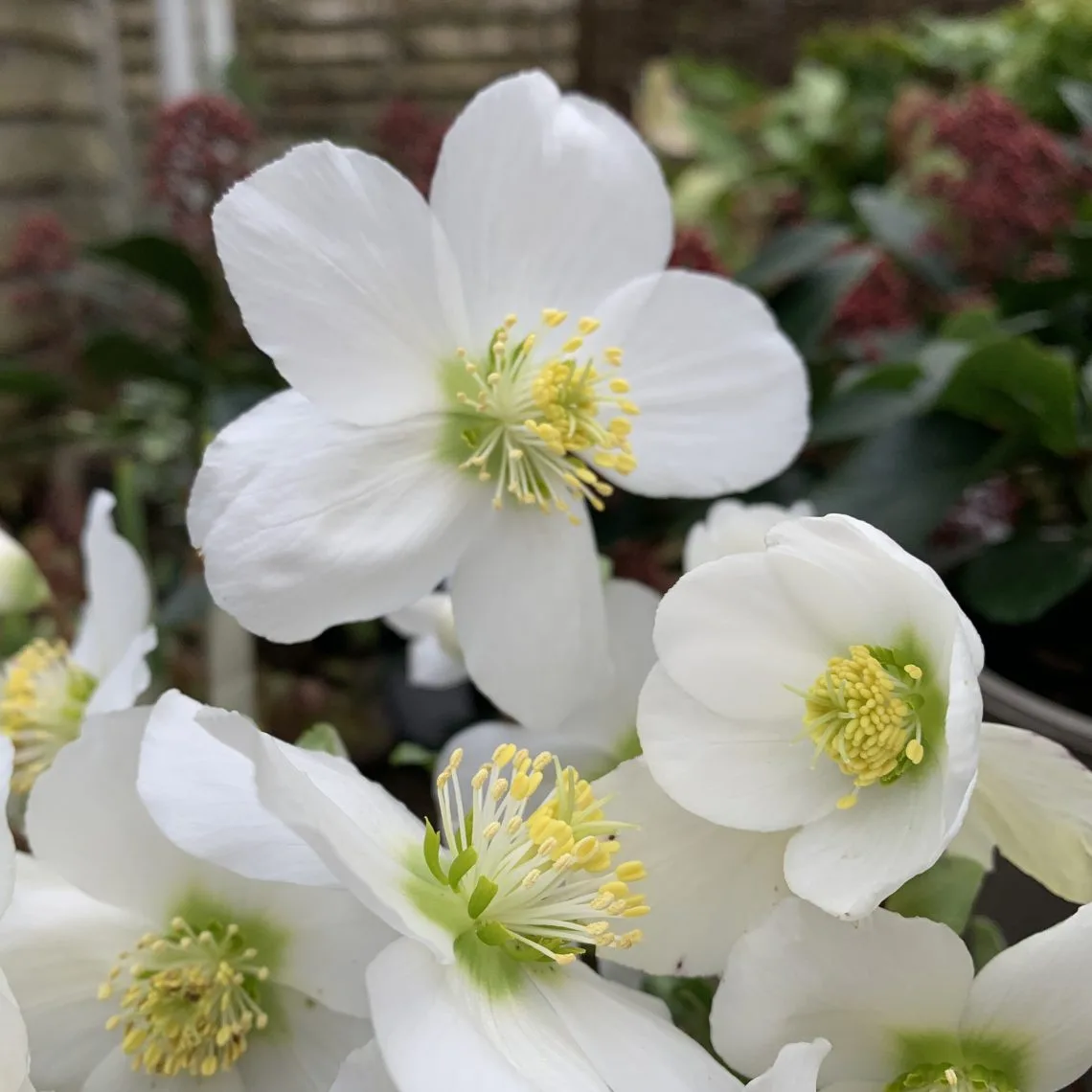
hellebore 'Verboom Beauty'
Also known as: Information to be completed
A semi-evergreen, floriferous, early-flowering, compact cultivar with white flowers
Scientific classification
- Species
- hellebore 'Verboom Beauty' (Helleborus 'Verboom Beauty')
- Genus
- Helleborus
- Family
- Ranunculaceae
- Order
- Ranunculales
- Class
- Magnoliopsida
- Phylum
- Magnoliophyta
- Harmful if eaten, skin irritant. Wear gloves and other protective equipment when handling]
- Toxicity
- Herbaceous Perennial · Houseplants
- Plant type
- 0.1-0.5 metres
- Height
- 0.1-0.5 metres
- Spread
- Semi evergreen
- Foliage
- Bushy
- Habit
- Spring · Summer · Autumn · Winter
- Season of interest
- Full sun · Partial shade
- Sunlight
- Information to be completed
- Ideal temperature









hellebore 'Verboom Beauty' pictures
Toxicity
Harmful if eaten, skin irritant. Wear gloves and other protective equipment when handling]
hellebore 'Verboom Beauty' care guide
- Moderate regular watering, allowing brief slight drying between soakings
- Watering
- Full sun · Partial shade
- Sunlight

Watering
Moderate regular watering, allowing brief slight drying between soakings
Fertilizing
 Fertilizing
Balanced perennial feed every four weeks from spring through summer
Pruning
 Pruning
Remove faded or damaged foliage as the flowers appear
Propagation
 Propagation
Divide mature clumps in spring after flowering or in early autumn
Growing
 Growing
Often forced for earlier flowering and sold for indoor or outdoor Christmas display. Place in a cool place indoors and after flowering gradually acclimatise to outdoor conditions before planting out in the garden. Thrives in neutral to alkaline soils that are moist, fertile and humus-rich. Partial shade is ideal but can tolerate full sun if the soil is not prone to drying out. Provide shelter from strong, cold winds. Mulch annually in autumn. For further details see hellebore cultivation
Common pests and diseases
Diseases
May be susceptible to hellebore leaf spot and hellebore black death
Pests
May be susceptible to hellebore aphid, hellebore leaf miner and snails
Explore the plant health library →