
Lithops julii 'Hotlips'
Also known as: Information to be completed
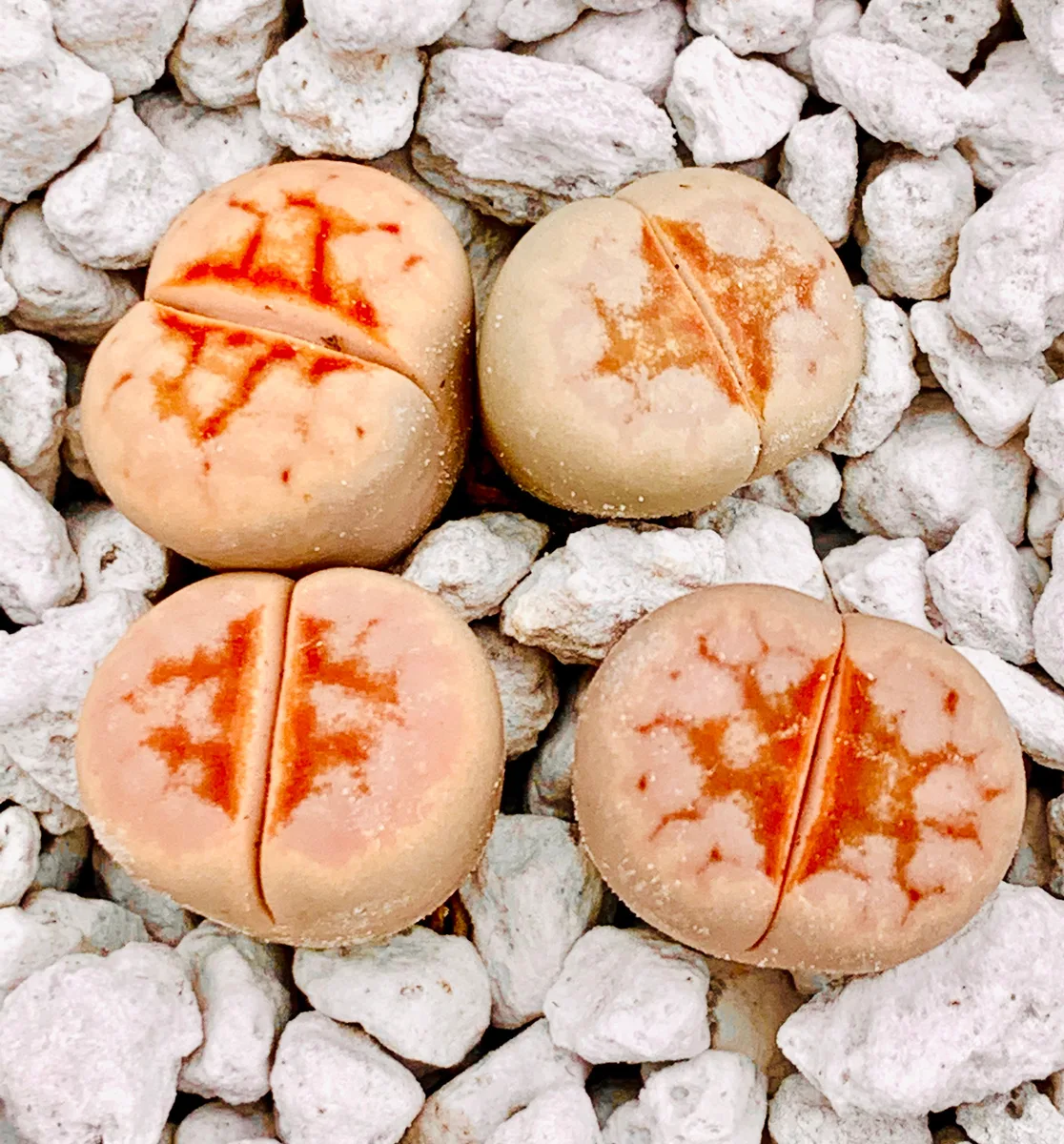
A succulent perennial forming a clump of pairs of thick, rounded, pale grey-brown leaves with near flat tops, with variable reddish brown markings along the fissure. White, daisy-like flowers are usually produced in late summer and autumn
Scientific classification
- Species
- Lithops julii 'Hotlips' (Lithops julii 'Hotlips')
- Genus
- Lithops
- Family
- Aizoaceae
- Information to be completed
- Toxicity
- Cactus Succulent · Houseplants
- Plant type
- Up to 10 cm
- Height
- 0-0.1 metre
- Spread
- Evergreen
- Foliage
- Clump forming
- Habit
- Spring · Summer · Autumn · Winter
- Season of interest
- Full sun
- Sunlight
- Information to be completed
- Ideal temperature









Lithops julii 'Hotlips' pictures
Distribution of Lithops julii 'Hotlips'
Distribution map
Information to be completed
Information to be completed
Culture
Information to be completed
Toxicity
Information to be completed
Quick identification of Lithops julii 'Hotlips'
Information to be completed
Lithops julii 'Hotlips' care guide
- Moderate regular watering, allowing brief slight drying between soakings
- Watering
- Full sun
- Sunlight
- Information to be completed
- Ideal temperature

Watering
Moderate regular watering, allowing brief slight drying between soakings
Fertilizing
 Fertilizing
Balanced perennial feed every four weeks from spring through summer
Pruning
 Pruning
No pruning required
Propagation
 Propagation
Propagate by seed, sown in spring in a well-drained, ideally sterilised potting mix, at 18-22°C and kept moist. Plants can take up to three years to flower from seed. Some plants may produce offsets which can be removed for propagation
Growing
 Growing
Grow in equal parts coarse sand and sifted topsoil, in a bright position with shelter from hot midday sun. May be grown outdoors in areas where temperatures do not drop below 5°C. From early summer to late autumn, water well, allowing the soil to dry out in between; apply a half-strength liquid feed monthly. Keep dry over winter. See houseplant cacti and succulent cultivation for further information
People also ask
Information to be completed
Common pests and diseases
Diseases
Generally disease-free, though may suffer from rot if over-watered
Pests
May be susceptible to aphids and mealybugs when flowering
Explore the plant health library →




