
begonia Illumination Series
Also known as: Information to be completed
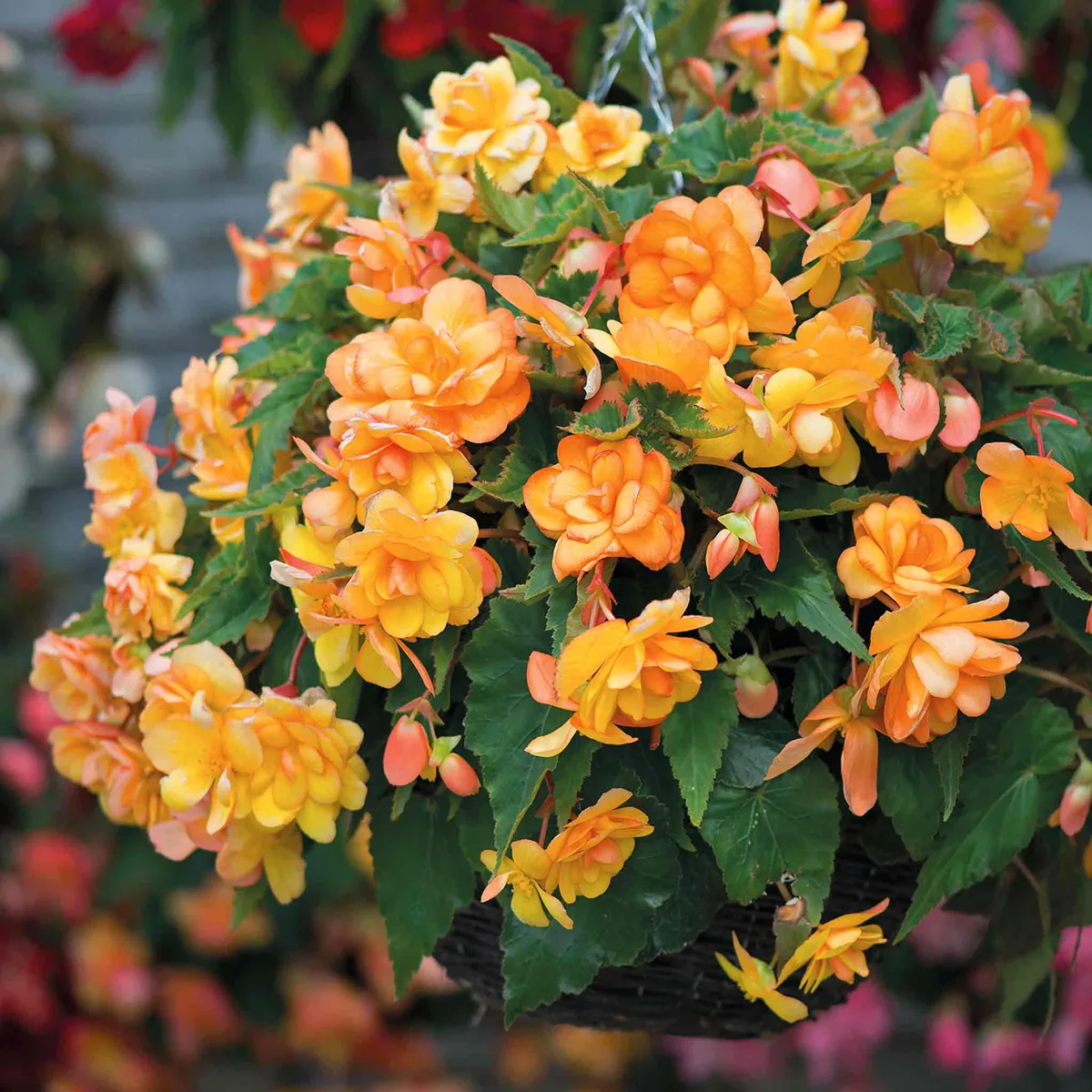
Illumination Series are pendulous plants with oval leaves and sprays of rosette-like, double, flowers in any of a range of colours including white, pink, orange, red, dark red and pink, in summer and autumn
Scientific classification
- Species
- begonia Illumination Series (Begonia (Illumination Series))
- Genus
- Begonia
- Family
- Begoniaceae
- Order
- Cucurbitales
- Class
- Magnoliopsida
- Phylum
- Magnoliophyta
- For ornamental use only - do not eat
- Toxicity
- Conservatory Greenhouse · Houseplants · Bedding
- Plant type
- 0.1-0.5 metres
- Height
- 0.1-0.5 metres
- Spread
- Deciduous
- Foliage
- Pendulous weeping
- Habit
- Spring · Summer · Autumn
- Season of interest
- Partial shade
- Sunlight
- Information to be completed
- Ideal temperature









begonia Illumination Series pictures
Toxicity
For ornamental use only - do not eat
begonia Illumination Series care guide
- Keep compost evenly moist with bright shade and good humidity
- Watering
- Partial shade
- Sunlight

Watering
Keep compost evenly moist with bright shade and good humidity
Fertilizing
 Fertilizing
Weak balanced begonia feed every two to three weeks in growth
Pruning
 Pruning
Cut back after flowering and store the tubers
Propagation
 Propagation
Propagate by seed or stem cuttings
Growing
 Growing
Grow in fertile, well-drained, neutral to slightly acid soil in partial shade. Ideal for hanging baskets and containers. See Begonias: outdoors for further advice.
Common pests and diseases
Diseases
May be susceptible to grey moulds, powdery mildews, stem rot and rhizome rot
Pests
May be susceptible to caterpillars, mealy bugs, mites, glasshouse thrips, vine weevil and aphids
Explore the plant health library →




