
ivy-leaved cyclamen Silver-leaved Group
Also known as: Information to be completed
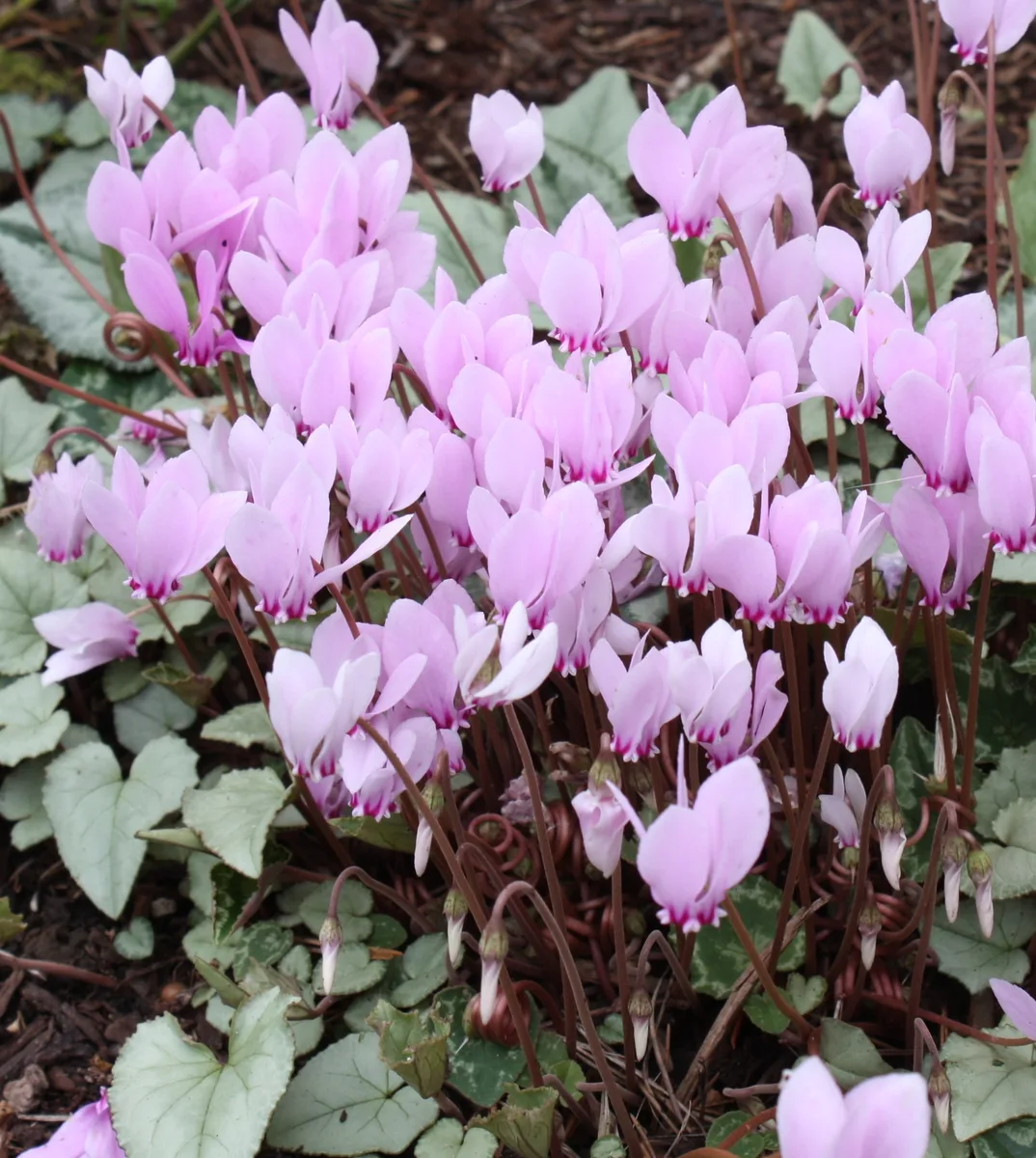
Silver-leaved Group are low-growing perennials producing small pink flowers with swept back petals from late summer to mid autumn, and roughly-ivy-shaped, silvery-grey leaves with variable, dark green markings from early autumn to mid-spring
Scientific classification
- Species
- ivy-leaved cyclamen Silver-leaved Group (Cyclamen hederifolium (Silver-leaved Group))
- Genus
- Cyclamen
- Family
- Primulaceae
- Order
- Ericales
- Class
- Magnoliopsida
- Phylum
- Magnoliophyta
- Ornamental bulbs, not to be eaten. Wear gloves and other protective equipment when handling
- Toxicity
- Bulbs
- Plant type
- Up to 10 cm
- Height
- 0.1-0.5 metres
- Spread
- Deciduous
- Foliage
- Matforming
- Habit
- Spring · Autumn · Winter · Summer
- Season of interest
- Partial shade
- Sunlight
- Information to be completed
- Ideal temperature









ivy-leaved cyclamen Silver-leaved Group pictures
Distribution of ivy-leaved cyclamen Silver-leaved Group
Distribution map
- Native
- Introduced
- Cultivated
Source:WCVP v16 · Royal Botanic Gardens, Kew · CC BY 3.0 · Boundaries:WGSRPD / TDWG
Toxicity
Ornamental bulbs, not to be eaten. Wear gloves and other protective equipment when handling
ivy-leaved cyclamen Silver-leaved Group care guide
- Water moderately during growth; keep dry during summer dormancy.
- Watering
- Partial shade
- Sunlight

Watering
Water moderately during growth; keep dry during summer dormancy.
Fertilizing
 Fertilizing
Apply a low-nitrogen fertilizer monthly during active growth.
Pruning
 Pruning
No pruning required
Propagation
 Propagation
Propagate by seed, sown in darkness as soon as ripe. Can be beneficial to soak seed for 10 hours prior to sowing. Seedlings may vary, so select those with the best colour
Growing
 Growing
Plant near the surface in moderately fertile, humus-rich, well-drained soil. Avoid excessive summer moisture and mulch well when leaves wither. Tolerates dry soil under trees. See hardy cyclamen cultivation
Common pests and diseases
Diseases
Generally disease free outdoors
Pests
Mice and squirrels may be a problem; vine weevil can attack pot-grown plants
Explore the plant health library →




