
Nerium oleander [White-flowered]
Also known as: Information to be completed
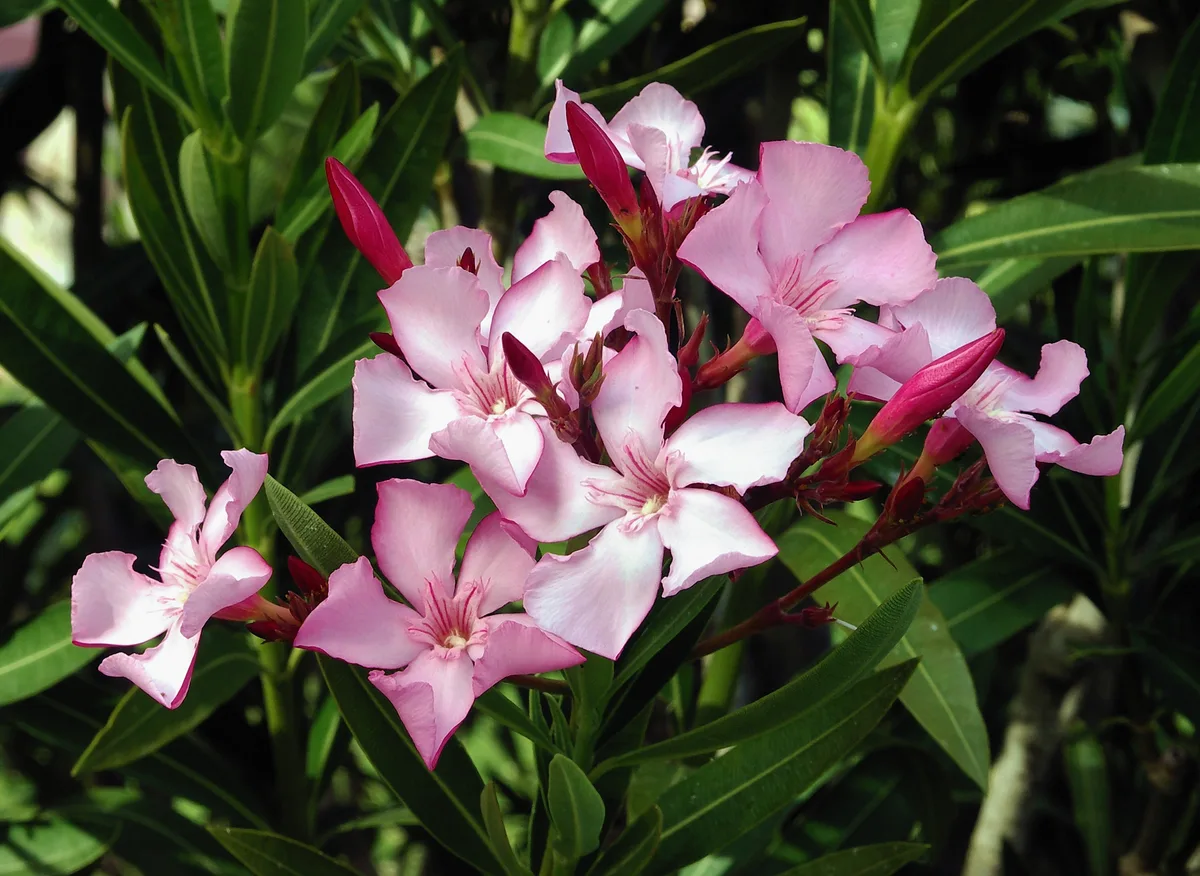
An evergreen, erect to spreading shrub to 4m, with lance-shaped, grey-green leaves to 20cm long. From late spring to autumn it produces open, branched clusters of white, 5-petalled flowers to 5cm across
Scientific classification
- Species
- Nerium oleander [White-flowered] (Nerium oleander [White-flowered])
- Genus
- Nerium
- Family
- Apocynaceae
- TOXIC if eaten, smoke from burning is harming. Wear gloves and other protective equipment when handling]
- Toxicity
- Shrubs
- Plant type
- 2.5-4 metres
- Height
- 1.5-2.5 metres
- Spread
- Evergreen
- Foliage
- Bushy
- Habit
- Spring · Summer · Autumn · Winter
- Season of interest
- Full sun
- Sunlight
- Information to be completed
- Ideal temperature









Nerium oleander [White-flowered] pictures
Distribution of Nerium oleander [White-flowered]
Distribution map
Information to be completed
Information to be completed
Culture
Information to be completed
Toxicity
TOXIC if eaten, smoke from burning is harming. Wear gloves and other protective equipment when handling]
Quick identification of Nerium oleander [White-flowered]
Information to be completed
Nerium oleander [White-flowered] care guide
- Moderate regular watering, allowing brief slight drying between soakings
- Watering
- Full sun
- Sunlight
- Information to be completed
- Ideal temperature

Watering
Moderate regular watering, allowing brief slight drying between soakings
Fertilizing
 Fertilizing
Balanced perennial feed every four weeks from spring through summer
Pruning
 Pruning
Prune lightly as needed to remove unwanted shoots and keep the shrub in shape. Prune in mid- to late spring.
Propagation
 Propagation
Propagate by semi-ripe cuttings in summer; sow seed at 16°C in spring
Growing
 Growing
Outdoors, grow in fertile, moist but well-drained soil in full sun. Where winters are not reliably mild, grow under glass in loam-based potting compost in full light; ventilate well. During growth, water moderately and apply a balanced liquid feed monthly. Water sparingly in winter
People also ask
Information to be completed
Common pests and diseases
Diseases
May be susceptible to honey fungus (rarely)
Pests
May be susceptible to scale insects, mealybugs and glasshouse red spider mites under glass
Explore the plant health library →




