
Cape primrose 'Leyla'
Also known as: Information to be completed
Razzamatazz ' is an upright perennial to 75cm with branched stems supporting rough, hairy leaves. The pink flower-heads, produced from late summer to early autumn, have a large central cone of double disc florets surrounded by a single row of reflexed ray florets
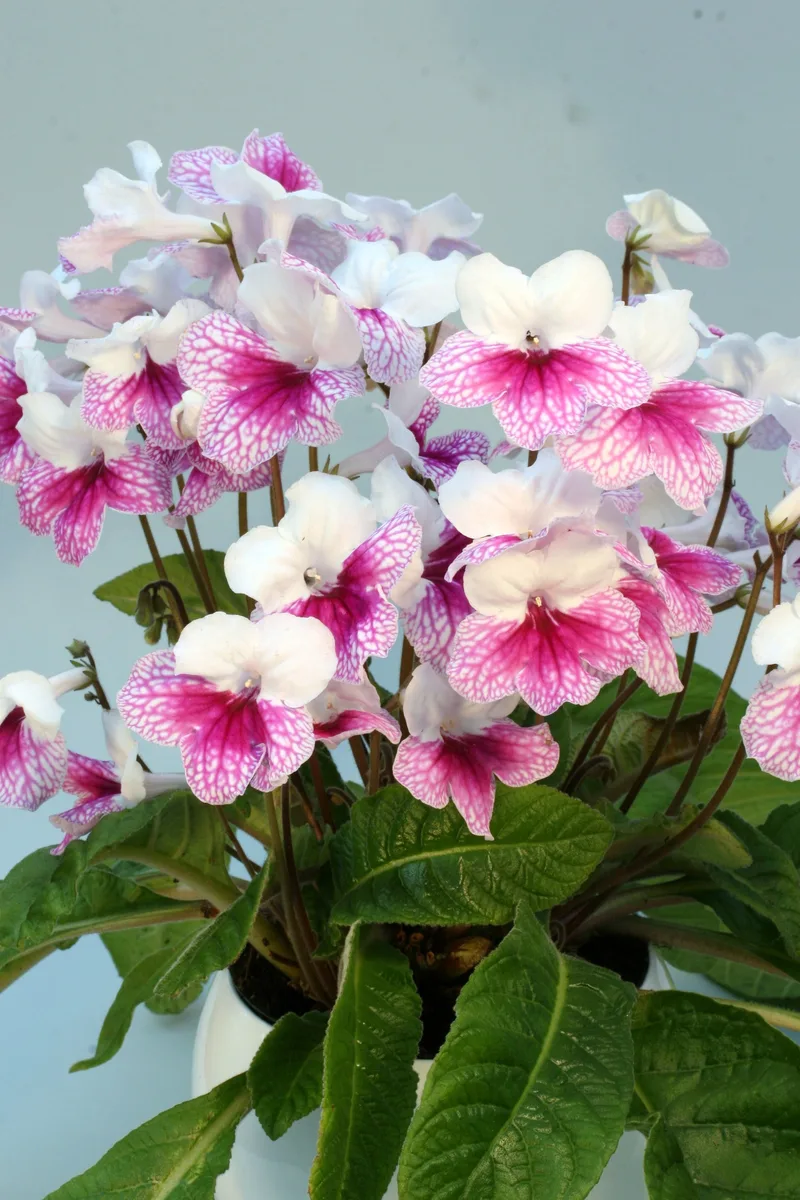
Scientific classification
- Species
- Cape primrose 'Leyla' (Streptocarpus 'Leyla')
- Genus
- Streptocarpus
- Family
- Gesneriaceae
- Information to be completed
- Toxicity
- Herbaceous Perennial
- Plant type
- 0.5-1 metres
- Height
- 0.1-0.5 metres
- Spread
- Deciduous
- Foliage
- Bushy
- Habit
- Spring · Summer · Autumn · Winter
- Season of interest
- Full sun · Partial shade
- Sunlight
- Information to be completed
- Ideal temperature









Cape primrose 'Leyla' pictures
Distribution of Cape primrose 'Leyla'
Distribution map
Information to be completed
Information to be completed
Culture
Information to be completed
Toxicity
Information to be completed
Quick identification of Cape primrose 'Leyla'
Information to be completed
Cape primrose 'Leyla' care guide
- Keep compost evenly moist with bright shade and good humidity
- Watering
- Full sun · Partial shade
- Sunlight
- Information to be completed
- Ideal temperature

Watering
Keep compost evenly moist with bright shade and good humidity
Fertilizing
 Fertilizing
Weak balanced feed every two to three weeks in active growth
Pruning
 Pruning
Cut back stems as the blooms fade to encourage further flower production
Propagation
 Propagation
Propagate by division in spring or autumn although they resent a lot of disturbance. Propagate by root cuttings from late autumn to early winter
Growing
 Growing
Grow as a houseplant in free-draining compost on an east or west-facing windowsill, or grow in a temperate or warm greenhouse in bright filtered light with shade from hot sun. Water sparingly as compost dries in winter and in the growing season water freely allowing compost to dry out between waterings; feed fortnightly with a high-potassium fertiliser. See Streptocarpus cultivation
People also ask
Information to be completed
Common pests and diseases
Diseases
May be susceptible to grey moulds (botrytis) or powdery mildews
Pests
May be susceptible to glasshouse leafhoppers, mealybugs, thrips, vine weevil and tarsonemid mite
Explore the plant health library →




