
hydrangea 'Benxi'
Also known as: Information to be completed
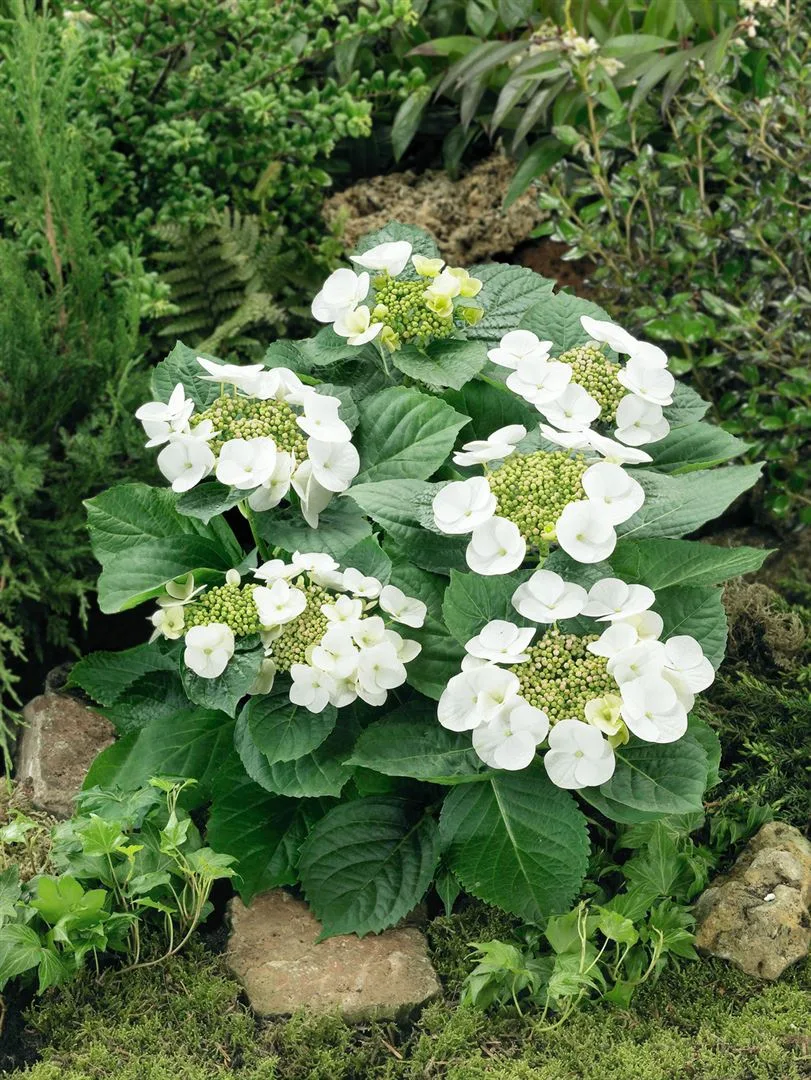
A deciduous shrub to 1.2m high, with ovate, serrated dark green leaves that are red when young and turn orange and red in autumn. In summer, broad flat lace-cap flower heads open to clusters of tiny white fertile flowers surrounded by large, showy white florets with rounded petals, that have slight pink tints as they age
Scientific classification
- Species
- hydrangea 'Benxi' (Hydrangea macrophylla 'Benxi')
- Genus
- Hydrangea
- Family
- Hydrangeaceae
- Skin allergen. Wear gloves and other protective equipment when handling
- Toxicity
- Shrubs
- Plant type
- 1-1.5 metres
- Height
- 1-1.5 metres
- Spread
- Deciduous
- Foliage
- Bushy
- Habit
- Autumn · Spring · Summer
- Season of interest
- Partial shade · Full sun
- Sunlight
- Information to be completed
- Ideal temperature









hydrangea 'Benxi' pictures
Distribution of hydrangea 'Benxi'
Distribution map
Information to be completed
Information to be completed
Culture
Information to be completed
Toxicity
Skin allergen. Wear gloves and other protective equipment when handling
Quick identification of hydrangea 'Benxi'
Information to be completed
hydrangea 'Benxi' care guide
- Keep soil consistently moist, especially in warm weather
- Watering
- Partial shade · Full sun
- Sunlight
- Information to be completed
- Ideal temperature

Watering
Keep soil consistently moist, especially in warm weather
Fertilizing
 Fertilizing
Hydrangea feed in spring and again early summer
Pruning
 Pruning
Use the method for the hydrangea type: remove faded mophead flowers to the first healthy bud pair; paniculata and arborescens may have last year's stems shortened to healthy bud pairs. Climbing hydrangeas need overlong shoots trimmed after flowering. Most types are pruned in late winter or early spring; climbing hydrangeas are pruned after flowering in summer.
Propagation
 Propagation
Propagate by softwood cuttings in early summer, or by hardwood cuttings in winter. As this plant is protected by Plant Breeders' Rights, any propagation should be for personal rather than commercial use
Growing
 Growing
Grow in moist but well-drained, humus rich soil, ideally in light shade, though will tolerate full sun if soil is not too dry. Mulch in spring, and provide shelter from cold, drying winds. See shrubby hydrangea cultivation for more detailed advice
People also ask
Information to be completed
Common pests and diseases
Diseases
May be susceptible to a leaf spot, powdery mildews, grey moulds (Botrytis) and honey fungus (rarely)
Pests
May be susceptible to aphids, capsid bug, red spider mite, stem and bulb eelworm, vine weevil and scale insects
Explore the plant health library →




