
elephant's ears 'Bach'
Also known as: Information to be completed
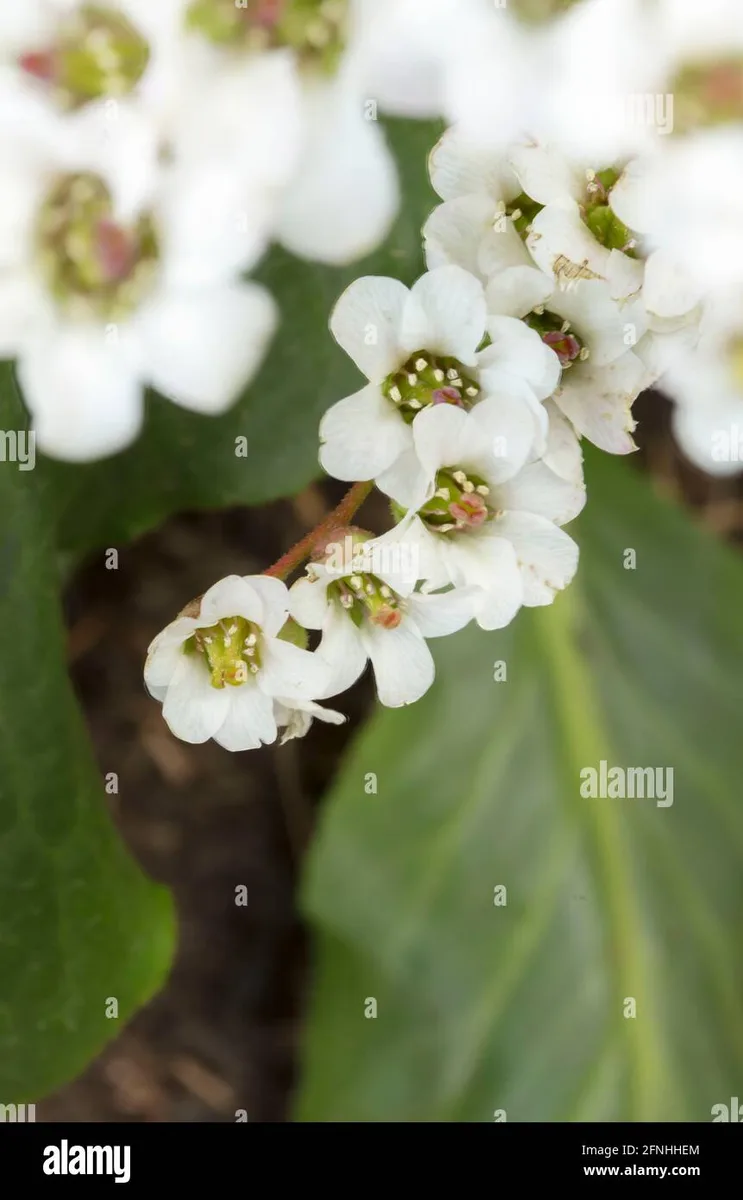
A herbaceous perennial, up to 40cm high, with glossy, dark green leaves, crimson-flushed in winter. In spring, red-hued stalks bear flowers, with dark pink centres, which open pale pink with white calyces and mature to white with dark pink calyces
Scientific classification
- Species
- elephant's ears 'Bach' (Bergenia 'Bach')
- Genus
- Bergenia
- Family
- Saxifragaceae
- Information to be completed
- Toxicity
- Herbaceous Perennial
- Plant type
- 0.1-0.5 metres
- Height
- 0.1-0.5 metres
- Spread
- Evergreen
- Foliage
- Clump forming
- Habit
- Spring · Summer · Autumn · Winter
- Season of interest
- Full shade · Full sun · Partial shade
- Sunlight
- Information to be completed
- Ideal temperature









elephant's ears 'Bach' pictures
Distribution of elephant's ears 'Bach'
Distribution map
Information to be completed
Information to be completed
Culture
Information to be completed
Toxicity
Information to be completed
Quick identification of elephant's ears 'Bach'
Information to be completed
elephant's ears 'Bach' care guide
- Moderate regular watering, avoid prolonged drought or waterlogging
- Watering
- Full shade · Full sun · Partial shade
- Sunlight
- Information to be completed
- Ideal temperature

Watering
Moderate regular watering, avoid prolonged drought or waterlogging
Fertilizing
 Fertilizing
Balanced feed in spring and light repeat in growth season
Pruning
 Pruning
Remove faded flower spikes and leaves to keep plants tidy
Propagation
 Propagation
Propagate by division in spring or autumn
Growing
 Growing
Grow in any soil that is not boggy, in sun or shade, but performs best in moist but well-drained soil in a cool sheltered position with partial shade from taller trees or shrubs, which will give the flowers protection from late frosts, and so prolong the flowering season; however a more exposed position and less rich soil will encourage winter colouring
People also ask
Information to be completed
Common pests and diseases
Diseases
May be susceptible to a leaf spot
Pests
May be susceptible to vine weevil and slugs and snails
Explore the plant health library →




