
chard 'Rhubarb Chard'
Also known as: Information to be completed
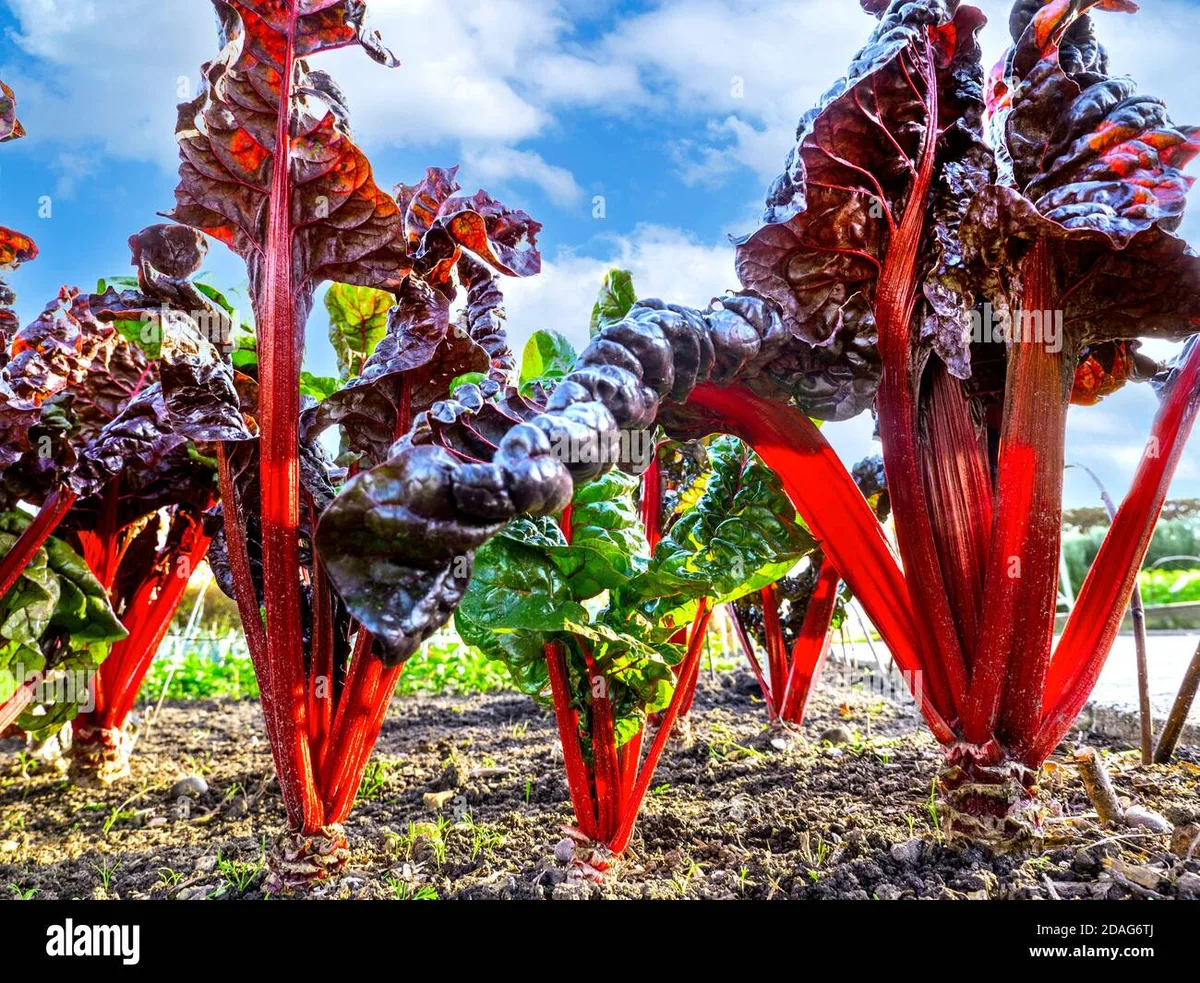
A rosette-forming biennial, which may be grown as a vegetable, or for ornamental effect. The large, broadly triangular, deeply puckered leaves are dark green tinged with purple, with bright red stems and midribs. Leaves may be picked small for salads or cooked when mature, using the stems like celery and the blades like spinach. Plants left for a second year produce tall, leafy stems topped with narrowly conical sprays of small, green flowers in spring or summer
Scientific classification
- Species
- chard 'Rhubarb Chard' (Beta vulgaris var. flavescens 'Rhubarb Chard' [subsp. cicla])
- Genus
- Beta
- Family
- Amaranthaceae
- Order
- Caryophyllales
- Class
- Magnoliopsida
- Phylum
- Tracheophyta
- Information to be completed
- Toxicity
- Annual Biennial
- Plant type
- 0.5-1 metres
- Height
- 0.1-0.5 metres
- Spread
- Deciduous
- Foliage
- Clump forming
- Habit
- Spring · Summer · Autumn · Winter
- Season of interest
- Full sun · Partial shade
- Sunlight
- Information to be completed
- Ideal temperature









chard 'Rhubarb Chard' pictures
chard 'Rhubarb Chard' care guide
- Keep soil consistently moist for steady leafy growth without drought stress
- Watering
- Full sun · Partial shade
- Sunlight

Watering
Keep soil consistently moist for steady leafy growth without drought stress
Fertilizing
 Fertilizing
Nitrogen-rich vegetable feed every two to three weeks in active growth
Pruning
 Pruning
No pruning required
Propagation
 Propagation
Propagate by seed. See sowing vegetable seeds
Growing
 Growing
If sown in mid-spring and mid-summer can crop almost year round, with some winter protection. Grows best in rich, light but moisture retentive soil in sun or semi-shade. Water well in dry spells. See Grow your own chard
Common pests and diseases
Diseases
May be susceptible to a downy mildew and grey mould
Pests
May be susceptible to beet leaf miner
Explore the plant health library →




