
Penstemon digitalis 'Mystica'
Also known as: Information to be completed
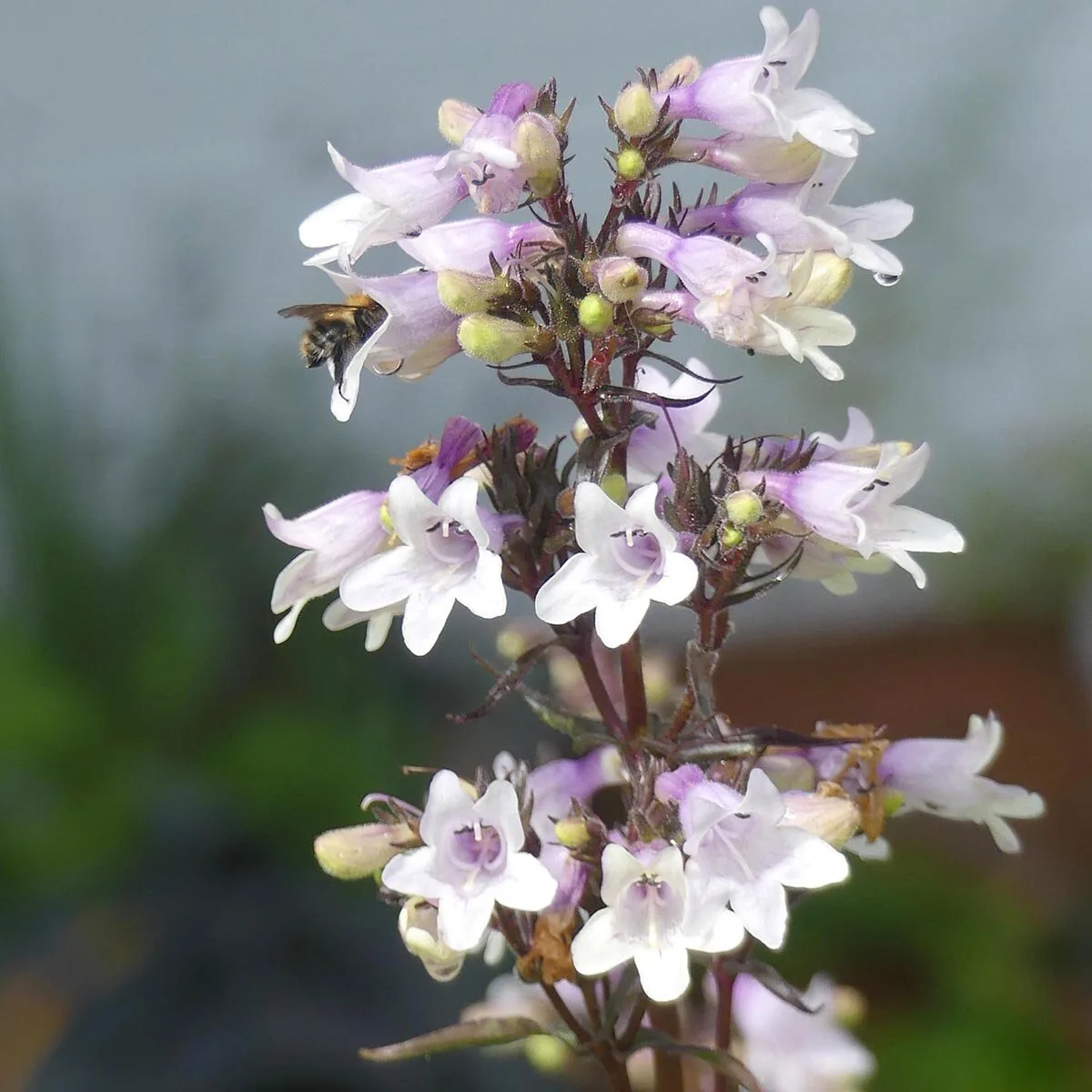
Multi-stemmed perennial about 75cm tall, producing clumps of foliage, evergreen at the base, with stems flushed purple-red, and lance shaped leaves, bronze-green in spring and becoming deep bronze-purple in summer and red in autumn. Panicles of delicate pale lavender to white tubular flowers appear in early summer
Scientific classification
- Species
- Penstemon digitalis 'Mystica' (Penstemon digitalis 'Mystica')
- Genus
- Penstemon
- Family
- Plantaginaceae
- Order
- Lamiales
- Class
- Magnoliopsida
- Phylum
- Magnoliophyta
- Information to be completed
- Toxicity
- Herbaceous Perennial
- Plant type
- 0.5-1 metres
- Height
- 0.1-0.5 metres
- Spread
- Semi evergreen · Evergreen
- Foliage
- Clump forming
- Habit
- Autumn · Winter · Spring · Summer
- Season of interest
- Full sun
- Sunlight
- Information to be completed
- Ideal temperature









Penstemon digitalis 'Mystica' pictures
Distribution of Penstemon digitalis 'Mystica'
Distribution map
- Native
- Introduced
- Cultivated
Source:WCVP v16 · Royal Botanic Gardens, Kew · CC BY 3.0 · Boundaries:WGSRPD / TDWG
Penstemon digitalis 'Mystica' care guide
- Moderate watering, avoid winter wet around the crown
- Watering
- Full sun
- Sunlight

Watering
Moderate watering, avoid winter wet around the crown
Fertilizing
 Fertilizing
Light balanced feed in spring and early bloom
Pruning
 Pruning
Deadhead after flowering to maintain vigour and prolong flowering, then cut back to 15cm in late winter or early spring
Propagation
 Propagation
Propagate by softwood cuttings in early summer or semi-ripe cuttings in midsummer
Growing
 Growing
Grow in fertile, well-drained soil in full sun or partial shade. In cold areas, protect plant overwinter with dry winter mulch. See penstemon cultivation
Common pests and diseases
Diseases
May be susceptible to a downy mildew, grey moulds, Powdery mildews and a fungal leaf spot
Pests
May be susceptible to slugs, snails, aphids and leaf and bud eelworms
Explore the plant health library →




