
fig 'Violette de Bordeaux'
Also known as: Information to be completed
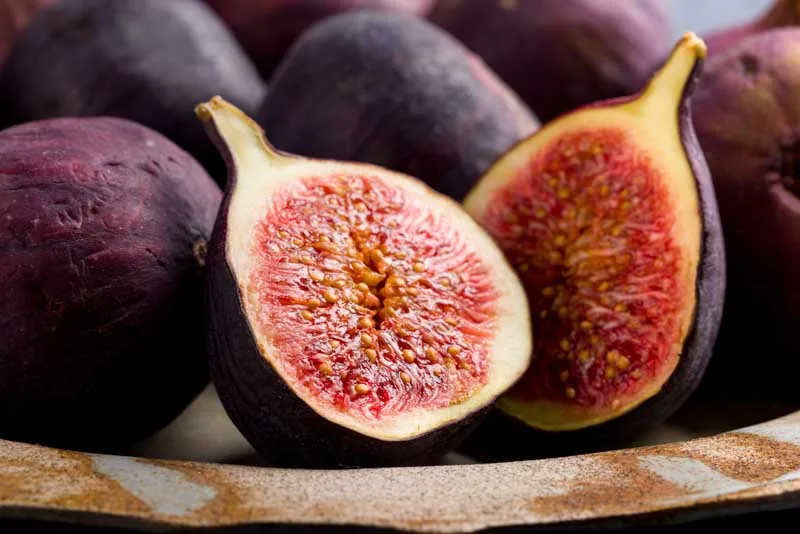
A vigorous, spreading large shrub or small tree, to around 4m tall with deeply lobed leaves. Reputedly hardier than many other cultivars. Produces small, edible, sweet fruits with a dark, purplish-black skin and pink to red flesh, from late summer into autumn. They also have a delicious fragrance. Can also be grown in containers, producing fruit at a young age.
Scientific classification
- Species
- fig 'Violette de Bordeaux' (Ficus carica 'Violette de Bordeaux')
- Genus
- Ficus
- Family
- Moraceae
- Order
- Rosales
- Class
- Magnoliopsida
- Phylum
- Tracheophyta
- Harmful to skin with sunlight. Wear gloves and other protective equipment when handling
- Toxicity
- Shrubs · Fruit Edible
- Plant type
- 2.5-4 metres
- Height
- 2.5-4 metres
- Spread
- Deciduous
- Foliage
- Bushy
- Habit
- Autumn · Spring · Summer
- Season of interest
- Full sun
- Sunlight
- Information to be completed
- Ideal temperature









fig 'Violette de Bordeaux' pictures
Distribution of fig 'Violette de Bordeaux'
Distribution map
- Native
- Introduced
- Cultivated
Source:WCVP v16 · Royal Botanic Gardens, Kew · CC BY 3.0 · Boundaries:WGSRPD / TDWG
Toxicity
Harmful to skin with sunlight. Wear gloves and other protective equipment when handling
fig 'Violette de Bordeaux' care guide
- Deep regular watering while fruiting, less in cool season
- Watering
- Full sun
- Sunlight

Watering
Deep regular watering while fruiting, less in cool season
Fertilizing
 Fertilizing
Balanced fruit tree feed in spring and early summer
Pruning
 Pruning
In mid-spring remove a proportion (1/4 to 1/3) of older branches. For further information see fig cultivation and fan-training
Propagation
 Propagation
Propagate by hardwood cuttings, by layering or from suckers
Growing
 Growing
Best grown fan-trained against a warm wall or fence, using a root-restriction method such as a box of paving slabs with the bottom filled with a layer of rubble or broken crocks. Also suitable for cultivation in a container. See fig cultivation
Common pests and diseases
Diseases
May be susceptible to honey fungus
Pests
May be susceptible to glasshouse red spider mite, thrips, mealybugs and scale insects under glass
Explore the plant health library →




