
Rosa 'Keith Maughan'
Also known as: Information to be completed
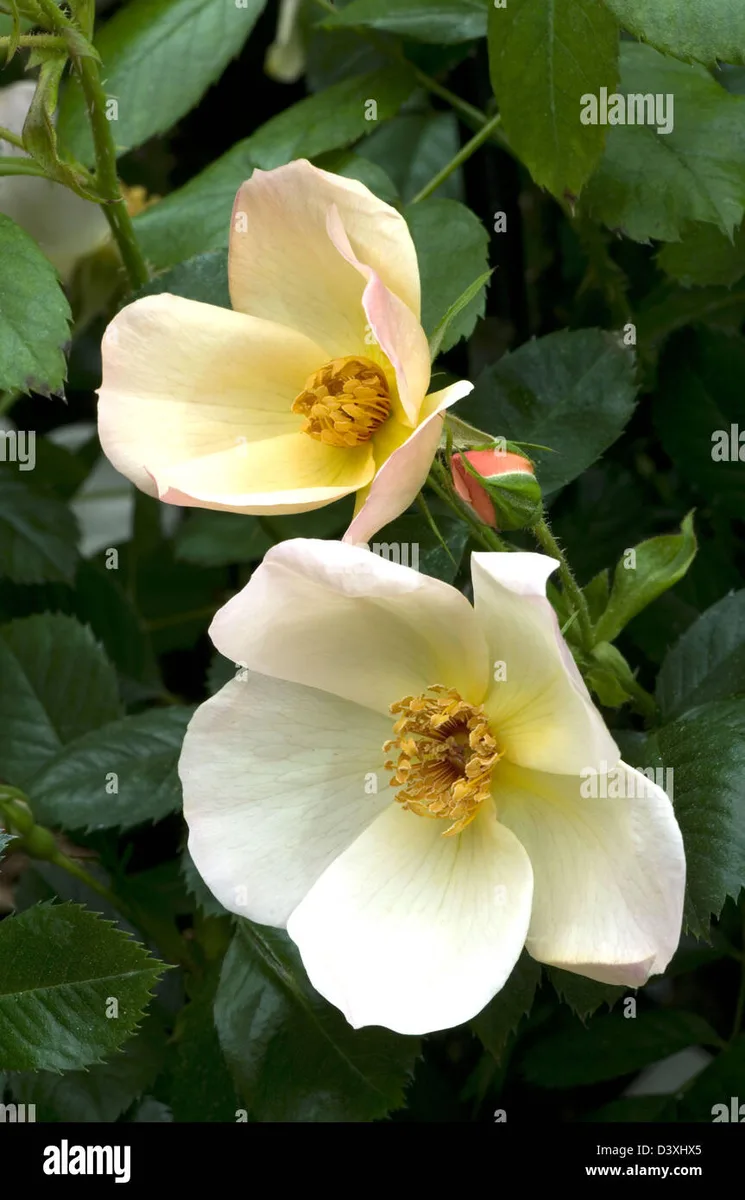
A broad-growing vigorous climbing rose with pinnate, glossy, dark green leaves with reddish margins. It produces reddish throrns and apricot to orange buds opening to medium sized, single pale lightly fragranced buff yellow flowers with a red accent at the centre among deep yellow stamens. This is a repeat flowering rose producing blooms from early summer until October.
Scientific classification
- Species
- Rosa 'Keith Maughan' (Rosa 'Keith Maughan')
- Genus
- Rosa
- Family
- Rosaceae
- Fruit are ornamental - not to be eaten. Wear gloves and other protective equipment when handling
- Toxicity
- Climber Wall Shrub · Roses
- Plant type
- 2.5-4 metres
- Height
- 1.5-2.5 metres
- Spread
- Deciduous
- Foliage
- Bushy · Climbing · Columnar upright
- Habit
- Spring · Summer · Autumn
- Season of interest
- Full sun · Partial shade
- Sunlight
- Information to be completed
- Ideal temperature









Rosa 'Keith Maughan' pictures
Distribution of Rosa 'Keith Maughan'
Distribution map
Information to be completed
Information to be completed
Culture
Information to be completed
Toxicity
Fruit are ornamental - not to be eaten. Wear gloves and other protective equipment when handling
Quick identification of Rosa 'Keith Maughan'
Information to be completed
Rosa 'Keith Maughan' care guide
- Deep root watering, allow slight topsoil drying before repeat irrigation
- Watering
- Full sun · Partial shade
- Sunlight
- Information to be completed
- Ideal temperature

Watering
Deep root watering, allow slight topsoil drying before repeat irrigation
Fertilizing
 Fertilizing
Rose bloom fertilizer every two to four weeks spring through late summer
Pruning
 Pruning
Deadhead regularly. Prune after flowering, tie in any new shoots, cut back long shoots by a third, cut back side shoots by two-thirds and removing any dead, dying, damaged and diseased stems
Propagation
 Propagation
Propagate by budding or hardwood cuttings
Growing
 Growing
Thrives in full sun and tolerates shade, suitable for growing as a climber against a wall, trellis or obelisk, can form a shrubby supported hedge. Grow in moist but free-draining or free-draining soil, preferably in full sun. Avoid planting in sites that have previously been used for growing roses. Add mycorrhizal fungi to the roots when planting to help the plant establish quicker.
People also ask
Information to be completed
Common pests and diseases
Diseases
May be susceptible to rose black spot, rose rust, replant disease, rose dieback, and rose powdery mildews. May also be susceptible to disorders rose blindness and flower balling and sometimes honey fungus
Pests
May be affected by brown scale, rose aphids, rose leafhopper, rose leaf-rolling sawfly, large rose sawfly, rose slug sawfly or slugworm, scurfy rose scale, red spider mites, caterpillars, rabbits and deer; leaf-cutting bees may use rose leaves to make nests for their larvae
Explore the plant health library →




