
climbing squirrel corn
Also known as: Dutchman's breeches
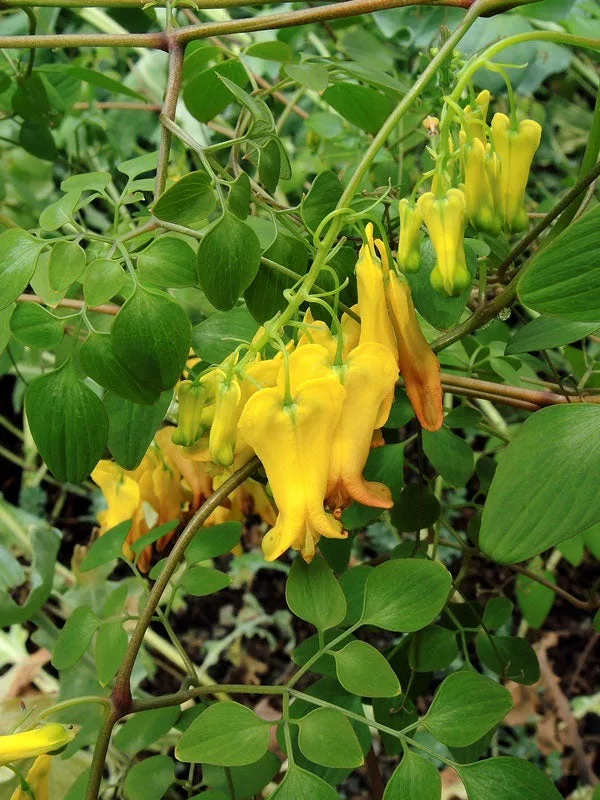
An annual climber with finely divided foliage and hanging clusters of yellow, locket-shaped flowers. Grown mostly for its striking seed pods, to 15cm, terracotta red and beaded, which open to show black and white seeds
Scientific classification
- Species
- climbing squirrel corn (Dactylicapnos torulosa)
- Genus
- Dactylicapnos
- Family
- Papaveraceae
- Can cause stomach upset if ingested and contact with foliage may aggravate skin allergies. Wear gloves and other protective equipment when handling
- Toxicity
- Climber Wall Shrub
- Plant type
- 4-8 metres
- Height
- 1.5-2.5 metres
- Spread
- Deciduous
- Foliage
- Climbing
- Habit
- Spring · Summer · Autumn
- Season of interest
- Partial shade
- Sunlight
- Information to be completed
- Ideal temperature









climbing squirrel corn pictures
Distribution of climbing squirrel corn
Distribution map
Southern China to India
Information to be completed
Culture
Information to be completed
Toxicity
Can cause stomach upset if ingested and contact with foliage may aggravate skin allergies. Wear gloves and other protective equipment when handling
Quick identification of climbing squirrel corn
Information to be completed
climbing squirrel corn care guide
- Moderate regular watering, avoid prolonged drought and stagnant waterlogging
- Watering
- Partial shade
- Sunlight
- Information to be completed
- Ideal temperature

Watering
Moderate regular watering, avoid prolonged drought and stagnant waterlogging
Fertilizing
 Fertilizing
Balanced perennial feed every four weeks spring through summer growth
Pruning
 Pruning
Cut back foliage down to ground level at end of growing season
Propagation
 Propagation
Propagate by seed; sown fresh seed in vermiculite or grit and placing in a cold frame through winter (stratifying). Also can be propagated by semi-ripe cuttings in June
Growing
 Growing
Grow in partial shade in a moist, but well-drained soil. A soil rich in leaf mould is ideal. May self-seed
People also ask
Information to be completed
Common pests and diseases
Diseases
Generally trouble free
Pests
Slugs and snails may be problematic
Explore the plant health library →




