
commonName:"begonia 'Waterfall'"
Also known as: Information to be completed
A tuberous perennial, usually grown as an annual, reaching 25cm tall with trailing stems. Slender, pointed, dark green leaves are held on succulent stems and throughout summer single or double orange flowers are produced
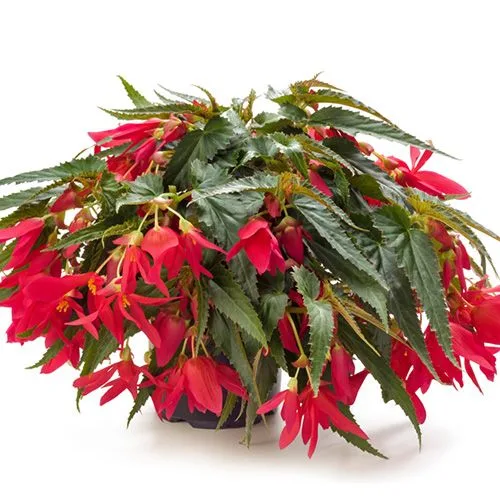
Scientific classification
- Species
- commonName:"begonia 'Waterfall'" (Begonia 'Waterfall')
- Genus
- Begonia
- Family
- Begoniaceae
- Ornamental bulbs - not to be eaten. Wear gloves and other protective equipment when handling
- Toxicity
- Bedding
- Plant type
- 0.1-0.5 metres
- Height
- 0.1-0.5 metres
- Spread
- Deciduous
- Foliage
- Pendulous weeping
- Habit
- Spring · Summer · Autumn
- Season of interest
- Partial shade · Full sun
- Sunlight
- Information to be completed
- Ideal temperature









commonName:"begonia 'Waterfall'" pictures
Distribution of commonName:"begonia 'Waterfall'"
Distribution map
Information to be completed
Information to be completed
Culture
Information to be completed
Toxicity
Ornamental bulbs - not to be eaten. Wear gloves and other protective equipment when handling
Quick identification of commonName:"begonia 'Waterfall'"
Information to be completed
commonName:"begonia 'Waterfall'" care guide
- Moderate regular watering, allowing brief slight drying between soakings
- Watering
- Partial shade · Full sun
- Sunlight
- Information to be completed
- Ideal temperature

Watering
Moderate regular watering, allowing brief slight drying between soakings
Fertilizing
 Fertilizing
Balanced perennial feed every four weeks from spring through summer
Pruning
 Pruning
No pruning required
Propagation
 Propagation
Propagate by seed, basal cuttings, or stem cuttings of sideshoots
Growing
 Growing
In spring plant tubers, hollow side uppermost, in free-draining compost at 16-18°C. Plant out after the last frosts in fertile, humus-rich, moist but well-drained soil in sun or partial shade. Lift the tubers in autumn before the first frosts and dry off. See begonias: outdoors for further information
People also ask
Information to be completed
Common pests and diseases
Diseases
May be susceptible to grey moulds, powdery mildews, stem rot and rhizome rot
Pests
May be susceptible to caterpillars, mealy bugs, mites, glasshouse thrips, vine weevil and aphids
Explore the plant health library →




