
bleeding heart 'Burning Hearts'
Also known as: Information to be completed
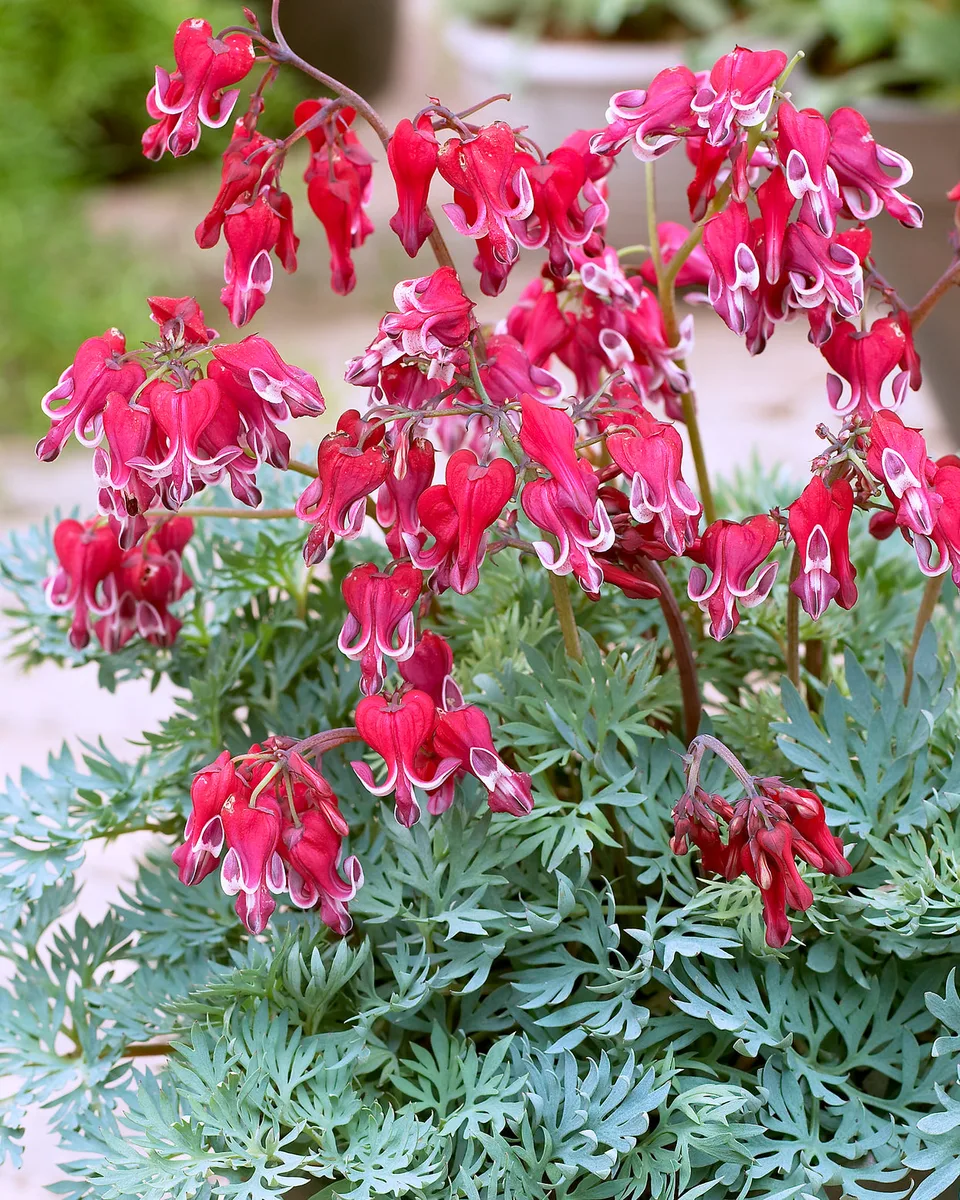
A mound-forming, herbaceous perennial with finely-divided, blue-to grey-green leaves and, from late spring into summer, arching racemes of heart-shaped, deep reddish-pink flowers with white margins.
Scientific classification
- Species
- bleeding heart 'Burning Hearts' (Dicentra 'Burning Hearts')
- Genus
- Dicentra
- Family
- Papaveraceae
- Order
- Ranunculales
- Class
- Magnoliopsida
- Phylum
- Magnoliophyta
- Information to be completed
- Toxicity
- Herbaceous Perennial
- Plant type
- 0.1-0.5 metres
- Height
- 0.1-0.5 metres
- Spread
- Deciduous
- Foliage
- Clump forming
- Habit
- Spring · Summer · Autumn
- Season of interest
- Full shade · Partial shade
- Sunlight
- Information to be completed
- Ideal temperature









bleeding heart 'Burning Hearts' pictures
bleeding heart 'Burning Hearts' care guide
- Moderate regular watering, avoid prolonged drought or waterlogging
- Watering
- Full shade · Partial shade
- Sunlight

Watering
Moderate regular watering, avoid prolonged drought or waterlogging
Fertilizing
 Fertilizing
Balanced feed in spring and light repeat in growth season
Pruning
 Pruning
Generally not required
Propagation
 Propagation
Propagate by division or root cuttings
Growing
 Growing
Plant in moist, fertile, humus-rich soil. Best in neutral or slightly alkaline soil, in part shade, in a sheltered position
Common pests and diseases
Diseases
Generally disease-free
Pests
May be susceptible to slugs
Explore the plant health library →




