
Kalimeris incisa
Also known as: Information to be completed
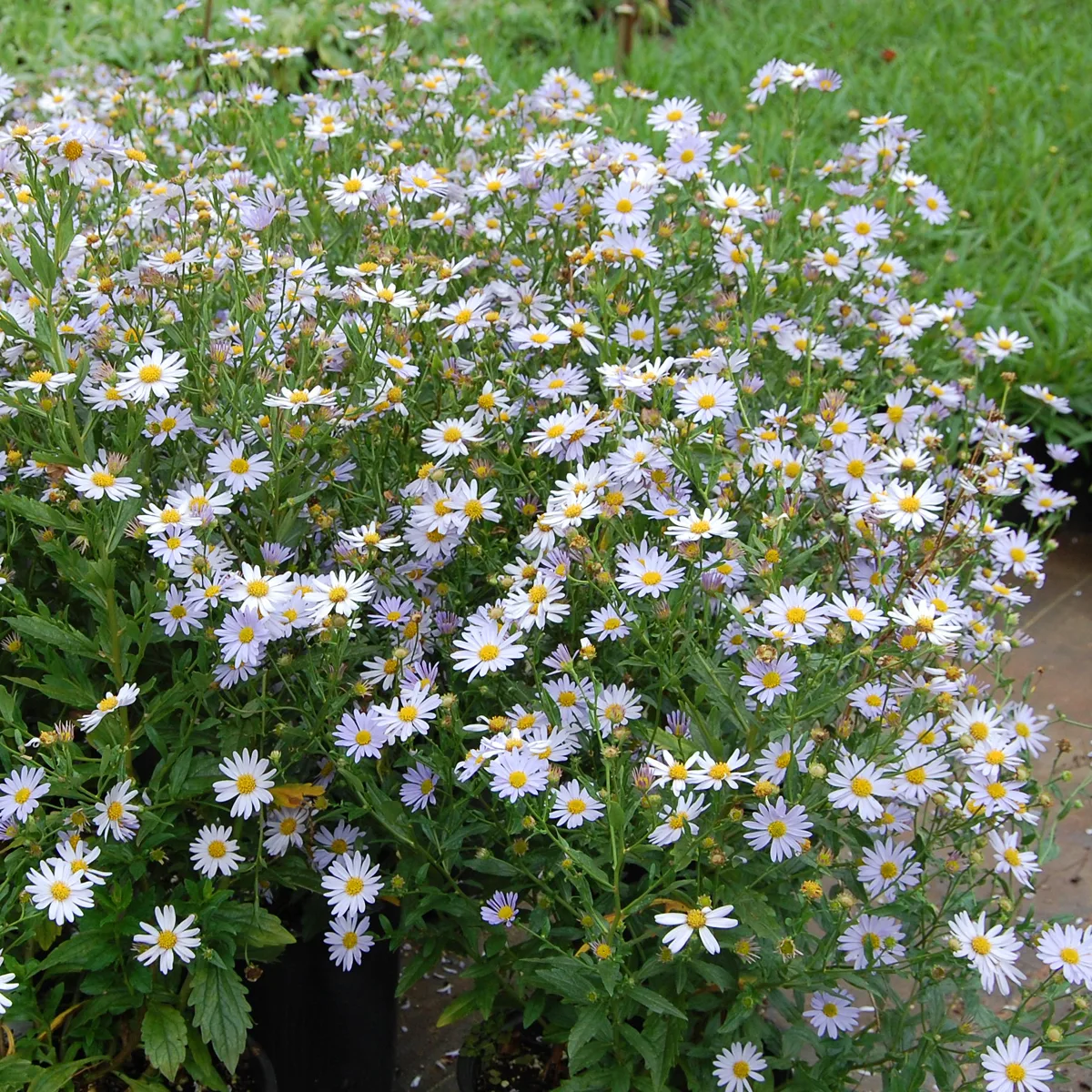
Clump-forming perennial about 1m or more tall, producing leafy, branching stems bearing very pale purple or white daisy-like flowerheads to 4cm across, with golden yellow or greenish-yellow centres, appearing over a long period from early summer to autumn
Scientific classification
- Species
- Kalimeris incisa (Kalimeris incisa)
- Genus
- Kalimeris
- Family
- Asteraceae
- Information to be completed
- Toxicity
- Herbaceous Perennial
- Plant type
- 1-1.5 metres
- Height
- 0.5-1 metres
- Spread
- Deciduous
- Foliage
- Clump forming
- Habit
- Spring · Summer · Autumn
- Season of interest
- Full sun · Partial shade
- Sunlight
- Information to be completed
- Ideal temperature









Kalimeris incisa pictures
Distribution of Kalimeris incisa
Distribution map
Information to be completed
Information to be completed
Culture
Information to be completed
Toxicity
Information to be completed
Quick identification of Kalimeris incisa
Information to be completed
Kalimeris incisa care guide
- Regular moderate watering, allow slight soil dryness between rounds
- Watering
- Full sun · Partial shade
- Sunlight
- Information to be completed
- Ideal temperature

Watering
Regular moderate watering, allow slight soil dryness between rounds
Fertilizing
 Fertilizing
Balanced aster-type feed applied every four growing weeks
Pruning
 Pruning
Cut stems close to the ground in late autumn
Propagation
 Propagation
Propagate by division in spring or root softwood basal cuttings in spring; division can be carried out every third year to maintain vigour
Growing
 Growing
Grow in moderately fertile, moist but well-drained soil in full sun or light shade. See aster cultivation
People also ask
Information to be completed
Common pests and diseases
Diseases
May be susceptible to Verticillium wilt, Powdery mildews and grey moulds
Pests
May be susceptible to leaf and bud eelworms, slugs and snails
Explore the plant health library →




