
emerald feather
Also known as: Information to be completed
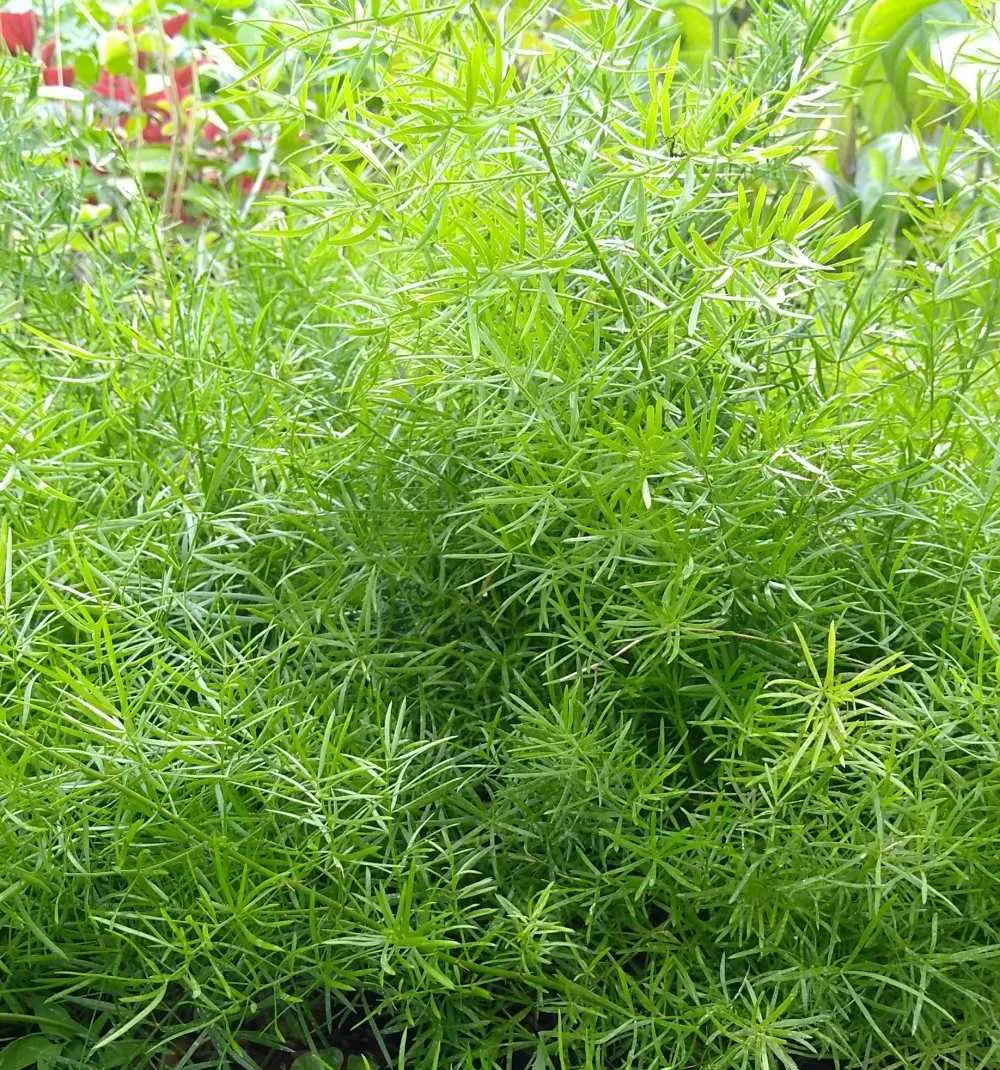
Tuberous-rooted evergreen perennials to 60cm, with very fine, feathery foliage on arching stems and small white flowers followed by red berries
Scientific classification
- Species
- emerald feather (Asparagus densiflorus Sprengeri Group)
- Genus
- Asparagus
- Family
- Asparagaceae
- Order
- Asparagales
- Class
- Liliopsida
- Phylum
- Magnoliophyta
- Skin allergen; fruits harmful if eaten. Wear gloves and other protective equipment when handling
- Toxicity
- Conservatory Greenhouse
- Plant type
- 0.5-1 metres
- Height
- 0.1-0.5 metres
- Spread
- Evergreen
- Foliage
- Tufted
- Habit
- Summer · Autumn
- Season of interest
- Partial shade
- Sunlight
- Information to be completed
- Ideal temperature









emerald feather pictures
Toxicity
Skin allergen; fruits harmful if eaten. Wear gloves and other protective equipment when handling
emerald feather care guide
- Moderate regular watering, avoid prolonged drought and stagnant waterlogging
- Watering
- Partial shade
- Sunlight

Watering
Moderate regular watering, avoid prolonged drought and stagnant waterlogging
Fertilizing
 Fertilizing
Balanced perennial feed every four weeks spring through summer growth
Pruning
 Pruning
No pruning required
Propagation
 Propagation
Propagate by seed or division
Growing
 Growing
Grow outdoors in moist but well-drained soil in a sheltered frost-free site in partial shade. Grow under glass in loam-based compost in bright filtered light. Foliage is useful in flower arranging
Common pests and diseases
Diseases
Generally disease-free
Pests
May be susceptible to asparagus beetle, slugs and snails
Explore the plant health library →




