
elephant ear 'John Peed'
Also known as: Information to be completed
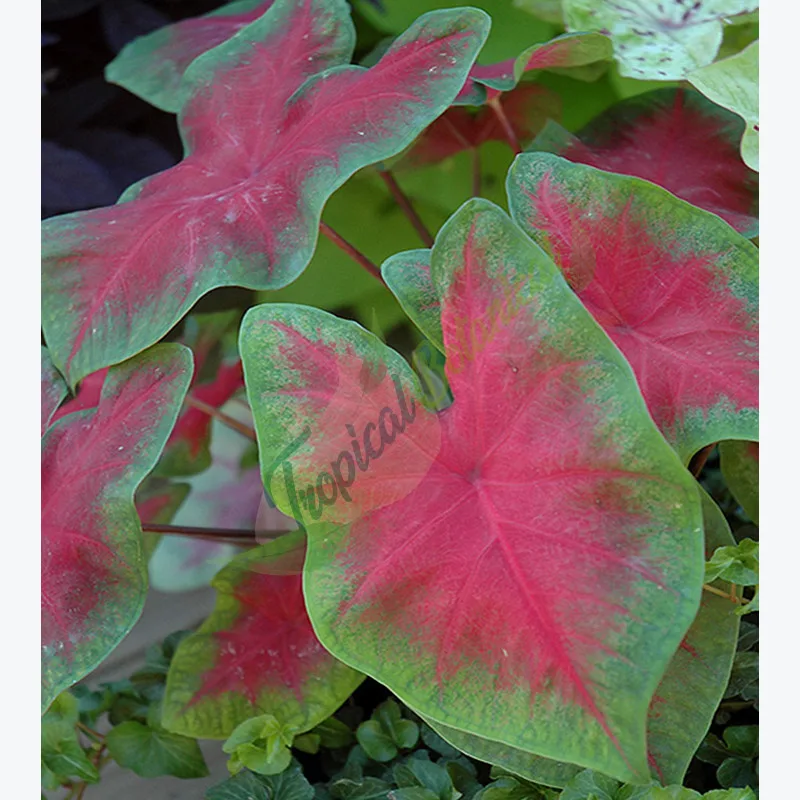
A tropical, tuberous perennial to 60cm tall, grown as a foliage houseplant. It has pink, heart-shaped leaves with red veins and green margins; these are held on slender, upright stalks
Scientific classification
- Species
- elephant ear 'John Peed' (Caladium 'John Peed')
- Genus
- Caladium
- Family
- Araceae
- Harmful if eaten, skin/eye irritant. Wear gloves and other protective equipment when handling]
- Toxicity
- Conservatory Greenhouse · Houseplants
- Plant type
- 0.5-1 metres
- Height
- 0.1-0.5 metres
- Spread
- Deciduous
- Foliage
- Clump forming
- Habit
- Spring · Summer · Autumn
- Season of interest
- Partial shade
- Sunlight
- Information to be completed
- Ideal temperature









elephant ear 'John Peed' pictures
Distribution of elephant ear 'John Peed'
Distribution map
Information to be completed
Information to be completed
Culture
Information to be completed
Toxicity
Harmful if eaten, skin/eye irritant. Wear gloves and other protective equipment when handling]
Quick identification of elephant ear 'John Peed'
Information to be completed
elephant ear 'John Peed' care guide
- Moderate regular watering, allowing brief slight drying between soakings
- Watering
- Partial shade
- Sunlight
- Information to be completed
- Ideal temperature

Watering
Moderate regular watering, allowing brief slight drying between soakings
Fertilizing
 Fertilizing
Balanced perennial feed every four weeks from spring through summer
Pruning
 Pruning
No pruning required
Propagation
 Propagation
Propagate by dividing tubers in spring
Growing
 Growing
Start the tubers off in pots of houseplant compost in early spring. Plant the tubers so that their growing tip is about 5cm below the soil level. Water sparingly initially and keep the pots warm (about 20°C) to help them come out of their winter dormancy. Protect from direct sun, which can burn the foliage. In autumn the foliage will begin to die back; suspend watering and remove withered top growth. Either lift and store the tubers or keep them in their pots over winter. Start them back into growth the following spring
People also ask
Information to be completed
Common pests and diseases
Diseases
Generally disease-free
Pests
Generally pest-free
Explore the plant health library →




