
Eucalyptus gunnii 'Blue Ice'
Also known as: Information to be completed
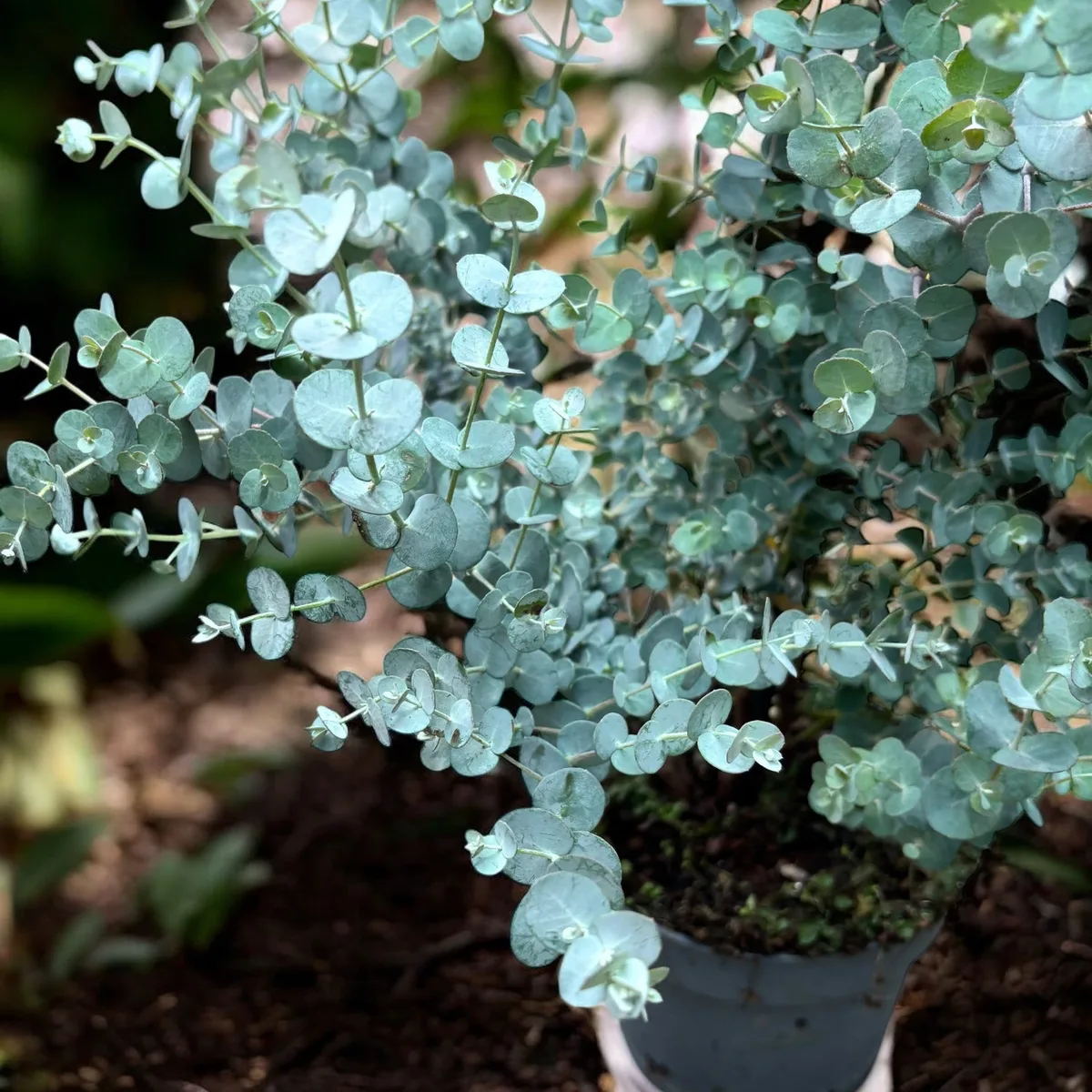
Fast growing, highly ornamental, evergreen tree, about 25m tall, one of the most cold tolerant for northern hemisphere gardens. Flaking cream to grey bark sheds to leave a smooth, yellowish patchy surface, weathering to white, green and pinkish-grey. Highly aromatic foliage, the juvenile leaves to 7cm long, a much stronger blue than the typical species. The adult leaves are grey-green and 8cm long. White flowers are produced from mid to late summer and followed by cylindrical, woody fruits
Scientific classification
- Species
- Eucalyptus gunnii 'Blue Ice' (Eucalyptus gunnii 'Blue Ice')
- Genus
- Eucalyptus
- Family
- Myrtaceae
- Order
- Myrtales
- Class
- Magnoliopsida
- Phylum
- Magnoliophyta
- Information to be completed
- Toxicity
- Trees
- Plant type
- Higher than 12 metres
- Height
- wider than 8 metres
- Spread
- Evergreen
- Foliage
- Information to be completed
- Habit
- Spring · Summer · Autumn · Winter
- Season of interest
- Full sun
- Sunlight
- Information to be completed
- Ideal temperature









Eucalyptus gunnii 'Blue Ice' pictures
Eucalyptus gunnii 'Blue Ice' care guide
- Water deeply at planting, minimal irrigation once mature drought tolerant shrub
- Watering
- Full sun
- Sunlight

Watering
Water deeply at planting, minimal irrigation once mature drought tolerant shrub
Fertilizing
 Fertilizing
Light organic mulch feed once annually in early spring new growth stage
Pruning
 Pruning
Little pruning is needed. Remove diseased, damaged, crowded or crossing shoots and unwanted growth. Timing depends on the plant: generally late winter or early spring; plants prone to bleeding and deciduous magnolias need different timing, and deciduous azaleas and lilacs are pruned after flowering.
Propagation
 Propagation
Propagate by seed at 13-18°C in spring and summer
Growing
 Growing
Grows best in slightly acidic, well-drained soil in full sun with shelter from cold, drying winds especially when young. Tolerant of wet soils. See eucalyptus cultivation
Common pests and diseases
Diseases
May be susceptible to silver leaf, oedema and honey fungus
Pests
May be susceptible to eucalyptus gall wasp and eucalyptus sucker
Explore the plant health library →




