
opium poppy 'Lauren's Grape'
Also known as: Information to be completed
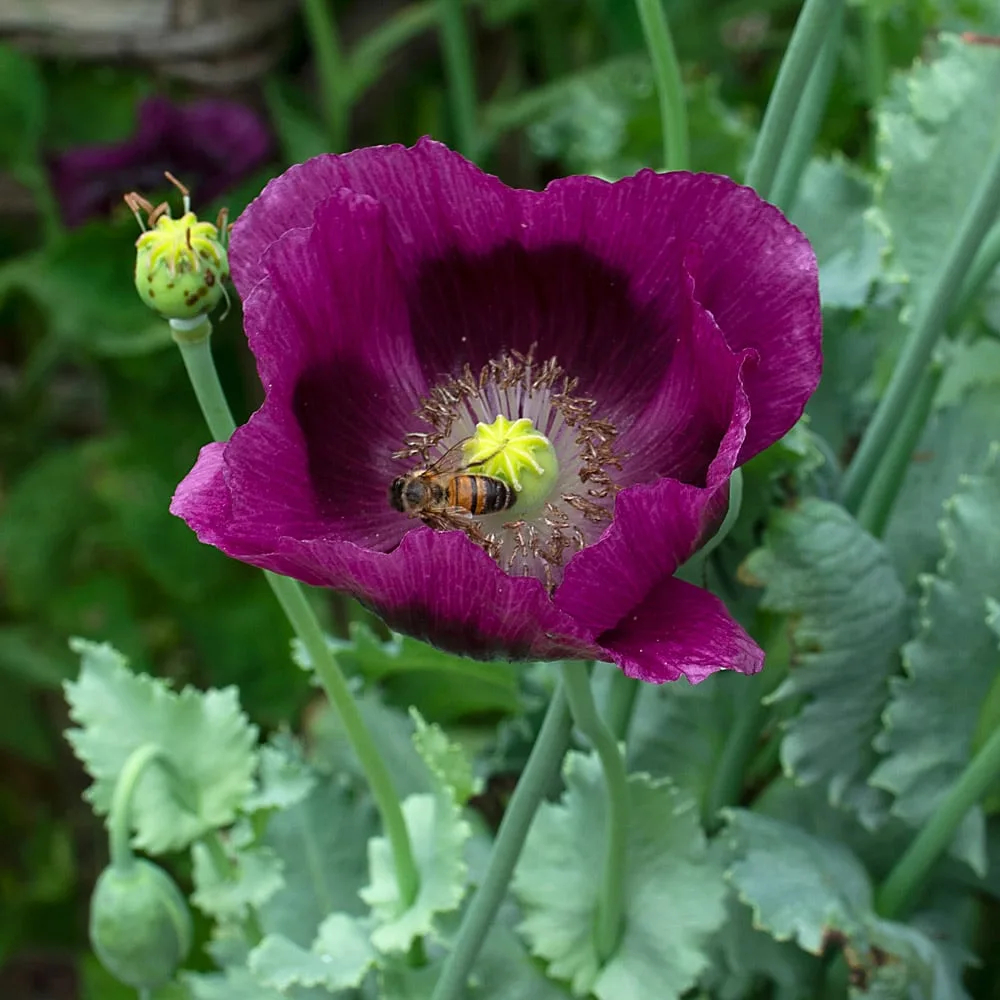
An upright annual, to 90cm tall, with deeply lobed, grey-green leaves and single, bowl-shaped, rich purple flowers, to 10cm across, with a glossy black basal blotch, which are followed by decorative pepperpot seedpods; good for cutting fresh or dried
Scientific classification
- Species
- opium poppy 'Lauren's Grape' (Papaver somniferum 'Lauren's Grape')
- Genus
- Papaver
- Family
- Papaveraceae
- Order
- Ranunculales
- Class
- Magnoliopsida
- Phylum
- Magnoliophyta
- Harmful if eaten. Wear gloves and other protective equipment when handling
- Toxicity
- Annual Biennial
- Plant type
- 0.5-1 metres
- Height
- 0.1-0.5 metres
- Spread
- Deciduous
- Foliage
- Columnar upright
- Habit
- Spring · Summer · Autumn
- Season of interest
- Partial shade
- Sunlight
- Information to be completed
- Ideal temperature









opium poppy 'Lauren's Grape' pictures
Distribution of opium poppy 'Lauren's Grape'
Distribution map
- Native
- Introduced
- Cultivated
Source:WCVP v16 · Royal Botanic Gardens, Kew · CC BY 3.0 · Boundaries:WGSRPD / TDWG
Toxicity
Harmful if eaten. Wear gloves and other protective equipment when handling
opium poppy 'Lauren's Grape' care guide
- Regular mild watering, slight soil drying acceptable between times
- Watering
- Partial shade
- Sunlight

Watering
Regular mild watering, slight soil drying acceptable between times
Fertilizing
 Fertilizing
Thin general flower feed every three weeks warm growing months
Pruning
 Pruning
No pruning required but deadhead to prevent re-seeding
Propagation
 Propagation
Propagate by seed in situ in spring
Growing
 Growing
Easy to grow in any well-drained or moist but well-drained soil in full sun or light shade
Common pests and diseases
Diseases
May be susceptible to downy mildews in wet conditions and fungal wilts
Pests
May be susceptible to aphids
Explore the plant health library →




