
basil 'Mrs Burns' Lemon'
Also known as: Information to be completed
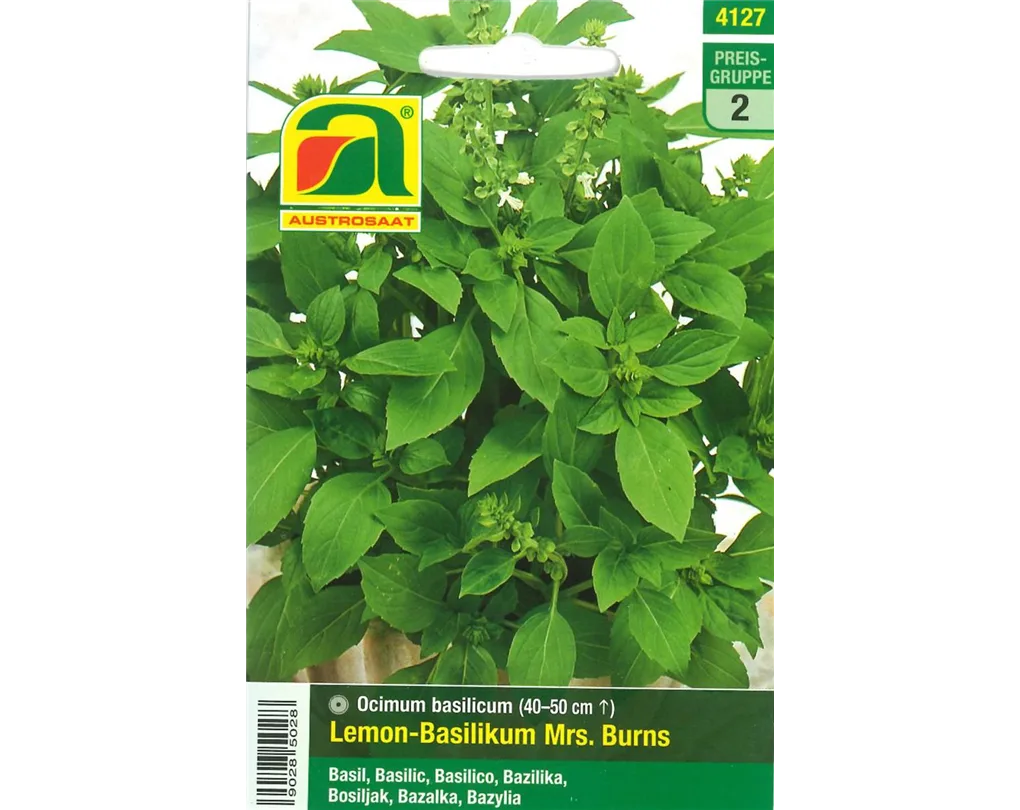
An attractive, tall, upright, perennial, grown as an annual, with a neat habit and fine mid-green leaves that are intensely aromatic and lemon scented. White flowers are held on spikes in summer and attract bees
Scientific classification
- Species
- basil 'Mrs Burns' Lemon' (Ocimum basilicum 'Mrs Burns' Lemon')
- Genus
- Ocimum
- Family
- Lamiaceae
- Order
- Lamiales
- Class
- Magnoliopsida
- Phylum
- Magnoliophyta
- Information to be completed
- Toxicity
- Annual Biennial · Herbs - Culinary
- Plant type
- 0.1-0.5 metres
- Height
- 0.1-0.5 metres
- Spread
- Deciduous
- Foliage
- Bushy
- Habit
- Spring · Summer · Autumn
- Season of interest
- Full sun
- Sunlight
- Information to be completed
- Ideal temperature









basil 'Mrs Burns' Lemon' pictures
Distribution of basil 'Mrs Burns' Lemon'
Distribution map
- Native
- Introduced
- Cultivated
Source:WCVP v16 · Royal Botanic Gardens, Kew · CC BY 3.0 · Boundaries:WGSRPD / TDWG
basil 'Mrs Burns' Lemon' care guide
- Keep soil consistently moist for steady leafy growth without drought stress
- Watering
- Full sun
- Sunlight

Watering
Keep soil consistently moist for steady leafy growth without drought stress
Fertilizing
 Fertilizing
Nitrogen-rich vegetable feed every two to three weeks in active growth
Pruning
 Pruning
Pinch out flower heads as they appear to encourage continued leaf growth. If left to flower, cut back after flowering
Propagation
 Propagation
Propagate by seed in gentle heat in spring under glass or indoors, or sow in-situ in summer. See sowing seeds indoors for further advice
Growing
 Growing
Grow as an annual, indoors, in moist but well drained soil in a sheltered position in full sun. Can move outdoors in summer. Best grown in a container. See basil cultivation for more information
Common pests and diseases
Diseases
May be susceptible to powdery mildews
Pests
May be susceptible to aphids, slugs, snails and leafhoppers
Explore the plant health library →




