
Impatiens omeiana 'Ice Storm'
Also known as: Information to be completed
A hardy rhizomatous cultivar that has a silvery frosting on the leaves and almost orchid-like, creamy yellow flowers in early autumn. The species is endemic to Sichuan in China. It looks great in a jungle or exotic scheme and is ideal for growing in a container too. Grow in moist, well-drained soil that doesn't dry out. It grows to 50-60cm in height and enjoys semi-shade best but will grow in sun too if kept moist and well watered.
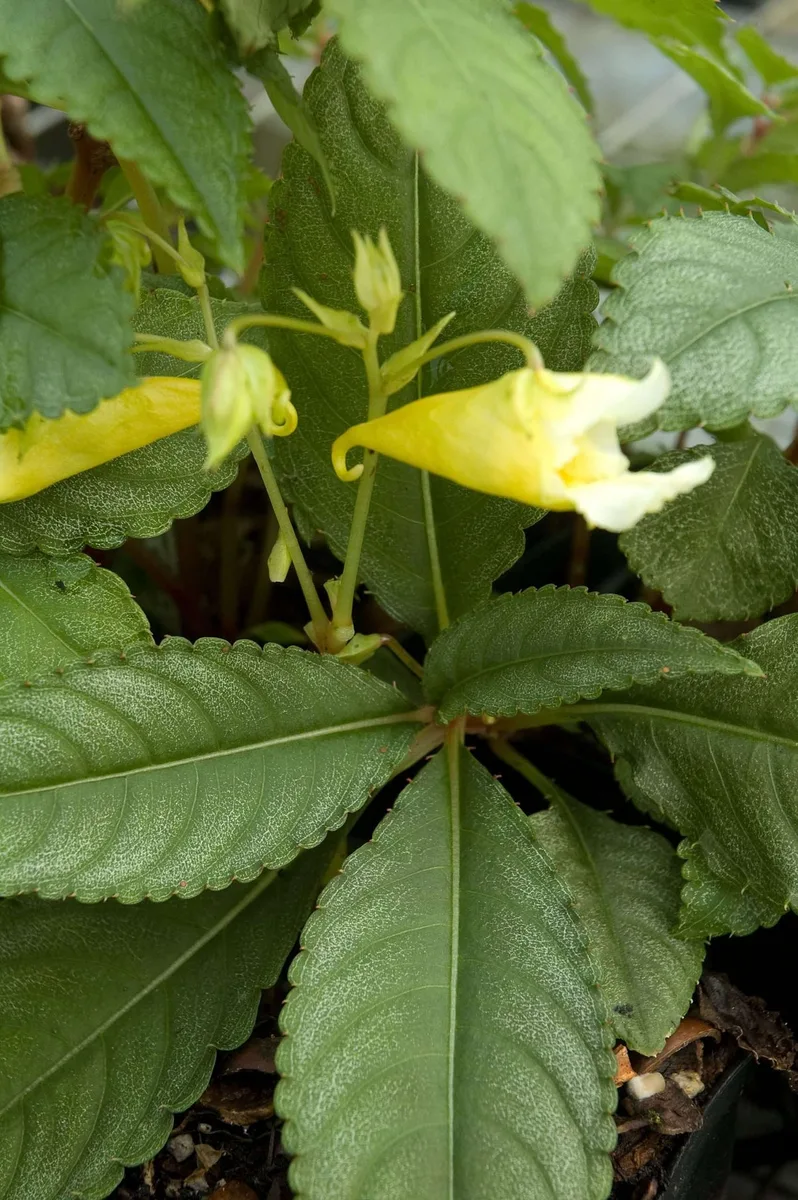
Scientific classification
- Species
- Impatiens omeiana 'Ice Storm' (Impatiens omeiana 'Ice Storm')
- Genus
- Impatiens
- Family
- Balsaminaceae
- Order
- Ericales
- Class
- Magnoliopsida
- Phylum
- Magnoliophyta
- Information to be completed
- Toxicity
- Herbaceous Perennial
- Plant type
- 0.5-1 metres
- Height
- 0.1-0.5 metres
- Spread
- Evergreen
- Foliage
- Columnar upright · Suckering
- Habit
- Spring · Summer · Autumn
- Season of interest
- Full shade · Full sun · Partial shade
- Sunlight
- Information to be completed
- Ideal temperature









Impatiens omeiana 'Ice Storm' pictures
Distribution of Impatiens omeiana 'Ice Storm'
Distribution map
- Native
- Introduced
- Cultivated
Source:WCVP v16 · Royal Botanic Gardens, Kew · CC BY 3.0 · Boundaries:WGSRPD / TDWG
Impatiens omeiana 'Ice Storm' care guide
- Moderate regular watering, avoid prolonged drought or waterlogging
- Watering
- Full shade · Full sun · Partial shade
- Sunlight

Watering
Moderate regular watering, avoid prolonged drought or waterlogging
Fertilizing
 Fertilizing
Balanced feed in spring and light repeat in growth season
Pruning
 Pruning
No pruning required
Propagation
 Propagation
Propagate by seed or softwood cuttings
Growing
 Growing
Grow in humus-rich, moist but well-drained soil in a sheltered, preferably shady spot. Mulch around the plant to help protect and over-winter the shallow rhizomes
Common pests and diseases
Diseases
May be susceptible to damping off (seedlings) or grey mould (flower buds)
Pests
Generally pest-free outdoors; if grown in a greenhouse or conservatory may be susceptible to glasshouse red spider mite, glasshouse whitefly, vine weevil and aphids
Explore the plant health library →




