
Helleborus Angel Glow ('B11-02')
Also known as: Information to be completed
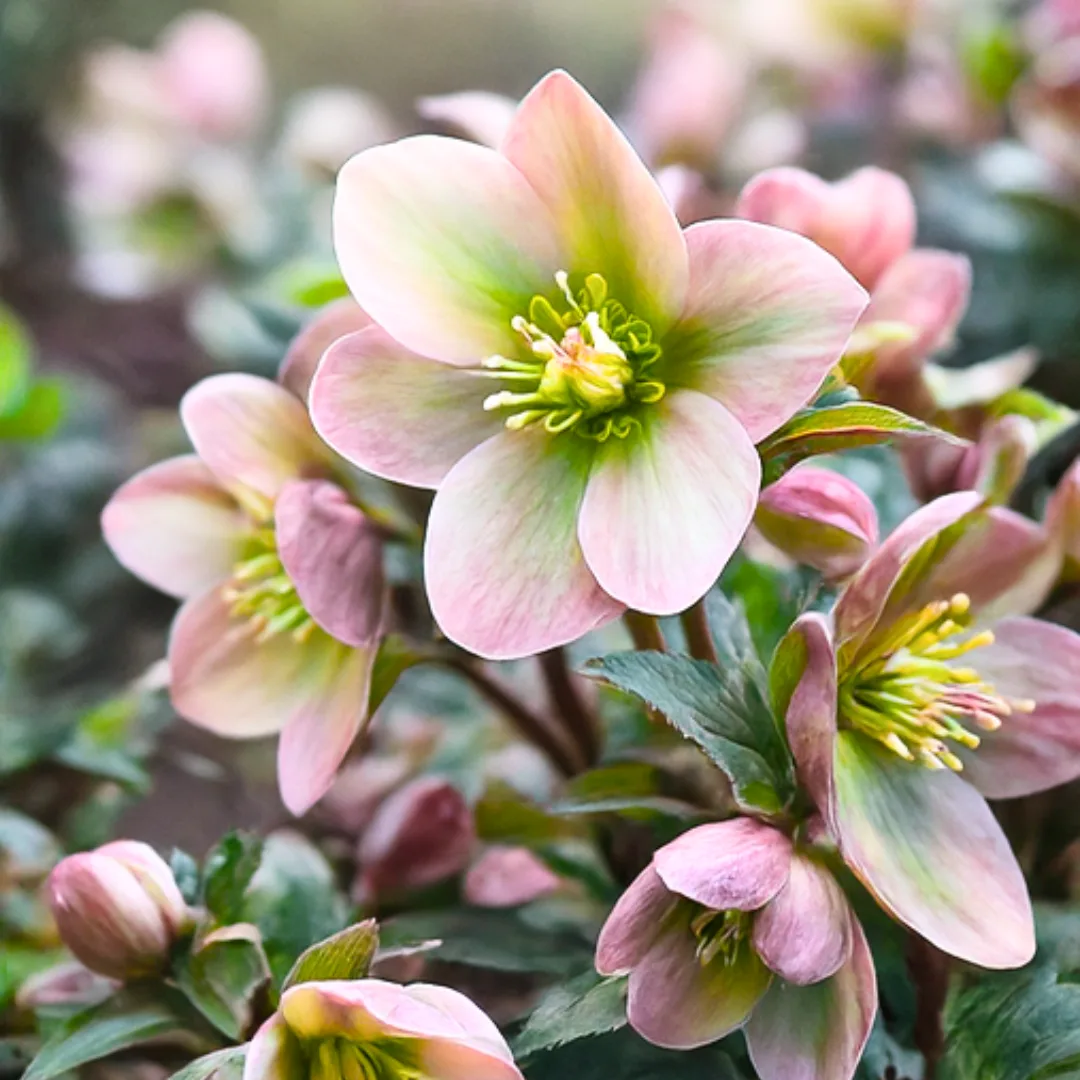
A clump forming, strongly growing evergreen perennial with leathery, divided, blue-green leaves reaching up to 40cm high. The pale pink flower are carried on reddish-brown stems from mid-winter to spring, turning light green with age.
Scientific classification
- Species
- Helleborus Angel Glow ('B11-02') (Helleborus Angel Glow ('B11-02'))
- Genus
- Helleborus
- Family
- Ranunculaceae
- Order
- Ranunculales
- Class
- Magnoliopsida
- Phylum
- Magnoliophyta
- Harmful if eaten, skin irritant. Wear gloves and other protective equipment when handling]
- Toxicity
- Herbaceous Perennial
- Plant type
- 0.1-0.5 metres
- Height
- 0.1-0.5 metres
- Spread
- Evergreen
- Foliage
- Clump forming
- Habit
- Spring · Summer · Autumn · Winter
- Season of interest
- Partial shade
- Sunlight
- Information to be completed
- Ideal temperature









Helleborus Angel Glow ('B11-02') pictures
Toxicity
Harmful if eaten, skin irritant. Wear gloves and other protective equipment when handling]
Helleborus Angel Glow ('B11-02') care guide
- Keep soil evenly moist, richer moisture in spring
- Watering
- Partial shade
- Sunlight

Watering
Keep soil evenly moist, richer moisture in spring
Fertilizing
 Fertilizing
Mulch or balanced feed in late winter to spring
Pruning
 Pruning
Remove damaged, old leaves in the atumn. When flowering finished, remove the old deteriorating flower stems to encorage new fresh growth from the base.
Propagation
 Propagation
Propagate by division of larger clumps in early spring.
Growing
 Growing
Tolerant of wide range of soils, but it prefers humus-rich, moist but well-drained soils. Improve lighter soil with organic matter such as garden compost. Avoid soils prone to drying out or staying wet. Plant in light shade and protected from cold drying winds. For more advice see hellebore cultivation.
Common pests and diseases
Diseases
May be susceptible to hellebore black death, hellebore leaf spot, grey moulds (botrytis) and virus diseases.
Pests
May be susceptible to hellebore aphid, hellebore leaf miner and snails
Explore the plant health library →




