
raspberry 'Black Jewel'
Also known as: Information to be completed
A very early hybrid raspberry with black fruit. It has deciduous green leaves and small white flowers in late spring producing its harvest early to midsummer
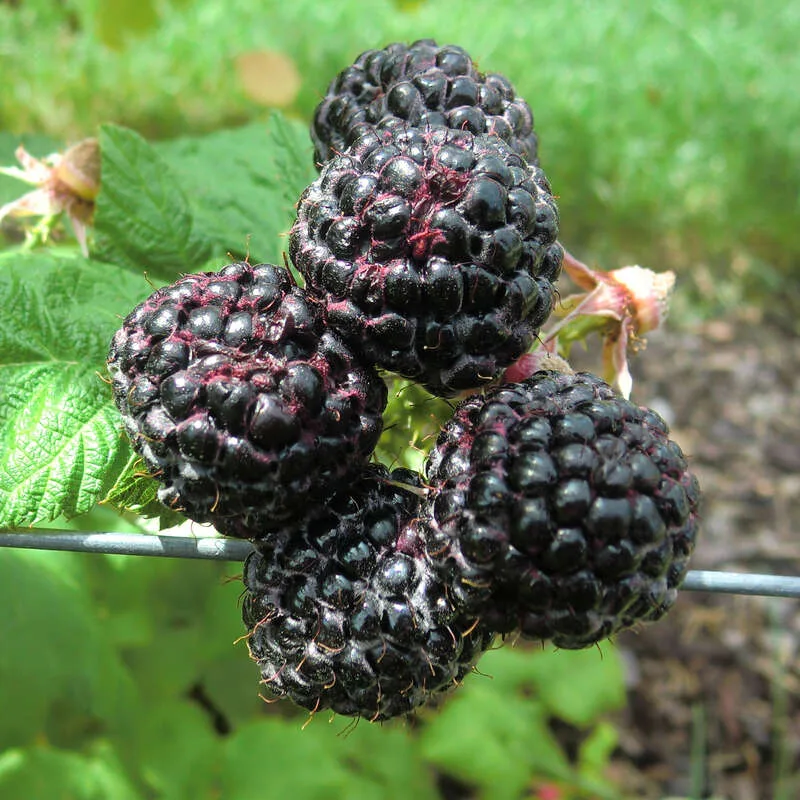
Scientific classification
- Species
- raspberry 'Black Jewel' (Rubus idaeus 'Black Jewel')
- Genus
- Rubus
- Family
- Rosaceae
- Order
- Rosales
- Class
- Magnoliopsida
- Phylum
- Magnoliophyta
- Information to be completed
- Toxicity
- Fruit Edible
- Plant type
- 1.5-2.5 metres
- Height
- 1-1.5 metres
- Spread
- Deciduous
- Foliage
- Columnar upright · Clump forming · Suckering
- Habit
- Autumn · Spring · Summer
- Season of interest
- Full sun · Partial shade
- Sunlight
- Information to be completed
- Ideal temperature









raspberry 'Black Jewel' pictures
Distribution of raspberry 'Black Jewel'
Distribution map
- Native
- Introduced
- Cultivated
Source:WCVP v16 · Royal Botanic Gardens, Kew · CC BY 3.0 · Boundaries:WGSRPD / TDWG
raspberry 'Black Jewel' care guide
- Deep full root watering cycles, partial soil drying between hydration rounds
- Watering
- Full sun · Partial shade
- Sunlight

Watering
Deep full root watering cycles, partial soil drying between hydration rounds
Fertilizing
 Fertilizing
Berry shrub diluted fruit feed every four weeks spring summer months
Pruning
 Pruning
Prune canes which have finished fruiting, to the ground. Tie in new ones to support
Propagation
 Propagation
Propagate by division
Growing
 Growing
Train to wires in a sheltered spot, in any fertile soil as long as it isn't too chalky. Plant in sun or partial shade. May have the potential to become a nuisance if not managed well. See raspberry cultivation
Common pests and diseases
Diseases
May be susceptible to grey moulds and honey fungus (rarely)
Pests
Generally pest-free
Explore the plant health library →




