
geranium 'Quantock Perfection'
Also known as: Information to be completed
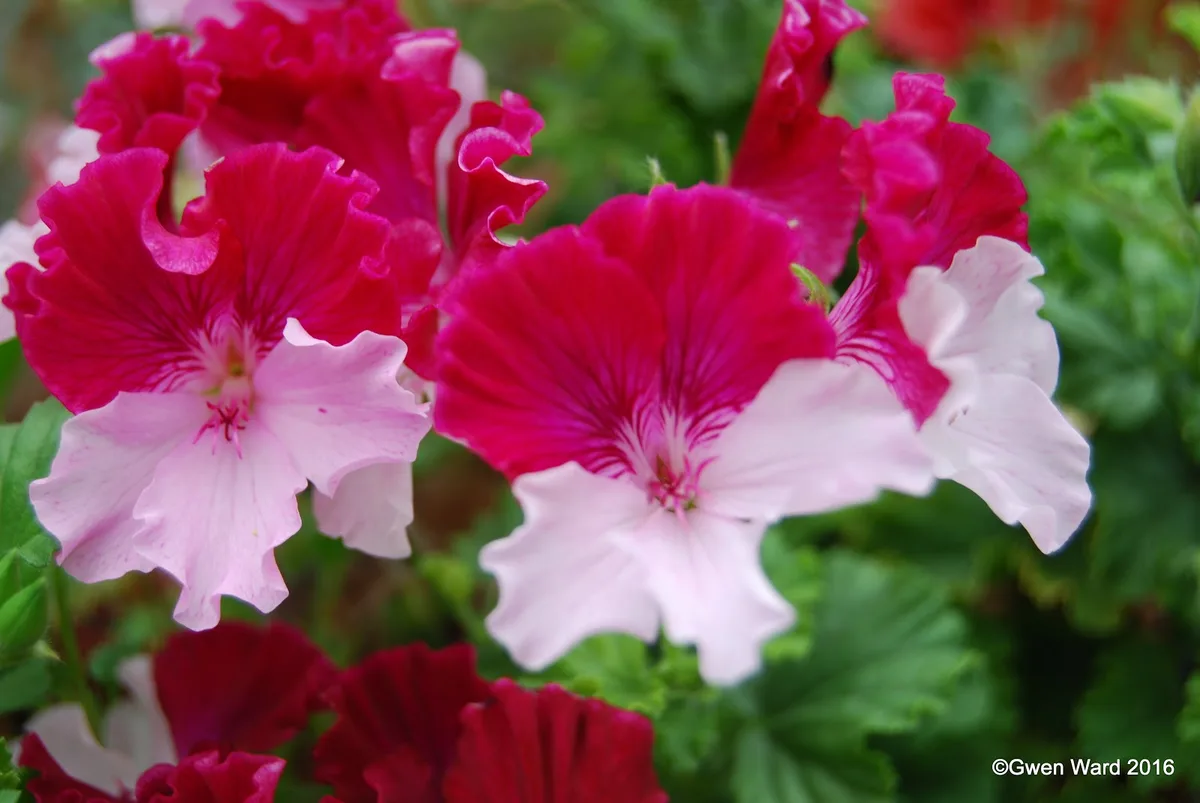
A bushy tender evergreen perennial, with small, rounded, lobed mid-green leaves. Produces abundant small single flowers to 3cm across, with deep pink upper petals and pale pink lower petals with deep pink veins, from late spring to early autumn
Scientific classification
- Species
- geranium 'Quantock Perfection' (Pelargonium 'Quantock Perfection')
- Genus
- Pelargonium
- Family
- Geraniaceae
- Information to be completed
- Toxicity
- Herbaceous Perennial
- Plant type
- 0.1-0.5 metres
- Height
- 0.1-0.5 metres
- Spread
- Evergreen
- Foliage
- Bushy
- Habit
- Spring · Summer · Autumn · Winter
- Season of interest
- Full sun
- Sunlight
- Information to be completed
- Ideal temperature









geranium 'Quantock Perfection' pictures
Distribution of geranium 'Quantock Perfection'
Distribution map
Information to be completed
Information to be completed
Culture
Information to be completed
Toxicity
Information to be completed
Quick identification of geranium 'Quantock Perfection'
Information to be completed
geranium 'Quantock Perfection' care guide
- Moderate regular watering, allowing brief slight drying between soakings
- Watering
- Full sun
- Sunlight
- Information to be completed
- Ideal temperature

Watering
Moderate regular watering, allowing brief slight drying between soakings
Fertilizing
 Fertilizing
Balanced perennial feed every four weeks from spring through summer
Pruning
 Pruning
Deadhead regularly
Propagation
 Propagation
Propagate by seed, or by softwood cuttings in spring or early autumn
Growing
 Growing
May be planted outdoors in beds, baskets and containers after all risk of frost has passed; young plants may need to be hardened off first. Grow in fertile, neutral to alkaline soil in full sun, and overwinter indoors. See pelargonium cultivation for more detailed advice
People also ask
Information to be completed
Common pests and diseases
Diseases
May be susceptible to grey moulds, black leg, pelargonium rust and pelargonium viruses
Pests
May be susceptible to vine weevils, leafhoppers, root mealybugs, aphids, caterpillars, western flower thrips, sciarid flies and whiteflies
Explore the plant health library →




